
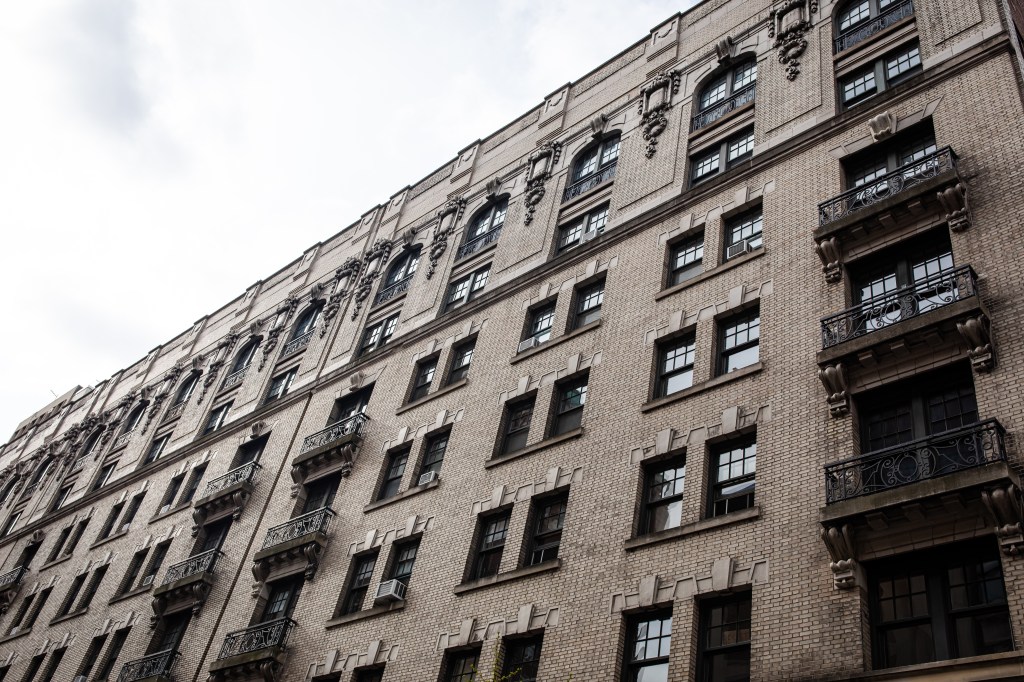
Just in time for the Rent Guidelines Board to consider, the city’s Independent Budget Office has released, “The Current State of Rent-Stabilized Buildings,” a report up to the IBO’s standard of thoroughness. Reassuring in some ways as to the condition of the city’s 960,000 price-regulated apartments, close examination should give pause to the Board, which has already signaled it may acquiesce to Mayor Mamdani’s campaign call for a rent freeze. It should especially concern tenants in the Bronx and low-income parts of Upper Manhattan.
The report’s good news lies in its most general finding. Per the report entitled “Demystifying Distress,” the IBO finds that “the majority of rent stabilized buildings do not show poor conditions generally, or notably worse conditions on average when compared to non-stabilized building conditions.” That’s superficially reassuring — but the finding reflects buildings of all ages, including some 200,000 post-1974 rent-stabilized units added to the system because of city tax breaks and subsidies. No one should be surprised that newer buildings are in pretty good shape.
It’s a different story for Upper Manhattan and the adjoining Bronx. There, per the IBO, “poor conditions are concentrated in rent stabilized buildings with a high share of stabilized apartments, (and) those with lower rents.”
The numbers are concerning: “around 5,400 rent stabilized buildings containing about 107,000 rent stabilized apartments have at least one hazardous violation per apartment.” Some 7,300 of those have “at least five hazardous conditions per apartment.”
These include “no heat or hot water, vermin infestations, leaks, or mold.” Some buildings are at risk of tax lien sales — which could force the city to take “in rem” ownership and absorb the cost of repairs and act as landlord.
These hazardous conditions are not found in unaffordable apartments whose owners are slumlords intent on gouging their tenants. The IBO finds that those buildings with more than one code violation per apartment are found in those whose rents are less than $1,500 per month, with the bottom quartile at just $1,100. The citywide market rate median is more than $4,000.
These pre-1973 building owners have had little incentive to make repairs, following the passage of the state 2019 Housing Stability and Tenant Protection Act. Capital investments lead to very limited rent increases — so limited that owners are keeping at least 26,000 units off the market completely. It doesn’t pay to fix them up.
As Douglas Eisenberg, owner of 18,000 rent-stabilized apartments and labeled a slumlord by Public Advocate Jumaane Williams, told the New York Times, he faces limited rent increases coupled with rising costs, including property taxes that have risen 109% since 2019. He’s been permitted an average rent increase of just 15%.
And, as small property owners know well, owners are not even assured that tenants will pay even an affordable rent. City protections enable them to avoid paying rent for a full year, knowing that they can then receive a so-called “one shot deal” from the city to cover their back rent. In the meantime, owners go without the cash flow they need to pay their bills and make repairs. That helps explain the reasons for hazardous conditions.
This gives small owners especially, an incentive simply to walk away from ownership or, worse, a return to the “Bronx is burning” period of the 1970s — when insurance settlements were more attractive than the return on investment.
The Rent Guidelines Board members, handpicked by the mayor, will likely back his rent freeze. But make no mistake: it’s a siren song that should be resisted.
Husock is a senior fellow at the American Enterprise Institute.