
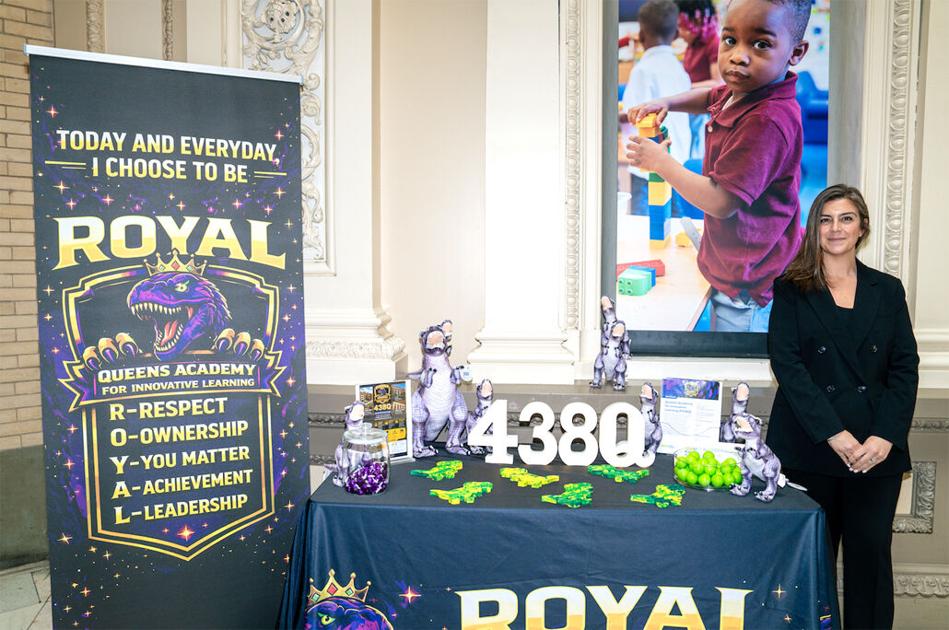
A new District 75 school in Queens is hoping to reshape how students with disabilities experience education, combining technology, project-based learning and individualized support to help them prepare for life beyond the classroom.
The Queens Academy for Innovative Learning, serving students in grades six through 12, will open this fall across three campuses in Astoria, Woodside and Jamaica.
The new school is one of five opening citywide this September, including the Academy of Cultural Excellence in Long Island City and West Q Elementary in Woodside.
The middle school will operate out of IS 125, the Thomas J. McCann Woodside Intermediate School, at 46-02 47 Ave. in Woodside.
The high school programs will be housed at William Cullen Bryant High School, located at 48-10 31 Ave. in Astoria, and at 165-15 88 Ave. in Jamaica.
The three sites will serve about 200 students combined, according to the DOE.
Founding Principal Jenna O’Shaughnessy, a Bayside native, last served as assistant principal of Maspeth’s PS 277, the Riverview School. She has worked with a diverse range of students of different abilities in kindergarten through age 22.
She told the Chronicle the new school was designed to meet students where they are academically, socially and emotionally.
“Our goal is really to create a school environment that is built around what the students need,” O’Shaughnessy said.
The Queens Academy for Innovative Learning will emphasize exploration of science, technology, engineering and mathematics, as well as community-based instruction, work-based learning and interactive technology that allows students to engage with lessons in different ways depending on their needs.
“It’s about finding ways for all students to access the curriculum and bring the curriculum to life,” O’Shaughnessy said.
Among the technologies being introduced into every classroom are Promethean boards — interactive, touch-sensitive whiteboards — and interactive smart tables that allow students to write, draw and manipulate lessons directly on the surface. The school will also utilize assistive technology that can read to students and provide additional supports for different learning styles.
“We are really going to pride ourselves on looking at curriculum and making sure students have access points to understand it and interact with it,” O’Shaughnessy said.
While academics remain a priority, the school also aims to help students develop independence, communication and self-advocacy skills that will support them after graduation.
“Yes, academics are extremely important, but we also want students to be independent and be able to advocate for themselves and their needs,” the principal said.
Some students will work toward earning traditional high school diplomas, while others will focus on post-secondary concerns such as employment opportunities, community involvement and independent living skills.
O’Shaughnessy said she hopes the school helps challenge misconceptions about students with disabilities and instead highlights their strengths and potential.
“I want people to look at their abilities,” she said. “We’re helping find what makes them shine and letting everyone else see that it’s not a disability, it’s just a different way they need to access something, and they’re going to shine just as bright as anyone else.”