

Listen to this article
Estimated 3 minutes
The audio version of this article is generated by AI-based technology. Mispronunciations can occur. We are working with our partners to continually review and improve the results.
Ontario’s Bill 9, which cracks down on misbehaving municipal politicians, passed third reading at Queen’s Park on Tuesday and is on its way to becoming law.
The Municipal Accountability Act passed handily by a vote of 110 to one. It must receive royal assent from the lieutenant governor before coming into effect.
The Independent MPP for Haldimand-Norfolk, Bobbi Ann Brady, registered the only vote against the bill.
Introduced by Municipal Affairs Minister Rob Flack, Bill 9 standardizes codes of conduct across Ontario municipalities, and gives them the power to remove and disqualify from office members who are found to be in serious violation.
The bill requires a local integrity commissioner to investigate misconduct allegations. If that person believes a breach of the code of conduct warrants a politician’s removal, the case will be passed on to Ontario’s integrity commissioner for review.
If that watchdog also recommends removal, the case would be passed back to the local council for a decision within 30 days. A councillor could only be removed by a unanimous vote of all council members who are not a subject of the complaint.
This is the latest attempt to pass legislation to address serious misconduct by municipal councillors, following previous efforts by the Liberals and NDP.
Municipal politicians and staff have for years been asking for legislative tools to deal with allegations of sexual harassment, discrimination and ethics abuses.
The province took the bill on the road last summer to gather feedback and pledged to have the new law in place ahead of the next round of municipal elections on Oct. 26.
Unanimous vote requirement draws criticism
One example of a case where this law could have been applied is that of former Ottawa city councillor Rick Chiarelli. CBC News has reported extensively on allegations of harassment of women on Chiarelli’s staff.
Despite multiple integrity commissioner reports, Ottawa city council had no power to oust him, however.
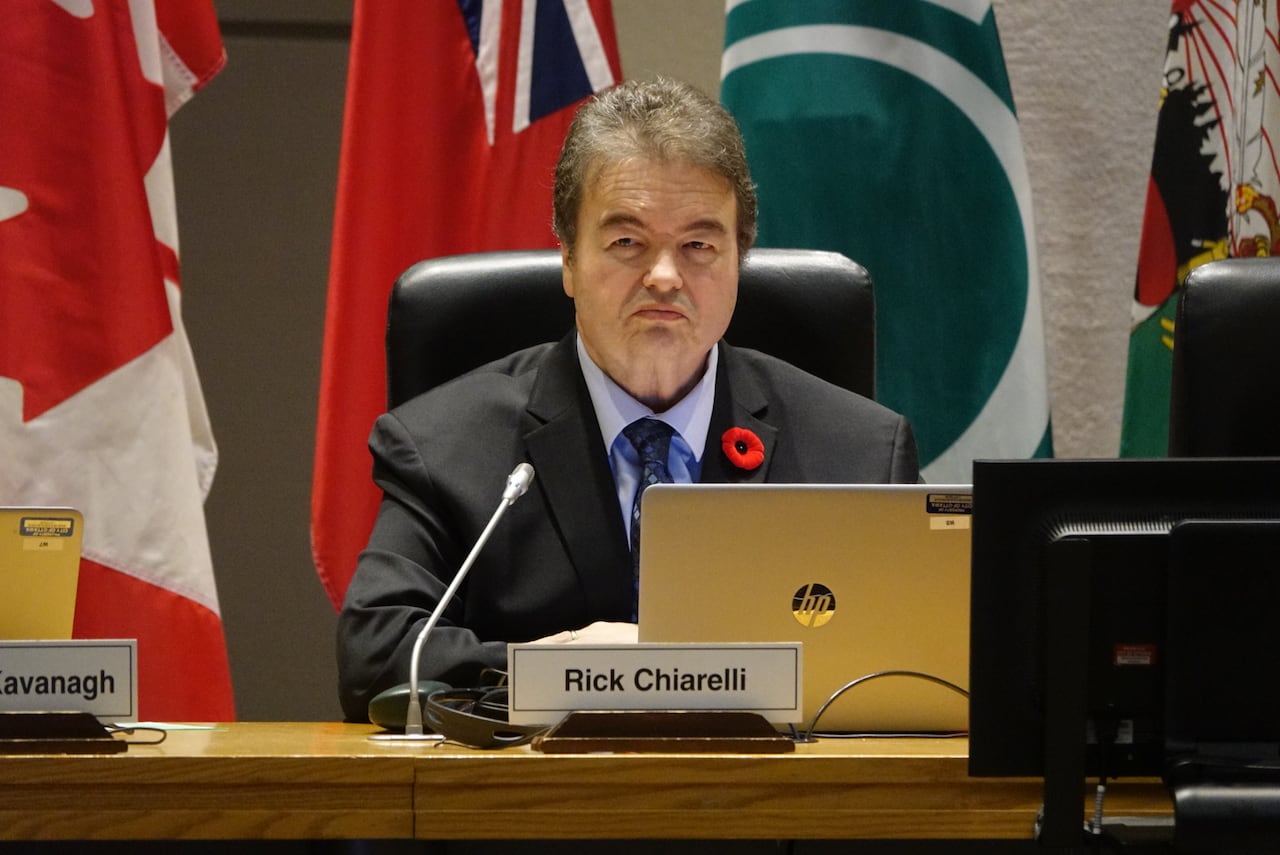 Ottawa city councillor Rick Chiarelli in November 2019. He did not run for re-election in 2022. (Giacomo Panico/CBC)
There has been some criticism about the bill’s requirement of a unanimous vote before a councillor can be removed.
“Two integrity commissioners can have found serious harm, harm of a sexual nature, harm to real people, and if a single councilor votes no, the person walks away without so much as a formal sanction,” said Ottawa Centre NDP MPP Catherine McKenney, who served on city council with Chiarelli and generally supports the bill.
“This is not a high enough bar, this is more of a wall that does not prioritize accountability.”
Orléans Liberal MPP Stephen Blais, another former Ottawa city councillor whose similar private member’s bills failed to get this far, said in a statement that the law is a step in the right direction, but could have been stronger and come sooner.
“I continue to believe accountability decisions should be more independent and less political, and I believe the government waited far too long to act,” he said.