
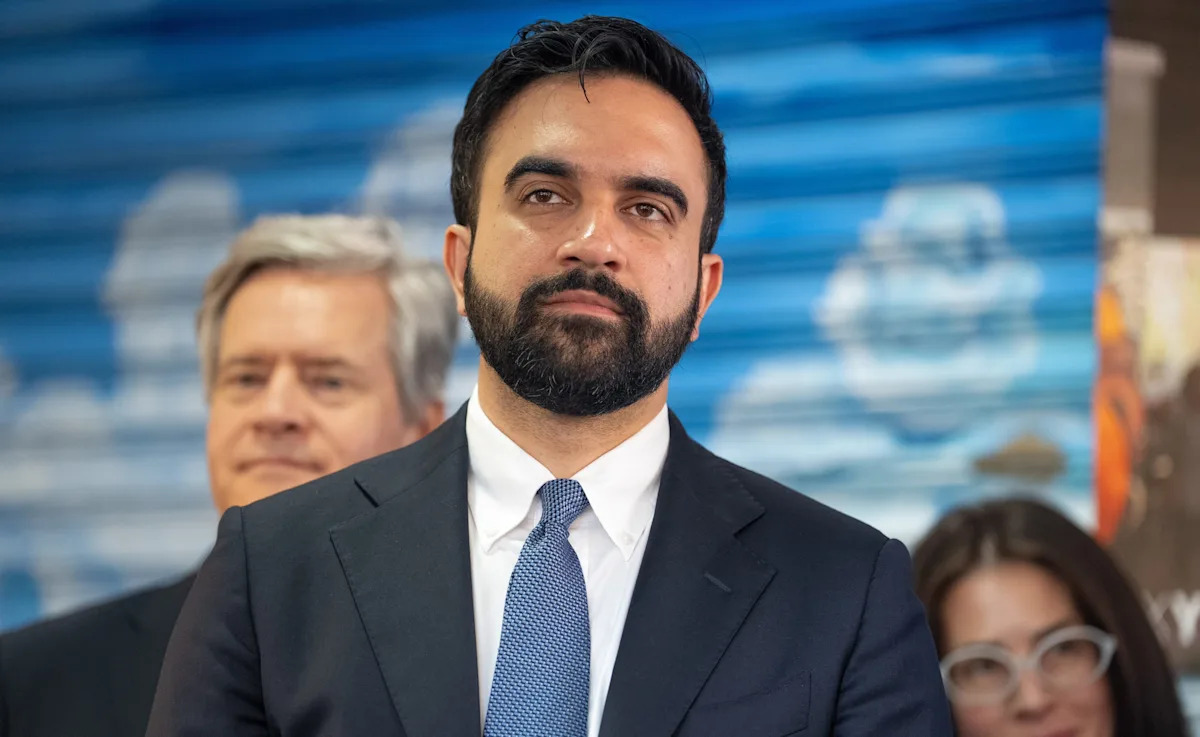
Mayor Mamdani on Tuesday unveiled a $22 billion, five-year plan to address the city’s housing crisis by building 200,000 new affordable units and preserving another 200,000 over the next decade.
In addition to the $22 billion investment funding over the next five years, Mamdani plans to pursue zoning and land use changes to speed up development, improve enforcement for housing code violations and boost housing production in neighborhoods with the least affordable housing. Mamdani first pledged to build 200,000 new units on the campaign trail.
“When it comes to affordable housing, a plan of this scale has never been imagined by a past mayor, let alone proposed by the largest city in the nation. We have the resources, the talent, and the will to achieve this,” Mamdani said at the announcement in Gowanus.
The city is experiencing record-low housing vacancies as rent and sales prices climb amid a stagnant housing supply, leaving New Yorkers struggling to find or hold onto homes.
“New York City has to grow,” Deputy Mayor for Housing Leila Bozorg said. “We simply do not have enough housing to meet the needs of everyone who lives here, and we will be adding housing of all types: apartments, co-ops, home ownership, shared housing, market rate, affordable, and more.”
The 112-page plan, dubbed “Block by Block,” was rolled out at a rally-style announcement reminiscent of Mamdani’s campaign era — which drew much of its strength from the city’s beleagured renters.
Sumathy Kumar, executive director of advocacy group Housing Justice for All, nodded to that base at the event.
“We know that tenants were one of the key blocks that elected this mayor, and this mayor’s housing plan is now a reflection of his commitment and accountability to New York City’s tenants,” Kumar said.
The mayor’s plan also looks to expand private construction — including in the city’s NYCHA buildings. Mamdani called for upgrading a program that partners with private developers in the housing developments. He is also focused on cracking down on landlords flouting the law.
“It’s an entire all of the above comprehensive plan,” Mamdani said Tuesday.
Mamdani also put forward plans to use modular housing to modernize construction and build new units faster and cheaper. Modular housing uses an assembly line format, largely constructing housing or pieces of buildings off-site place in factories.
The public-private Economic Development Cooperation will be looking at how to bring to the Big Apple construction methods like off-site manufacturing and digital fabrication — efforts intended to make affordable housing more investor-friendly for manufacturers and create more local jobs while ramping up the city’s housing output.
Mamdani also announce the formation of a working group led by Deputy Mayors for Housing and Economic Justice Leila Bozorg and Julie Su to look at forming more Project Labor Agreements to secure union labor for city-financed affordable housing projects.
James Whelan, president of the Real Estate Board of New York, a frequent critic of Mamdani’s, said the initiative to secure more PLAs would “make projects more expensive to build and finance.”
“New York won’t solve its housing supply crisis by undercutting its own laudable production goals,” Whelan said in a statement.
The Legal Aid Society praised another aspect of Mamdani’s plan that would cap rents for “extremely low income” New Yorkers at 25% of their income, down from 30%.
“This comprehensive housing plan recognizes that this crisis demands a bold, multi-pronged response,” the organization said.
“The Mayor’s housing plan meets the moment by putting housing production where it belongs: at the top of the city’s agenda,” Carlo A. Scissura, president of the New York Building Congress, said. “The New York Building Congress and our members are ready to work with City Hall, the Council, and communities to move quickly, build boldly, and deliver the homes New Yorkers need across all five boroughs.”