

Photo: Michael Nagle/Bloomberg/Getty Images
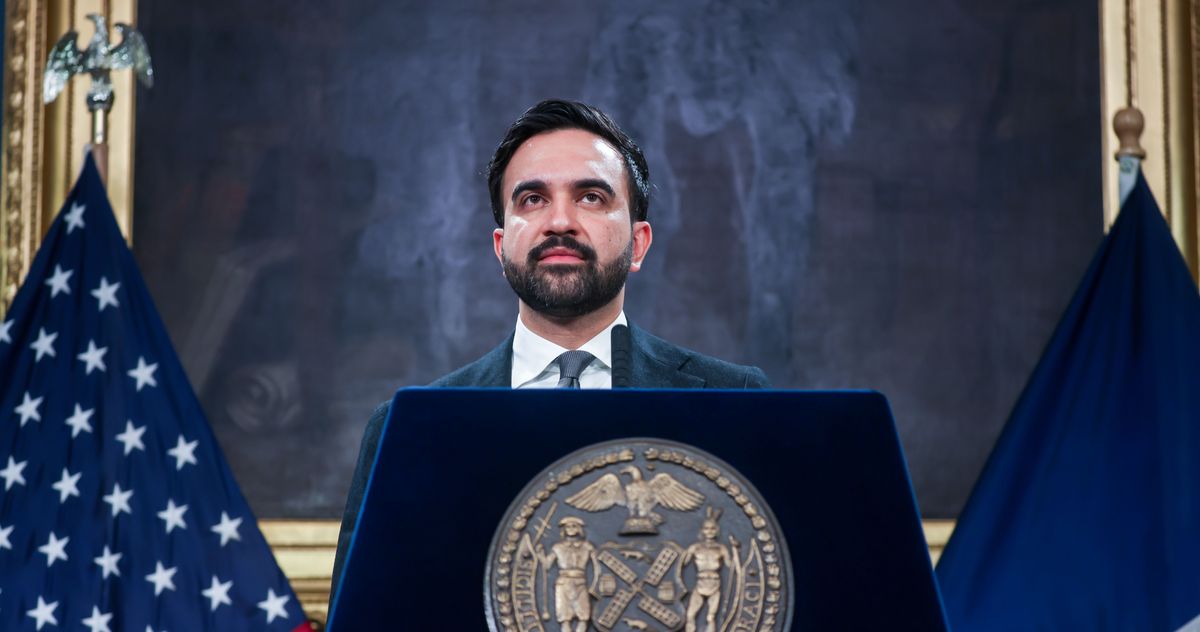
A smiling Mayor Mamdani was in full cheerful-salesman mode when he invited journalists to City Hall to discuss “Block by Block,” his administration’s 112-page housing plan, which he describes as “the most ambitious plan for affordable housing the city has ever seen.” Our sit-down took place shortly after a campaign-style rally in Brooklyn to announce the plan. But behind the cheers, slogans, and can-do pleasantries, the mayor is in for a fight.
“We’re talking about 200,000 new truly affordable homes being built over the next ten years; 200,000 affordable homes being preserved over that same period of time; an investment of $5.6 billion into the New York City Housing Authority, the largest city investment in NYCHA in decades,” he told me. “And all of this while investing in tenants across the city, ensuring that code enforcement is not seen as a suggestion, but rather a requirement. That’s what tenants can expect, and they can expect it from a city government that is serious about delivering on the housing crisis.”
Getting 200,000 new apartments built in the next decade will be a monumental achievement; it’s more than the total number of housing units in New Orleans, Cleveland, Tampa, or San Juan. Mayors Mike Bloomberg, Bill de Blasio, and Eric Adams made comparable promises, setting the city on an impressive, decades-long building spree that is often taken for granted. More than 34,000 new apartments were completed in the five boroughs in 2024 alone, according to the Furman Center at NYU, the greatest one-year total since 2010.
“Since the early 1990s, we’ve built 700,000 new units of housing,” author Nicole Gelinas told me earlier this year. “700,000 new units of housing is pretty much building an entire city. That’s a massive success story.”
But we can’t build fast enough to make rents reasonable for middle- and lower-income New Yorkers through supply and demand alone. On the night before Mayor Mamdani released his proposal, about 83,000 New Yorkers bedded down in city shelters, according to the Department of Homeless Services, including over 28,000 children.
The city’s housing market is actually multiple markets driven by different dynamics. Private developers, who build and lease apartments based on what people are willing to pay, are responding to a global appetite for luxury units in Gotham that has driven median rent for a one-bedroom in Manhattan to more than $5,000 a month. Mamdani, like the mayors before him, is deploying tens of billions of public dollars in partnership with public and private developers to subsidize an entirely separate, far tighter market for units that rent at much lower prices.
The extreme pressure to build or create low-cost units is where strategies like taking buildings away from negligent landlords come in. The administration plan includes a promise to fast-track and streamline the process that led to last year’s seizure of 2201-2205 Davidson Avenue in the Bronx, where residents of a 49-unit building spent a decade battling infestations, mold, and elevators that went out of service for months at a time. The Adams administration ultimately foreclosed on the complex, whose bankrupt owner had racked up more than $25 million in unpaid taxes and repair bills, and turned it over to a nonprofit manager.
The city has been taking abandoned or dilapidated buildings through so-called third-party transfers for decades; some end up sold to new for-profit or nonprofit owners, and a few get converted into tenant-owned co-ops. But Mamdani’s opponents are pretending that programs launched during the administration of Ed Koch are some new, radical scheme. Mamdani will have to weather canned ideological attacks like the one in the New York Post, whose coverage of the housing plan included the alarmist front-page headline “Mamdani Wants to Seize Apartments, Give Them to Nonprofits” and an editorial concluding that “The aim is (legalized) theft, but after all, confiscating private property is a pillar of socialism.”
In the real world, the mayor told me the days of letting years’ worth of housing complaints pile up are over. “When a tenant misses a city inspection, they can actually reschedule when that inspector will come back,” he told me. “If a tenant calls and makes a complaint about heat, starting from October 1, the city will investigate every single one of those.”
And truly negligent landlords will continue to risk losing their buildings — which has been city policy since the 1980s — rather than condemn tenants to years of living in slum conditions.
Another fight in the making involves public housing. Mamdani is allocating $5.6 billion over five years to NYCHA for capital improvements, which is a big chunk of change but far less than the estimated $78 billion it would take to bring the agency’s crumbling developments up to a state of good repair. Mamdani supports the multiple partnerships (with programs called RAD, PACT, and the Housing Preservation Trust) created in recent years that allow private developers to manage developments and accept Section 8 vouchers from tenants as payment.
“With these conversions to the Section 8 platform, public housing still remains actually in public ownership and control. So even with PACT and the Preservation Trust, NYCHA owns the land, NYCHA owns the buildings,” Leila Bozorg, Mamdani’s deputy mayor for housing and planning, told me. “Folks often debate if this is privatization, but really we’re maintaining strong public ownership and control, even when using the Section 8 resources. It’s one of those strategies we feel we need to lean into.”
That’s likely to stir up opponents who object to any changes to NYCHA’s traditional reliance on federal funding programs that are skimpy or nonexistent. Expect demonstrations and lawsuits in developments where organizers have decided, for one reason or another, to fight for the status quo.
The least controversial part of the Mamdani plan is a section on ramping up the use of low-cost, factory-made modular apartments, which have been tried before in New York with little success. But the mayor and Bozorg say the administration plans to take another look. “I was actually just at a ribbon-cutting on Friday that used modular construction by a factory out in Pennsylvania, and it helped them cut down on cost and cut six months from the project timeline,” she told me. “That’s the type of thing we want to support and see if we can scale further on the multifamily side.”
Another crowd-pleasing prong of the plan is a loan program to help first-time homebuyers secure their first property. “What I want to see is stability, and I think for many of those New Yorkers stability comes through home ownership. For others it comes through their long term tenancy,” Mamdani said. “What we want to ensure is that the city is doing everything it can to deliver that stability.”
Sign Up for the Intelligencer Newsletter
Daily news about the politics, business, and technology shaping our world.
Vox Media, LLC Terms and Privacy Notice