
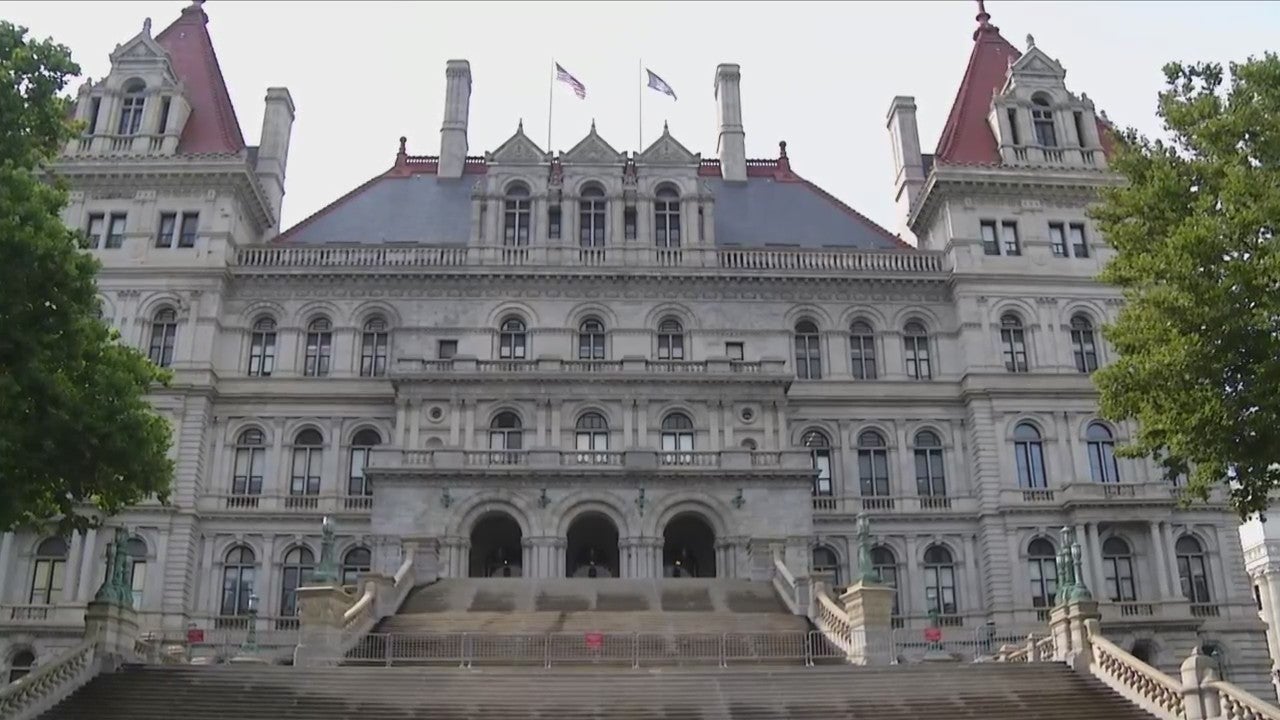
ALBANY, N.Y. — Eight weeks after its original deadline, both chambers of the New York State Legislature finally have passed the state budget.
The budget passed the Senate and Assembly on Wednesday just before midnight. News10NBC is working to learn when the budget will reach Gov. Kathy Hochul’s desk to be signed into law.
The budget was originally due on April 1, but debates over policies on lawsuit reform, green energy goals, immigration, and more held up the budget. Earlier this month, Hochul had said lawmakers had reached a “general agreement” in the budget. However, Speaker Carl Heastie later said there was no deal. Here’s what we know about the budget so far and News10NBC’s coverage of key issues:
Funding specific to Rochester
The state budget includes $75 million toward the creation of High Falls State Park and another $225 million for surrounding neighborhoods to use on housing, economic development, public safety, and supporting students. As News10NBC has covered, construction on the park is set to begin this fall. The park will open in stages, the first being south of the Pont de Rennes Bridge. In addition, the budget includes:
$4 million for Garth Fagan Dance to support a permanent home for the world-renowned dance company in downtown Rochester. $35 million in new unrestricted funds for the City of Rochester to help with programming, staffing, and anti-poverty programs.$75,000 for Military Family Camp at YMCA Camp Gorham in the Adirondacks, run by YMCA of Greater Rochester. It’s a camp that allows children of active duty service members to freely attend overnight camp with other children of military families. $200,000 for Special Olympics New York, which serves thousands of athletes with disabilities with competition and practice year-round. Help with rising utility bills
The state budget includes $1 billion set aside to help with rising utility rates. Joint filers with incomes below $150,000 a year will get a $200 check. Joint filers making between $150,000 and $300,000 will get $150.
If you’re a single filer with an income below $150,000, you’ll get a $100 check. The checks will be sent out between September and December this year and will be based on 2024 tax returns.
Car insurance proposal
Hochul announced on Wednesday that lawmakers have agreed to at least some parts of her proposal aiming to lower car insurance rates.
Hochul argues that tackling insurance fraud is one of the keys to lowering the state’s car insurance rates, which are among the highest in the nation. The plan involves cracking down on staged crashes, such as when a driver cuts off another car and then stops abruptly, to get an insurance payout. She says lawmakers have agreed to make it easier for prosecutors to charge a driver, or anyone who helped a driver, with intentionally causing a crash.
However, some lawmakers have expressed concerns over parts of her car insurance proposal, including a policy that would cap pain and suffering damages. Hochul’s plan also calls for capping payouts for drivers engaged in criminal behavior at the time of the crash, including uninsured drivers, drunk drivers, and drivers committing a felony. That means drivers engaged in illegal behavior would face a $100,000 cap on non-economic damages.
News10NBC’s Deanna Dewey explained how this could play out in a real-world scenario. Imagine someone sitting at a red light and getting rear-ended by a drunk driver. The accident is so serious that the driver of the car that was rear-ended suffers a spinal cord injury and paralysis. But if the victim was driving without car insurance, he was technically engaged in criminal behavior at the time of the accident. So even though the driver suffered a life-changing injury, his damages for pain and suffering would be capped at $100,000. You can read more here.
Electric bus mandate
After months of debate, the State Legislature approved a five-year delay to the state’s electric bus mandate. Once the budget is signed into law, school districts will have until July 2032 to stop buying diesel buses, compared to 2027 under the previous mandate. Districts will have until 2040 to fully electrify their fleet, a change from 2035 under the previous mandate.
News10NBC has spoken with districts that have had concerns over the reliability, cost, and availability of electric buses, in addition to not having enough energy available on current electrical grids. During school budget voting this week, the Pittsford, Hilton, and Dansville school districts all introduced proposals to buy electric buses. Voters in Pittsford approved the purchase of two electric buses, but voters in Hilton and Dansville rejected the measure.
Only a handful of school districts in the Rochester area have started transitioning to electric buses. Gates-Chili has the most in the area with 15 electric buses. Gates-Chili leaders say the buses work well because their routes are short and densely populated. However, leaders in the Naples school district, a more rural area where homes are spread out, said electric buses are more expensive to run — anywhere from five to eight times as much as diesel.
The electric bus mandate is part of the state’s clean energy goals. The state aims to generate 70% of its electricity from renewable sources and reduce its emissions by 40% by the year 2030. Some climate activists have called on lawmakers to stay the course on the goals. However, at an event in Rochester in March, Hochul said she wanted to delay the timeline due to the cost to energy customers. She said financial challenges like the pandemic, inflation, and tariffs have made the goals set in 2019 unrealistic.
Funding for education
The state budget will allocate $39 billion in tax dollars for school aid, an increase from last year. That includes $2.4 million for the Rochester and Buffalo city school districts’ health services. The budget also expands universal pre-K to support full-day instruction for four-year-olds by the fall of 2028.
For higher education, $15 billion is going to SUNY colleges, including $200 million for maintenance and $100 million for research facilities. Nearly $7 billion is going to CUNY schools. The spending plan also provides $20 million for community colleges, including making scholarships available to students pursuing degrees in nursing and other fields.
The delay in passing the state budget has caused concerns for some school districts. At last month’s city council meeting, RCSD Superintendent Dr. Eric Jay Rosser said the district’s budget didn’t account for several million in state aid, because of the delays in Albany.
For Related Stories: New York State budget budget passes