
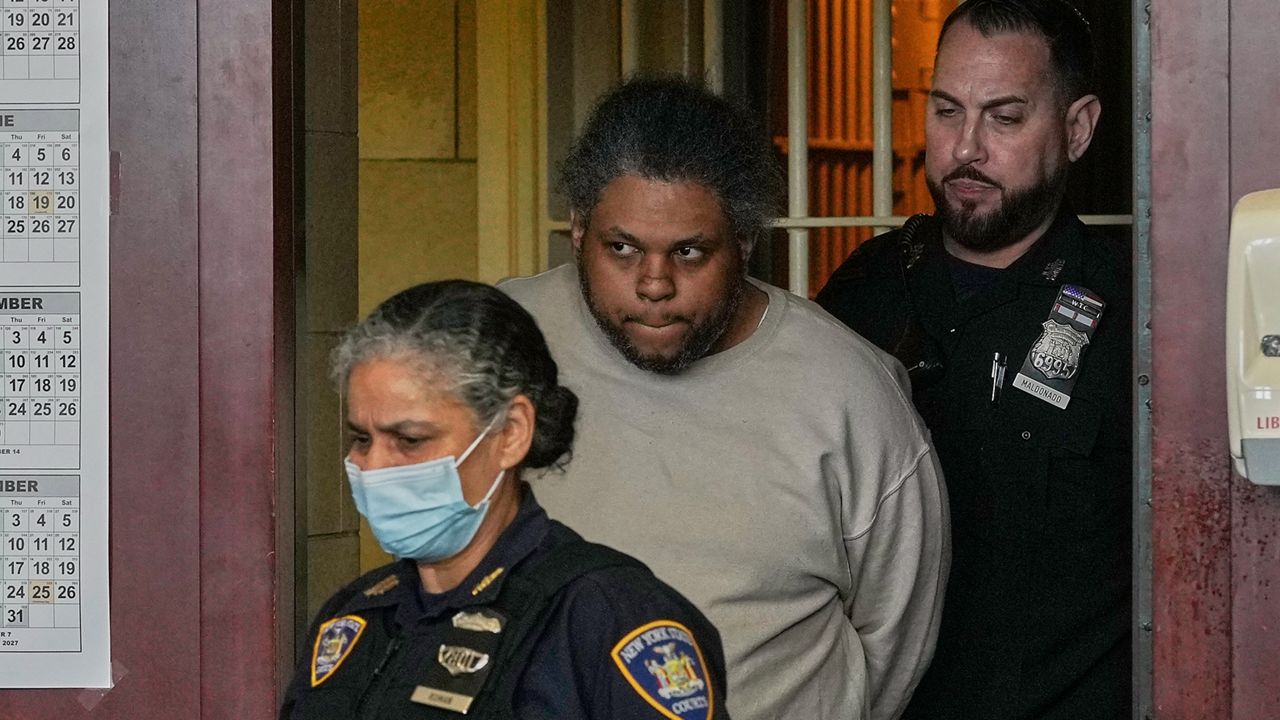
The man convicted of fatally beating four sleeping men with a metal bar during a rampage in Chinatown in 2019 was sentenced to 40 years to life in prison Thursday, prosecutors said.
Randy Santos, 31, was also found guilty of attempted murder for bludgeoning a fifth man during the spree, and for attacking a sixth man in Chelsea a week earlier, the Manhattan district attorney’s office said.
What You Need To Know
The man convicted of fatally beating four sleeping men with a metal bar during a rampage in Chinatown in 2019 was sentenced to 40 years to life in prison Thursday, prosecutors said
Randy Santos, 31, was also found guilty of attempted murder for bludgeoning a fifth man during the spree, and for attacking a sixth man in Chelsea a week earlier, the Manhattan district attorney’s office said
Prosecutors said Santos pummeled the four men who died — Chuen Kok, Anthony Manson, Florencio Moran and Nazario Vásquez Villegas — with a metal bar within 30 minutes of each other on Oct. 5, 2019
At his trial, Santos’ attorneys claimed he was driven by schizophrenic delusions, believing he had to kill 40 people to avoid dying himself
“The chilling murders committed by Randy Santos shook New York City,” Manhattan District Attorney Alvin Bragg said in a statement. “He displayed an appalling disregard for the lives of his victims, who were completely defenseless and unable to protect themselves.”
Prosecutors said Santos pummeled the four men who died — Chuen Kok, Anthony Manson, Florencio Moran and Nazario Vásquez Villegas — with a metal bar within 30 minutes of each other on Oct. 5, 2019. They ranged in age from 39 to 83.
A fifth man was seriously hurt during the rampage, according to prosecutors.
A week before the attacks, prosecutors said Santos punched a man sleeping on a bench along the waterfront near Chelsea Piers, then tried to throw him over a railing into the river.
At his trial, Santos’ attorneys claimed he was driven by schizophrenic delusions, believing he had to kill 40 people to avoid dying himself.
Authorities said some of Santos’ victims were homeless at the time, as was Santos himself.
“Unhoused individuals deserve the same level of safety as anyone else, and I hope the resolution of this case serves as a reminder of the work that remains in protecting and supporting our most vulnerable residents,” Bragg said.