

By law, ACS is required to obtain a judge’s permission before removing a child from their family, but there is an exception for an emergency removal if the child is in immediate danger and there is no time to get a court order.
The lawsuit, filed on May 28 by a group of parents who were forcibly separated from their children by ACS, alleges that the agency systematically abuses this power in instances where that do not pose an imminent risk to the life or safety of the child, claiming that the the agency has adopted an unwritten “policy, practice and/or custom” that has resulted in more than 50% of removals being made without a court order.
In these cases, ACS seeks judicial approval only after the family has already been separated, yet a significant percentage fail to withstand judicial scrutiny. In the required judicial review after an emergency removal, more than 25% of such cases do not meet the legal justification for the child to remain in state custody — a statistic that the plaintiffs argue undercounts illegal removals.
“ACS doesn’t live up to its mission,” said one of the parent plaintiffs who joined the case under the pseudonym Danielle Lorimer. “It says it is there to help us, but it never provides any meaningful support to struggling families. Instead, it separates families.”
The lawsuit alleges that the trauma of removal has lasting impacts on the lives of children, who can develop post-traumatic stress disorders that lead to cognitive delays and impairments.
An ACS spokesperson maintained the agency is committed to keeping families together whenever that is safely possible. The agency is reviewing the lawsuit with the Law Department.
“Emergency removals are only considered in circumstances where all other options are ruled out, and teams of highly trained child protective staff determine that a child is in imminent danger and that there is not enough time to get a court order,” the spokesperson said.
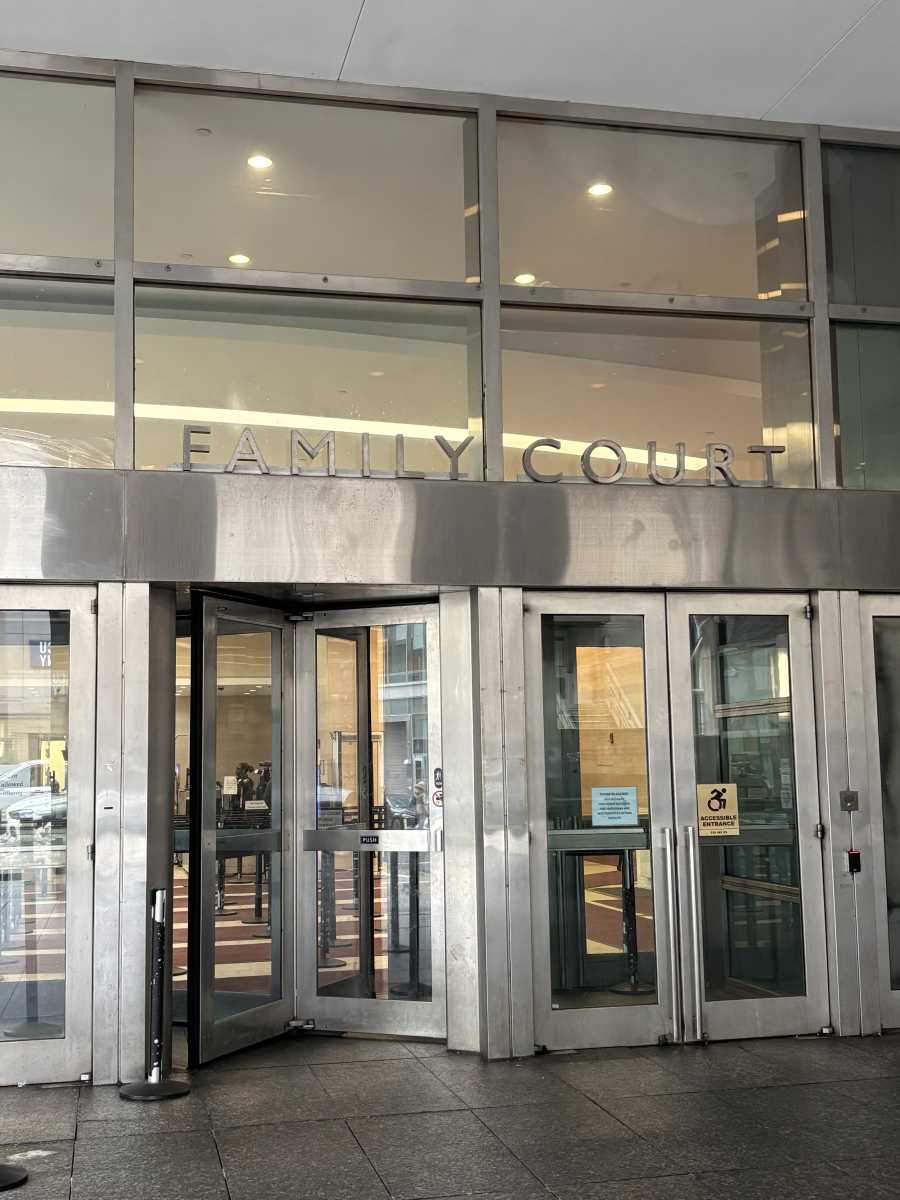 The Kings County Family Courthouse in Downtown Brooklyn.Photo by Max Parrott
The plaintiffs, represented by a mix of family justice legal advocates, are seeking an injunction requiring the city to “remedy” its overreliance on emergency removals, compensatory damages for the plaintiffs, and a judgment declaring the unconstitutional removal of children.
The class action lawsuit builds off a decision a federal appeals court made in a separate case involving an emergency removal proceeding in which the court found merit to a father’s lawsuit that claims ACS unconstitutionally separated him from his infant son for nearly three years.
Lawyer charges ACS policy has element of racism
Melissa Friedman, a Legal Aid Society attorney representing the plaintiffs, said that incentives for ACS to over-rely on emergency removals can range from a lack of training in the child protective specialists making these determinations to the path of least resistance in an agency that allegedly encourages the practice as the status quo.
The lawsuit cites an internal ACS audit that found caseworkers feel pressure to “err on the side of safety for themselves, by seeking removal and thereby ensuring that they won’t be liable in the case of abuse.”
A major problem is the subjective nature to ACS’s assessment of risk factors, which adds an element of racial discrimination or implicit prejudice in the removal practice, the suit argues. Over 90% of emergency removals are effectuated against Black or Hispanic families, and only 3% are effectuated against white families, according to ACS data.
“ACS workers are wolves in sheep’s clothing, and you have to be very cautious with them when you’re a Black or Latino parent,” said another plaintiff under the pseudonym Denise Archer.
Archer, a 36-year-old Black single mother from the Bronx, had her three children removed twice in 2023 without a court order in the span of four months, according to the court papers.
The second removal in 2023 — triggered in part by a request that Archer filed for additional childcare assistance and an accidental burn that caseworkers found on her son’s arm — led to a three-year separation.
The caseworker took Archer’s son to the hospital for a medical evaluation of the burn, and though hospital staff allegedly assessed that the burn was healing and found no indication it was anything other than accidental, ACS conducted an emergency removal of all three of Archer’s children.
The agency commenced a neglect petition four days later, but did not provide any reason why an emergency removal was justified, according to the suit. For almost the next three years, Archer battled ACS in court for their return.
An appellate court eventually reversed the neglect findings entirely and dismissed the case, reuniting the family earlier this year.