
The village of Tupper Lake scored a huge win in this year’s state budget. It will receive $12.5 million to help fix a water issue that’s plagued the village for more than a decade. Village Mayor Mary Fontana credited North Country Assemblyman Michael Cashman for helping secure the funding in the state budget.
Emily Russell spoke with Monica Sandreczki about the funding and the water crisis in Tupper Lake.
Emily RussellTupper Lake celebrates $12.5 million in NY budget for water system, credits Cashman

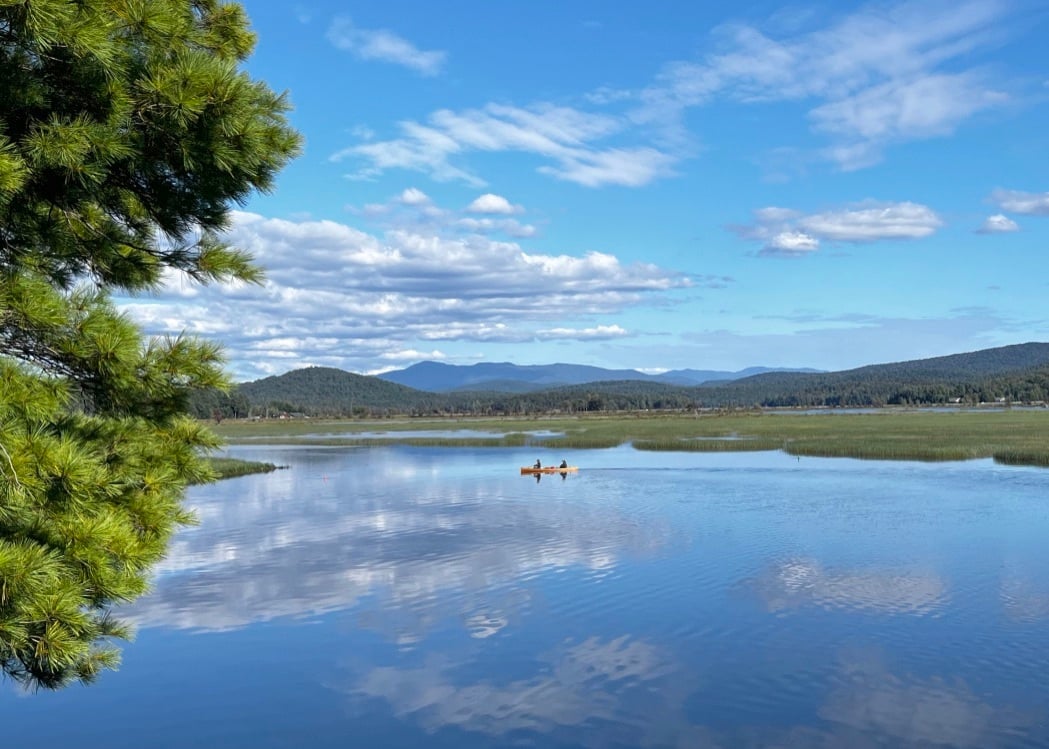
Tupper Lake. Photo: Emily Russell
MONICA SANDRECZKI: This funding is a tiny fraction of the 270 billion state budget. But what does it mean for the village of Tupper Lake and its water system?
EMILY RUSSELL: It’s hard to overstate how much this means to the village. Tupper Lake has struggled with its water since the early 2010s. This is a village of about three thousand people. So when I saw the news that this funding made it into the budget, I called up Mary Fontana, the mayor of Tupper Lake.
“When I heard that we had made it into the budget and that the figure was $12.5 million, I cried happy tears,” Fontana said. “My knees didn’t quite hit the floor, but they came darn close. I never anticipated a figure that large to close such a huge funding gap that this community has.”
SANDRECZKI: So what’s the problem to begin with? What’s the root cause of Tupper Lake’s water crisis?
RUSSELL: For a long time, the village was getting its drinking water from two sources- Big Tupper Lake and Simon Pond. But about 15 years ago, state health officials found hazardous levels of certain contaminants in the drinking water. So they recommended that Tupper abandon those two surface water sources. Instead, the solution was to drill a couple of wells for groundwater.
SANDRECZKI: What happened when the village pivoted to groundwater?
RUSSELL: So the village took on a $7 million debt for those two wells. For the first 18 months, the village had good, clean drinking water. But then people started reporting that the water was coming out of their faucets brown. The well water is high in iron and manganese, which was causing that discoloration. Plus, the village realized the two wells weren’t even supplying enough water for all its residents.
So they actually had to bring one of their surface water sources back online, and remember that surface water has contaminants in it. That’s left with two separate water issues- contaminants from surface water and discoloration from the well water. That’s despite all the money the village spent on the new wells.
“The village of Tupper Lake took on $7 million in debt and the $7 million project did not bring solutions to our doorstep,” said Fontana, “it brought more problems.”
SANDRECZKI: So Tupper Lake got this big money from Albany. How is the village moving forward now to fix these problems?
RUSSELL: Fontana says the village has determined that well water is the way to go. They just need to drill for more of it and have a way to treat it so it’s not brown when it comes out of the faucet. Engineers have identified five potential aquifers, and they’ll be drilling test wells in the next few weeks.
And then to treat that well water, Tupper is planning to build a new water treatment plant. The technology at that plant will remove the iron and manganese that’s been turning their well water brown for years now. The $12.5 million from this year’s state budget won’t pay for all of that, but it will cover most of the construction cost of the new system.
SANDRECZKI: How was Tupper Lake able to secure that money in the budget?
RUSSELL: This issue has been on the radar of state and local leaders for as long as it’s been a problem. And the village has had some success getting grant funding here and there, but never the kind of money that’s in this year’s budget. And Mary Fontana gives all the credit to Assemblyman Michael Cashman. He’s a Democrat from the Plattsburgh area who’s only been in office for about six months. But Fontana said he made Tupper Lake’s water system a top priority, and it paid off.
“He summited Everest for this community,” said Fontana. This is Tupper Lake’s victory, but this is Assemblyman Cashman’s victory, and Tupper Lake will never forget the friendship and partnership he’s shown us. For seven years, my child has not been able to take a bath where the water ran out of our faucet clear and with his help, she should be able to.”
RUSSELL: It still could take up to two years to drill the new well and get the water treatment plant up and running, but Fontana says the end of this water saga is finally in sight with this new state funding.