
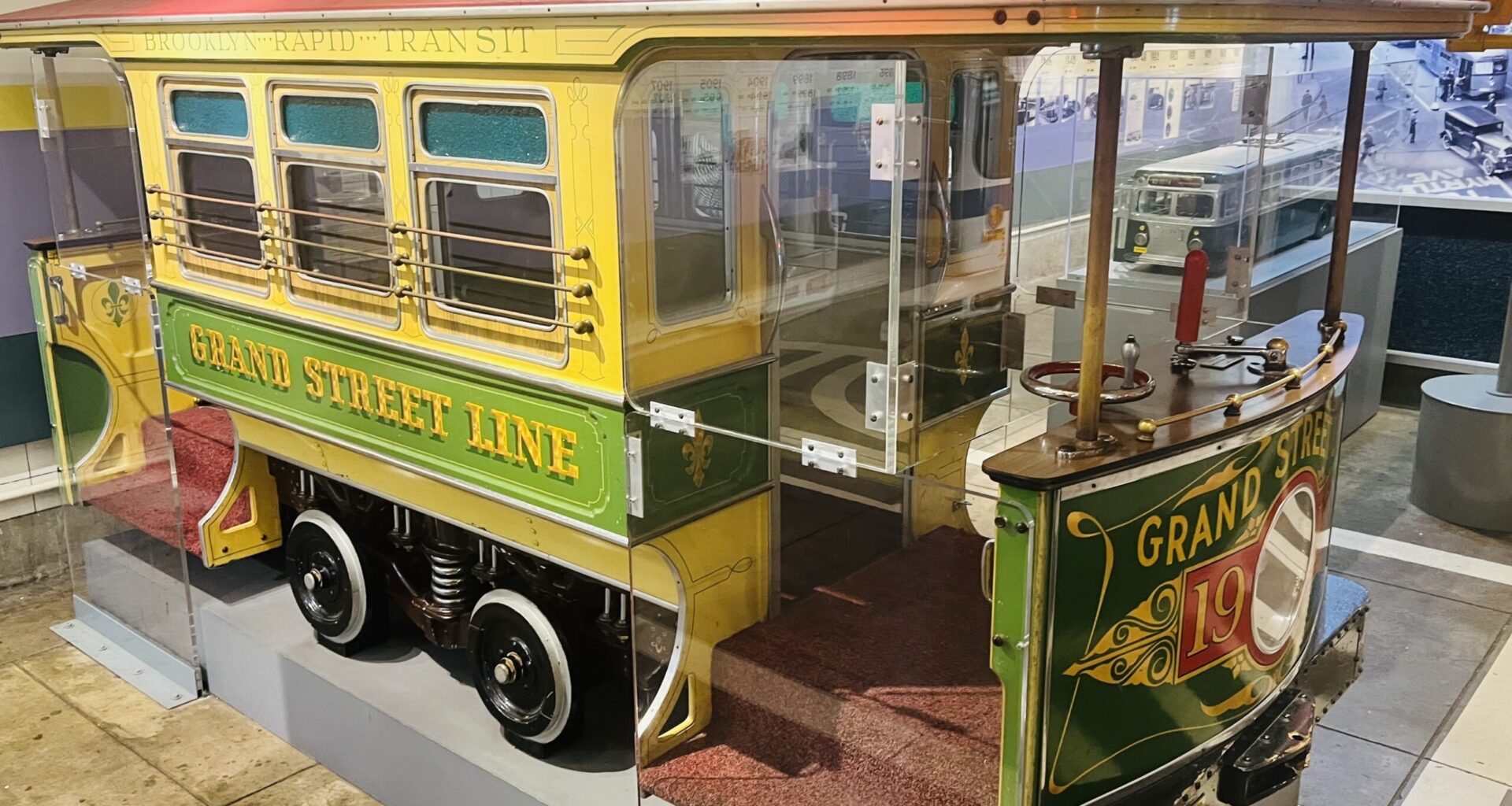
 DOWNTOWN BROOKLYN — Where else but Brooklyn can one walk through the underground of yesteryear?
Located in a decommissioned 1936 subway station at 99 Schermerhorn St., the New York Transit Museum is the largest museum in the U.S. dedicated to urban public transportation. It boasts vintage subway cars one can actually walk through, old turnstiles, exhibits on how New York City’s subway system was built, a full platform level with historic trains dating back to the early 1900s and more.
Jodi Shapiro, curator of the New York Transit Museum, told the Brooklyn Eagle that while many things make the New York Transit Museum unique, the biggest is that parts of their collection are not just on display; they move.
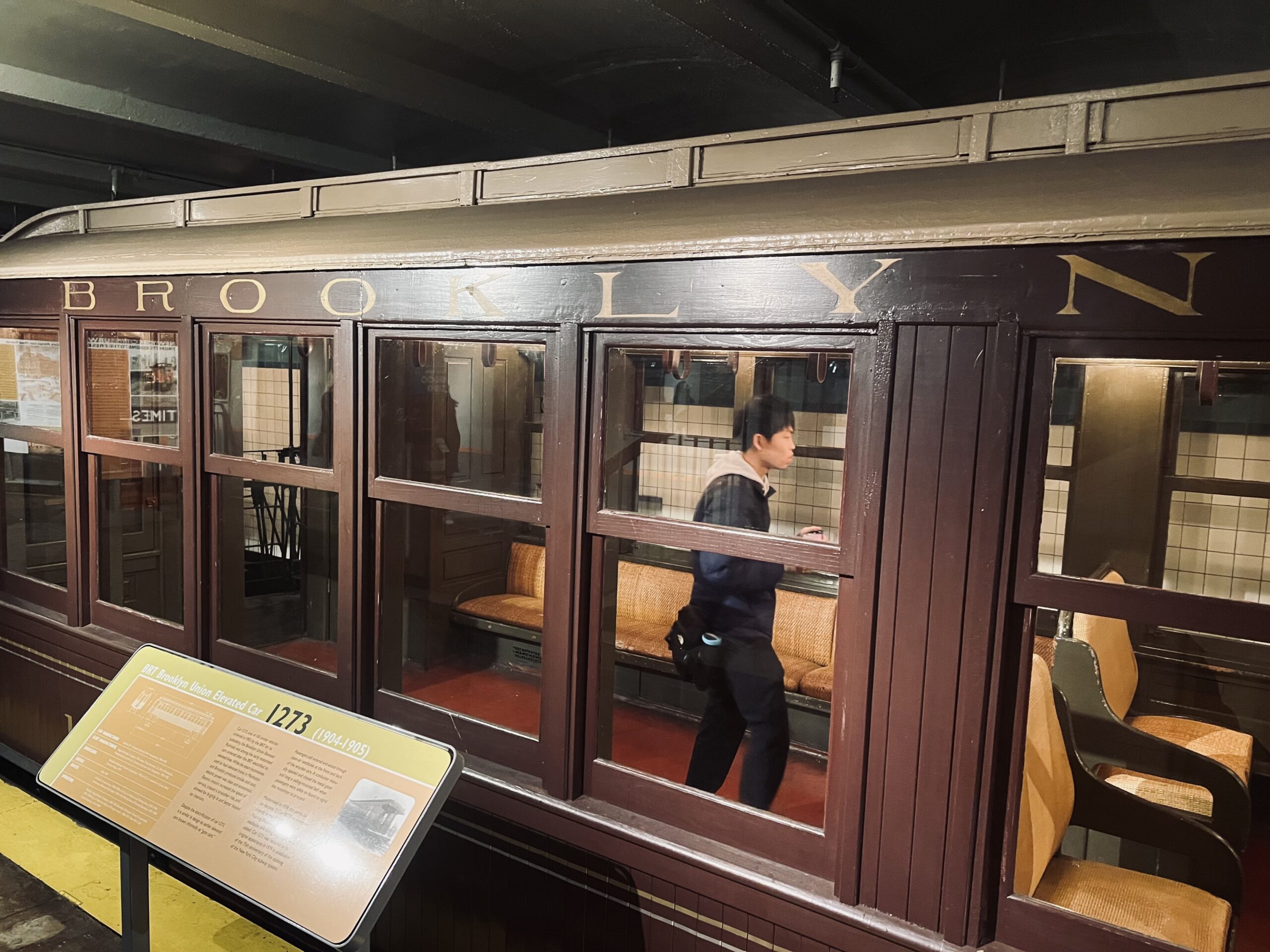 A BRT Brooklyn Union Elevated Railway Car circa 1904-1905. Photo: Wayne Daren Schneiderman/Brooklyn Eagle
“Our fleet of historic subway cars and buses still operates, and visitors can actually ride them beyond the museum walls,” Shapiro said. “Someone can read about what it was like to ride a subway car from the ‘30s or ‘40s, see movies about it and look at archival photographs, but we make it possible to experience it firsthand, creating a connection to history in ways other museums might not be able to.”
The Transit Museum opened on July 4, 1976, as part of the United States’ Bicentennial celebrations. It was originally intended to only be open through that summer. According to Shapiro, it was so popular that it remained open indefinitely, eventually becoming the New York Transit Museum of today.
“Our most popular exhibits are the ones that people can truly experience,” Shapiro said. “The vintage subway cars, Ticket to Ride, which features turnstiles from across generations that visitors can actually walk through.”
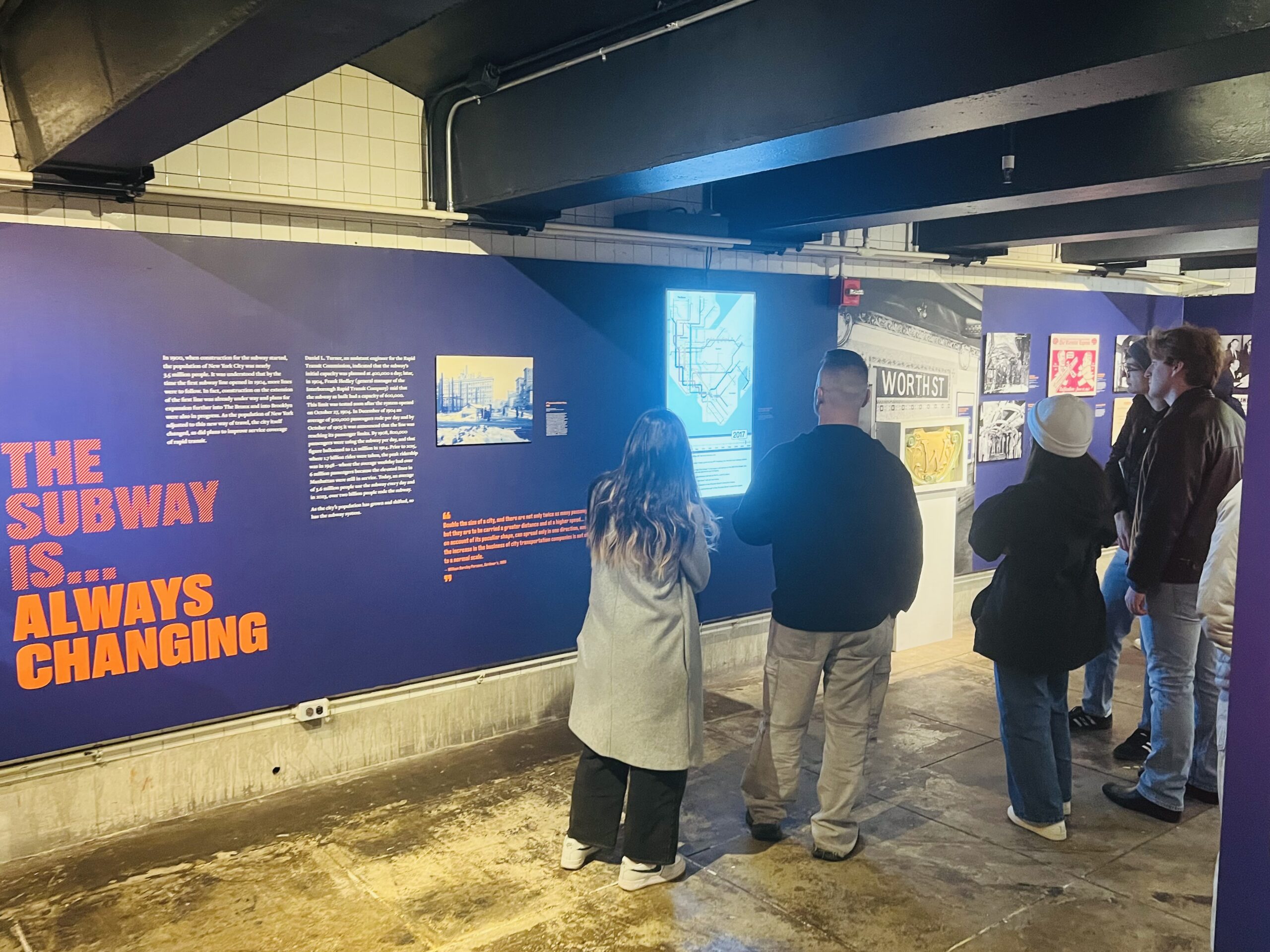 Taking in some transit history. Photo: Wayne Daren Schneiderman/Brooklyn Eagle
“Our fleet of historic subway cars and buses still operates, and visitors can actually ride them beyond the museum walls,” Shapiro said. “Someone can read about what it was like to ride a subway car from the ‘30s or ‘40s, see movies about it and look at archival photographs, but we make it possible to experience it firsthand, creating a connection to history in ways other museums might not be able to.”
The Transit Museum opened on July 4, 1976, as part of the United States’ Bicentennial celebrations. It was originally intended to only be open through that summer. According to Shapiro, it was so popular that it remained open indefinitely, eventually becoming the New York Transit Museum of today.
“Our most popular exhibits are the ones that people can truly experience,” Shapiro said. “The vintage subway cars, Ticket to Ride, which features turnstiles from across generations that visitors can actually walk through.”
The museum’s MetroCard exhibitions are popular right now, Shapiro told the Eagle. “FAREwell, MetroCard” in Brooklyn looks at the card’s history and its transition out of use, and “Inspired by MetroCard,” in the Grand Central gallery highlights how artists have transformed the cards into works of art.
Shapiro aims to keep the transit museum fresh for new and repeat visitors, which she described as “both a challenge and an opportunity,” noting that New York’s public transit history goes back to the 1830s.
In the 1830s, NYC’s first true mass transit system emerged, featuring horse-drawn streetcars that ran on iron rails embedded in city streets. One of the earliest lines began operating in 1832. These streetcars were essentially early buses on tracks, moving more smoothly than horse carriages on cobblestones.
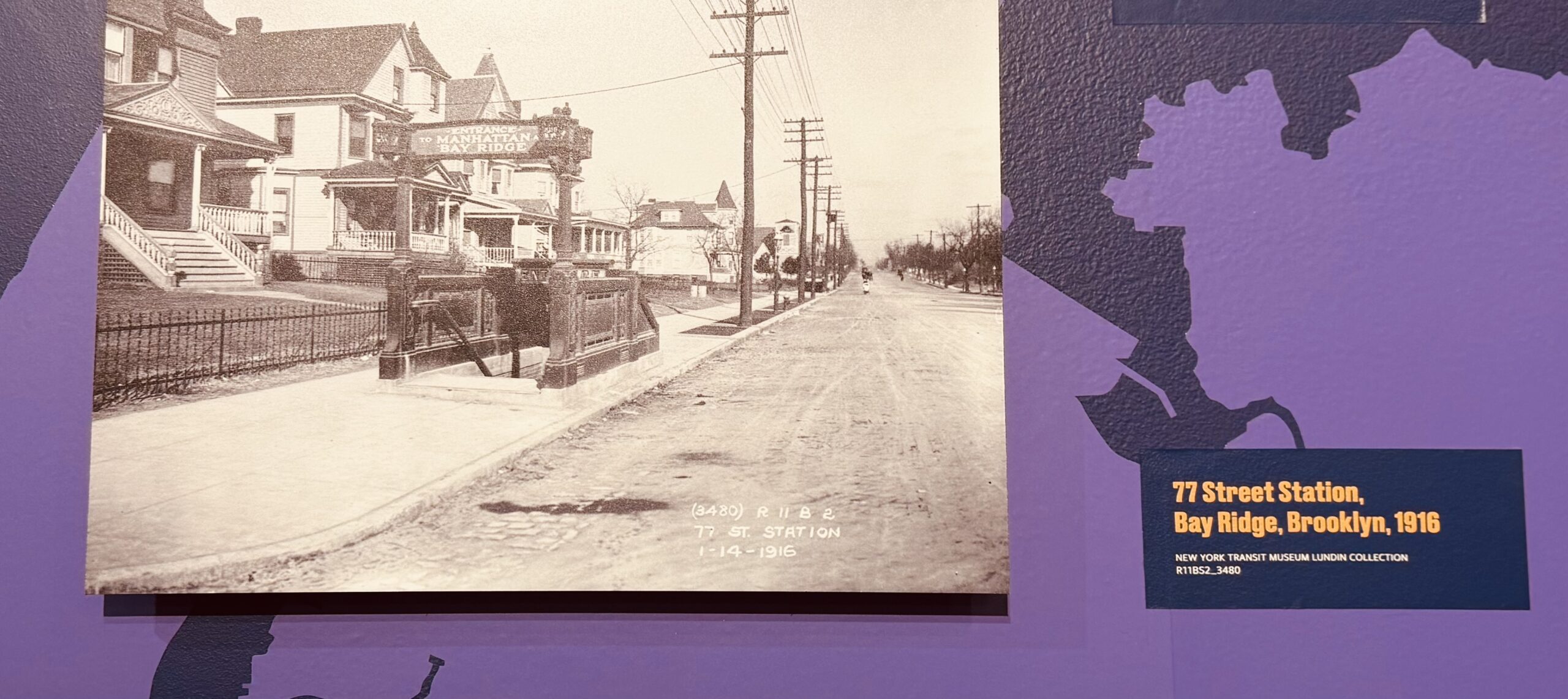 The 77th Street station in Bay Ridge, circa 1916. Photo: Wayne Daren Schneiderman/Brooklyn Eagle
“With so much material to draw from, you can get paralyzed by choice, so you have to focus on one or two aspects or one main story to narrow the focus,” Shapiro explained. “That’s where the fun begins.”
Shapiro said that public transportation is a universal experience that cuts across backgrounds and identities.
“So many people who live in or visit New York City use it at some point,” she said. “It’s for everyone, and our museum follows that idea.”