
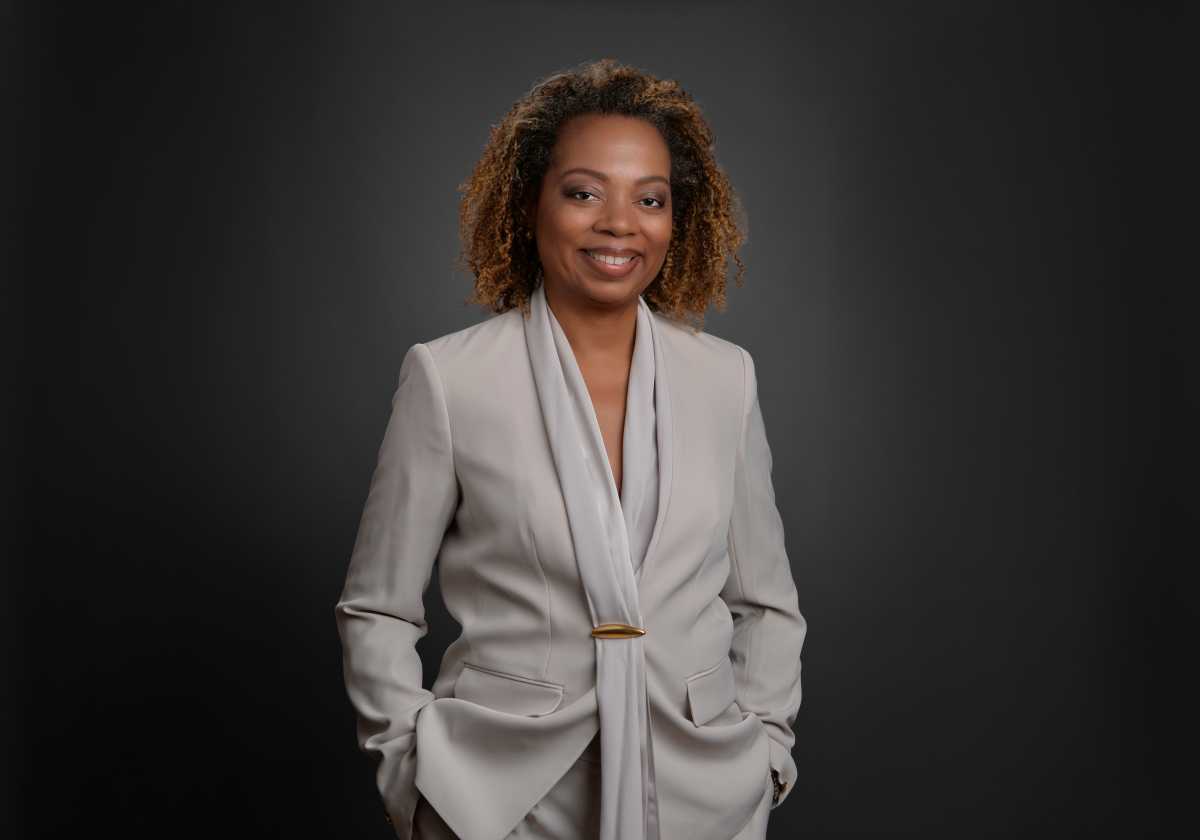
Taa Grays is taking over as the New York State Bar Association’s president at a moment of uncertainty and opportunity.
The younger generation’s interest in the legal profession is surging, while AI is changing the legal landscape. Faced with changing tides, Grays, former counsel to MetLife and a Bronx County prosecutor, said she’s relying on her 20 years of NYSBA’s core values to shepherd it through the next year.
Grays laid out a broad agenda in conversation with amNY Law centered on member retention and access to justice, while spotlighting AI guidance, family court reform and efforts to engage younger lawyers as personal projects for her tenure.
Her ascension marks the first time that a Black female president has taken the reins of the organization. But in taking the year-long post, she framed her goals largely in line with the bar’s long-term mission as both a professional network and a public-interest institution.
“The mission is the North Star for the organization, and that’s what all of our activities are focused on,” Grays said.
But within the greater strategic plan for the bar association, Grays detailed four issues that she plans to tackle during her presidency: consumer protection programming, family court reforms, renewable energy and AI.
New York State Bar Association president puts focus on AI impacts
The rise of AI is an unavoidable topic for bar associations across the country — one with promise and pitfalls. Ultimately, Gray sees AI as a tool that can improve efficiency and access to justice, but only if lawyers understand its limits and supervise its use.
NYSBA’s two committees that deal with AI encapsulate their multifaceted approach to the issue. One committee, focused on AI, examines the ethical questions of the new technology. Another teaches lawyers how to incorporate it in their practice.
“The bottom line is lawyers shouldn’t be afraid of AI,” Grays said, emphasizing that she rejected the notion of AI as something that could replace lawyers.
Hallucinations or poor prompts mean this new tool needs oversight, just as a lawyer would supervise their paralegals, she said.
Government regulation over AI can get complicated. Grays said she sees the bar association helping lawyers parse through tension in the approach between the direction of the federal government and the direction of the states. New York City and state have taken a more cautious approach than the federal government toward the technology, implementing regulations around automated hiring practices and financial reporting.
In January, the bar association is also hosting Techforward NYC, a legal technology to showcase “cutting edge” legal approaches.
As a former public servant and member of several social justice committees, Grays said that access to justice is another important topic. On this front, she will be prioritizing reforms in the state family court, but refrained from giving specific positions on budget tweaks or policy positions on the issue. Grays said that she would be relying on the guidance of a newly created task force for next steps.
“It’s a very emotionally fraught experience,” Grays said. “Family courts are not the most user-friendly places, particularly because a lot of the litigants are pro se.”
One issue is that many families fall into a no-man’s land where they don’t have reserves for legal expenses, but make too much money to be eligible for indigent services, so they end up representing themselves. The bar association would be looking into ways to both expand representation and provide more resources for pro se litigants in this group, she said.
In a broader sense, Grays said she is dedicated to the fundamentals of running the bar association: membership and financial sustainability.
In an era where bar association membership has been gradually declining for decades, the state Bar is no exception. But there are bright signs on the horizon: the number of U.S. law school applicants for the 2026 cycle is up around 17% from last year.
While Grays said the value proposition of the state bar association as a 60,000-member legal network has not changed for younger lawyers, she will focus on leaning on law schools and younger members to make the case to the new generation of lawyers.
“At bottom, it’s really about relationships,” Grays said.
One thing she said the organization does well is identifying young leaders who may not have been tapped before.
“I’m the next kind of culmination in that,” Grays said. “It shows the efforts of our prior leaders in making sure that the organization feels accessible.”