
A constitutional amendment poised for first passage in the New York state Legislature this week could help Democrats gain up to four congressional seats in 2028 if ultimately approved by voters, experts say.
Nearly a year after New York Democrats promised to wade into a national battle prompted by President Donald Trump’s request that Republican-led legislatures engage in mid-decade redistricting ahead of the 2026 midterms, state lawmakers are gearing up to ask voters to approve an amendment that would erase constitutional language prohibiting gerrymandering based on political party and incumbency while allowing New York to participate in mid-decade redistricting ahead of the 2028 election. It would also give the state Legislature more control over the process in cases where the Independent Redistricting Commission cannot come up with a map or court challenges arise.
Capital Tonight broke down how it could impact that race and what key players are saying on Tuesday’s show. The amendment would have to pass once again in 2027 before being posed to voters next fall eliminating any impact on the 2026 midterms.
Jeff Wice, a professor and redistricting expert at New York Law School, said while the effort may not net as many seats as some Democrats may hope for, in a tit-for-tat battle with other states, every seat counts.
“Democrats would be looking at a pickup on Long Island, a district there where there are two Republicans, a district in New York City, another highly contested race in the lower Hudson Valley,” said Wice.
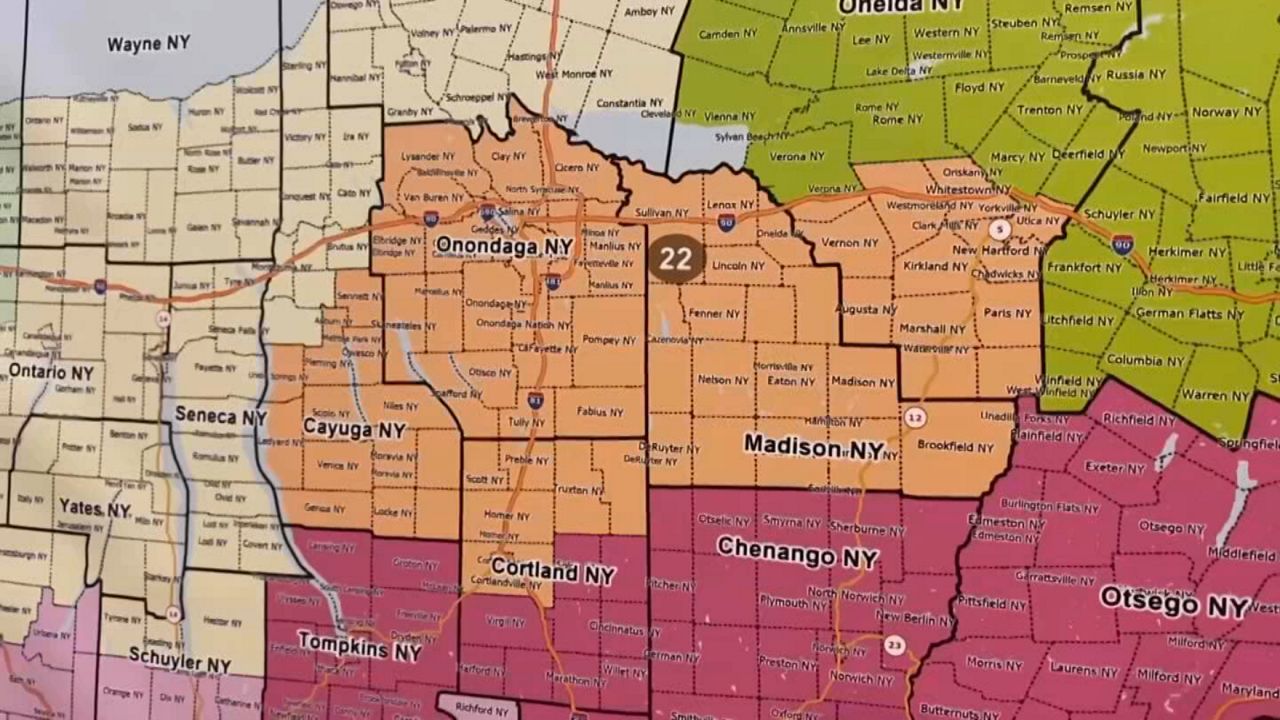
Grant Reeher, a professor of political science at Syracuse University, agreed that three to four seats are likely, but added that a pickup further upstate is also possible because there are opportunities to adjust Republican-held seats.
“It depends on what is the political life of the country, where elections are going in the next few cycles,” he said. “If November 2026 is a good year for Democrats and they put up a good presidential candidate in 2028, that will make a big difference.”
Assembly Speaker Carl Heastie defended the amendment, arguing New York should not unilaterally limit itself while other states pursue aggressive redistricting strategies, despite a 2014 constitutional amendment approved by voters establishing an Independent Redistricting Commission.
“I’m going to play fair based on how other people play,” Heastie said.
Heastie said the amendment is a response both to Republican-led redistricting efforts around the country and a recent Supreme Court decision weakening portions of the Voting Rights Act, which he argued has altered the legal landscape and reduced barriers to more aggressive redistricting efforts.
“Asking New York to play fair while everybody else is playing ruthless, I think it’s not fair to do,” he said.
Heastie insisted that the Supreme Court decision, on top of the existing redistricting wars, has changed the playing field since 2022 and specifically led to the deletion of anti-gerrymandering language.
“It made redistricting more of a wide-open process, so for us here in New York, we want to have as much flexibility in drawing districts as other states will,” he said.
The amendment would also address one of the key issues that led to New York’s contentious legal drama around redistricting between 2022 and 2024. Under the proposal, lawmakers could step in and draw maps themselves if the Independent Redistricting Commission is unable to reach consensus.
A state court threw out congressional maps drawn by Democratic lawmakers in 2022 after ruling the Legislature had not properly allowed the independent commission process to play out before attempting its own redraw, and that has allowed Republicans, including Assembly Minority Leader Ed Ra, to insist that New York Democrats are simply revisiting prior efforts to be heavy-handed in the drawing of lines.
“That’s wrong for New Yorkers and it should be rejected by New Yorkers, and we’re going to be calling that out until next year when we’re going to defeat it at the ballot box,” Ra said.
Wice said a key aspect of this effort is eliminating any chance of that scenario recurring by putting the decision squarely in the hands of the legislative majority.
“The Assembly and Senate stepped in and drew maps on their own, but the court invalidated the maps because the commission didn’t do its job submitting a second set of maps,” he said. “The new amendment takes that out of the equation. The commission gets to draw one set of maps and then hand the process over, and gives the Legislature the ability to draw maps if the court rules a map should be redrawn. It does not go to a special master, it does not go to the commission, unless the Legislature itself fails to draw a new map.”
Reeher said Republicans and Democrats pointing fingers at each other suggests the U.S. lacks an “adult in the room,” with neither party stepping up to shut down the effort.
“We’ve had a number of not good days for democracy when it comes to redistricting and this is another one,” Reeher said.
Reeher said New York Democrats deserve criticism for their own redistricting moves earlier in the decade, but argued that blame for the current push for mid-decade redistricting is a separate conversation.
“Yes, what the Democrats did early on in this decade was not a positive development for this. However, if we’re looking at the most recent history, I think the first shot across the bow on this was in Texas and it was taken by Donald Trump,” he said.