
ALBANY, New York — New York Democrats gave preliminary approval Wednesday to a constitutional amendment allowing them to redraw the state’s congressional lines in advance of the 2028 elections.
The state Legislature’s vote formally kicks off what’s likely to be several years of bitter partisan feuds over whether blue New York should join the national redistricting wars.
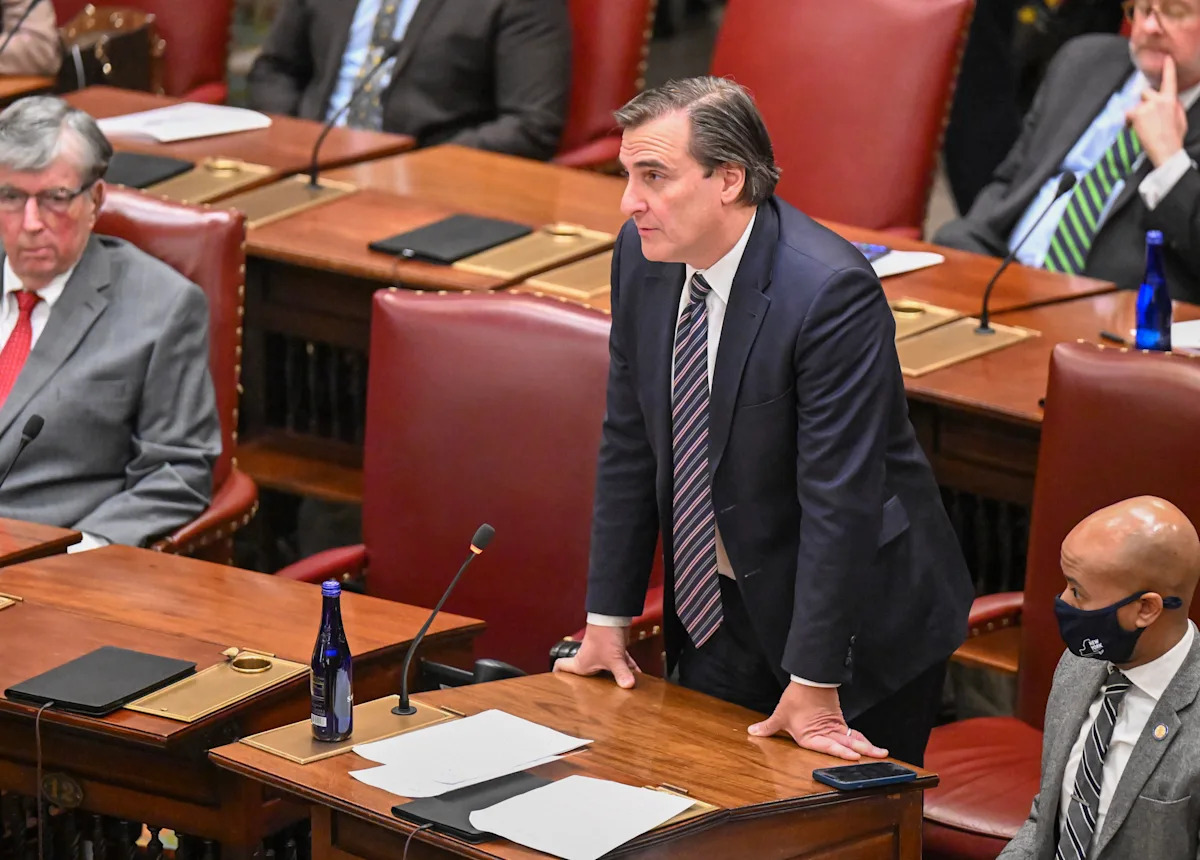
“You have Black members of Congress being specifically targeted,” Senate Deputy Leader Mike Gianaris said during the floor debate, referring to new maps that have been drawn in Republican-dominated states. “Of course Republican members of this body will say, ‘No, don’t fight fire with fire, don’t respond.’”
The amendment to allow mid-decade changes to the maps can’t be finalized unless the Legislature approves it again next year and voters pass it as a referendum in November 2027.
Republicans and Democrats are expected to pour tens of millions of dollars, if not more, into that vote that could move up to four GOP seats to the Democratic column. And Democrats are doing everything they can to ensure that goes as smoothly as possible — they’re poised to approve a separate bill on Thursday that would give them the power to determine the wording of the referendum.
“There is going to be a rigging of the system,” Republican Sen. George Borrello said. “We’re going to say the words just right, pour a ton of money into the propaganda, and try to convince people this is in their best interest.”
Democrats decided to take an aggressive approach with the amendment after months of debating how far they should go. Not only would it allow for new lines before the next Census, but it’d permanently remove the state’s restrictions on maps drawn to benefit parties or incumbents.
Wednesday’s state Senate debate was largely an argument over history. Republicans repeatedly dusted off quotes from Gianaris and Senate Majority Leader Andrea Stewart-Cousins from when they worked with former New York City Mayor Ed Koch 15 years ago to call for more independent redistricting. Lines like “voters choose their elected officials rather than elected officials choose their voters” repeatedly resurfaced.
But, Democrats said, times have changed.
“We are playing a game that we’re not playing alone,” Gianaris said. “So if the other participants in this process are playing by a different set of rules, to not be able to respond in kind would be irresponsible.”
The debate in the Assembly was more measured, in large part because members were barred from discussing what’s happened in other states. Democratic Assemblymember Chuck Lavine, the bill manager in that chamber, repeatedly said the amendment was simply “to give the state the flexibility and nimbleness it needs as laws are changing at the federal level.”
Both houses passed the bill on partisan lines: 38-22 in the Senate, and the Assembly 91-47.
Notably, several Democratic candidates for Congress — the members most likely to be impacted by the amendment — were absent from the debate a few weeks before New York’s primary election. Assemblymembers Alex Bores and Claire Valdez — both running for House seats — were absent. As was Assemblymember Micah Lasher, another congressional candidate, who helped start talks on the amendment last summer.
The history lessons also included voters’ approval of a 2014 amendment on redistricting that’s currently binding legislators’ hands, as well as their rejection of a proposed 2021 amendment that would have given Democrats a bit more power over the process.
“In 2014 the voters themselves, the taxpayers, the residents of this state, our bosses so to speak, approved the Independent Redistricting Commission,” Republican Assemblymember Michael Tannousis said. “This is nothing more than an attempted power grab.”
But, Democrats argued, votes in the past don’t mean voters shouldn’t have a chance to weigh in on a different question in 2027.
“Don’t be afraid of this,” Gianaris said. “Put it on the ballot. Let the people decide. What are you afraid of?”