
In 1990, I had the opportunity to work on a book project with Miles Davis. During the weeks leading up to my first interview with him, I gave myself the exhilarating task of immersing myself in his music. I figured I’d start with the early recordings and work my way forward, but I never made it out of the 1950s. Those ten years of his musical development are so unfathomably rich—he recorded close to thirty albums during that period, many incomparable—that a listener could cycle through the decade seemingly forever and keep finding new angles, colors, and avenues for exploration.
Miles was a phenomenon right from the time of his arrival in New York. In 1944, he left East St. Louis to attend Juilliard and pursue Charlie Parker, before abandoning school to perform on 52nd Street and in Harlem. He was still a teenager when he began playing with Parker, Coleman Hawkins, Thelonious Monk, and other giants. Miles joined Billy Eckstine’s big band in 1946 and Dizzy Gillespie’s in 1947, then turned down the opportunity to join Duke Ellington’s orchestra, probably the most prestigious in jazz, the following year. He had already linked up with arranger Gil Evans and was working on the ideas that would lead to the Birth of the Cool recordings, their unusual voicings, focus on counterpoint, and subdued style a major shift from the bebop that had first drawn him in. He was quickly emerging as a major force in the development of American music.
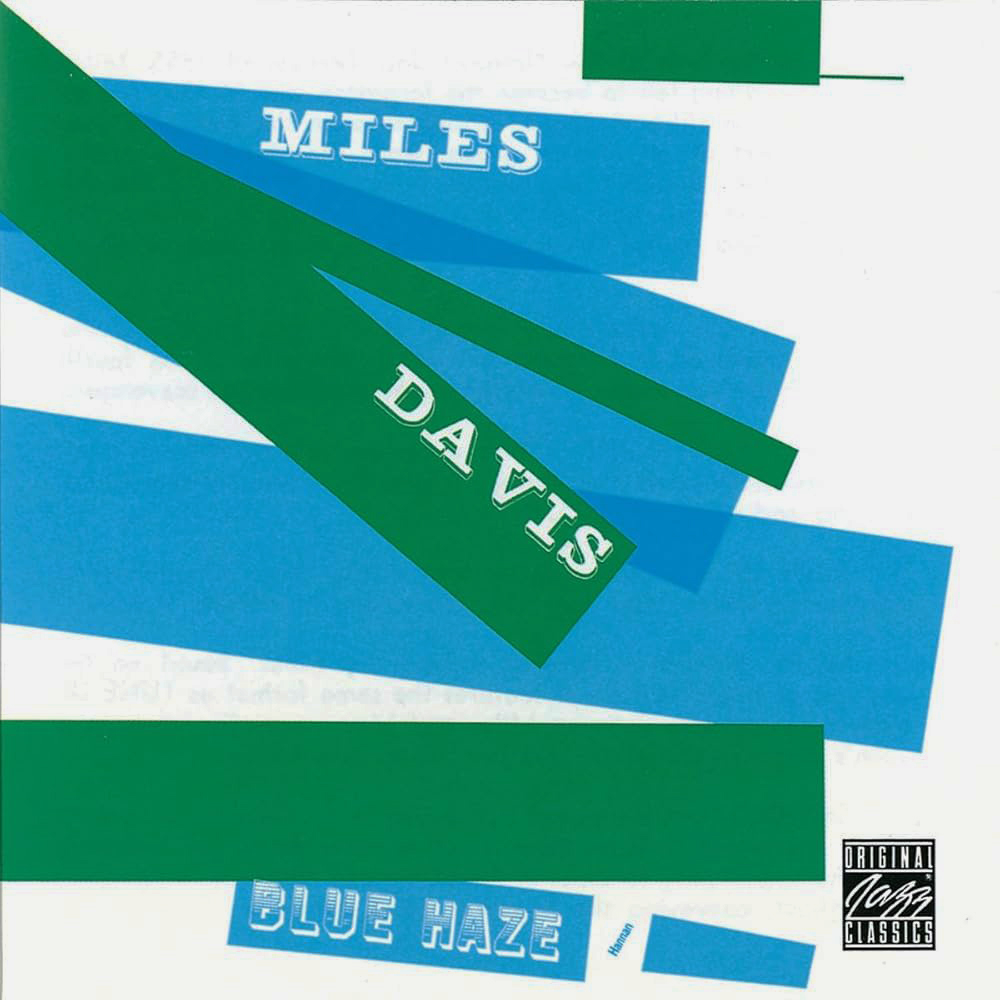
Yet at the dawn of the 1950s, Miles was also in a very dangerous state. The addiction issues that had afflicted Parker were now plaguing him. He was twenty-three years old, with a young daughter and son, when he was arrested for heroin possession. He drifted for a few years, living in Detroit and playing selected studio dates, but not keeping a band together. Yet he still managed to make brilliant recordings during this time. One of my favorites is Blue Haze on Prestige, a compendium of sessions from 1953 and 1954 with several fantastic side players, with Horace Silver and Art Blakey featuring on some tracks, John Lewis and Max Roach on others. This is where the master melodist begins to emerge, with his take on standards like “When Lights Are Low” attaining a newfound gravity.
It wasn’t until the mid-fifties, after managing to quit his habit, that Miles fully returned to the scene. To regain a sense of discipline, he took up boxing, emulating Sugar Ray Robinson. When he played a stellar set at the Newport Jazz Festival in 1955, word got out that Miles was back. He returned with a newfound sense of power and control, and proceeded to reclaim and expand his influence on the music of his time.
Several important developments had occurred in the interim. The standard album format moved from a 10-inch to 12-inch record, allowing for lengthier solos and greater displays of individual and group artistry. Miles also worked on his signature sound, using a Harmon mute to give his playing a thin, reedy, faraway quality. He had always played without vibrato, and when he combined that stripped-down timbre with this new, slightly inward-facing tone, Miles fully established his voice.
He used that voice to shape space in a new way. Miles had learned from predecessors like Louis Armstrong and contemporaries like Fats Navarro how to carve up time in different ways—dragging the beat, floating across bars, bringing unexpected intervals and chromatic shifts into his solos. But Miles took it further by exploring the entirety of the musical space the band was creating. Like a great visual artist, he was as attuned to the negative space around his lead line as to the line itself.