
Sacred institutions matter most when they refuse to harden into monuments to themselves. They matter when beauty is not locked behind velvet rope or treated as the private inheritance of the already initiated. They matter when music moves through marble, when song softens a room, and when grandeur becomes a public offering rather than a closed circuit of privilege.
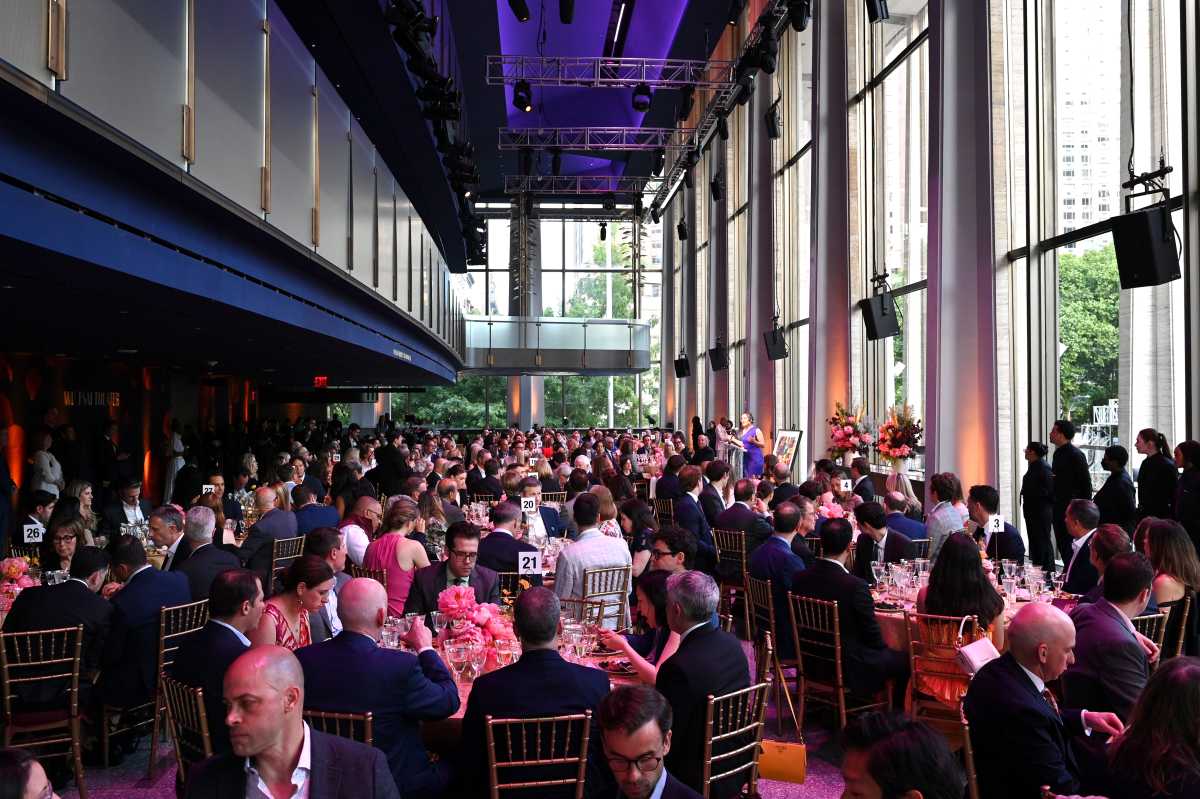
That was the deeper charge inside David Geffen Hall this week, when Lincoln Center for the Performing Arts hosted its 2026 Summer Gala honoring Andreas C. Dracopoulos, Co-President of the Stavros Niarchos Foundation, and Misty Copeland, the dancer, author, advocate, and cultural force whose career has long exceeded the boundaries of ballet. The evening had all the necessary pleasures of a proper New York gala: gowns, flashbulbs, champagne, the theater of arrival, and that delicious hush that comes when powerful people gather beneath a serious ceiling. Yet, unsurprisingly, the night’s truest beauty lived in something warmer. It lived in the possibility that culture, at its best, can still reach across difference and make a city feel briefly less fractured.
John Legend gave the evening its emotional center of gravity. His voice has always carried polish and ache in equal measure, the kind of smoothness that can feel almost dangerous when a room is already softened by admiration, generosity, and the shared vulnerability of live performance. He sang, and suddenly the gala became less about being seen and more about feeling something. Music, when delivered with conviction, still has that rare power. It disarms the spiritually exhausted, seduces the culturally overfed, and makes even the most romantically weathered among us briefly willing to believe in tenderness again.
 NEW YORK, NEW YORK – JUNE 01: John Legend performs onstage during the 2026 Lincoln Center for the Performing Arts Summer Gala at David Geffen Hall on June 01, 2026 in New York City.Photo by Michael Loccisano/Getty Images for Lincoln Center for the Performing Arts
With this in mind, Copeland’s recognition felt especially moving. She received the inaugural Lincoln Center Luminary Award, created to honor leading artists who have demonstrated both extraordinary talent on stage and civic vision beyond it. Copeland is precisely that kind of figure. Her career has never been contained by the proscenium. She has become a symbol of discipline, defiance, visibility, and almost supernatural grace under pressure, carrying ballet’s impossible beauty into a larger conversation about race, access, womanhood, and the right to enter rooms never designed with you in mind.
The award was presented with remarks by Thelma Golden, Director and Chief Curator of The Studio Museum in Harlem, whose presence added intellectual gravity and historical force. A surprise performance by Alice Smith deepened the atmosphere, while a video tribute with contributions from Alicia Keys, Debbie Allen, Steven R. Swartz, Susan Fales-Hill, Katherine Farley, Jody Gottfried Arnhold, and Darren Walker turned the moment into something closer to collective witness. Arguably, Copeland’s legacy belongs not only to dance history, but to the wider architecture of American possibility.
Dracopoulos, conversely, represented cultural infrastructure at its most consequential. Through the Stavros Niarchos Foundation, his work reflects the kind of philanthropy that does not merely adorn institutions, but helps reshape how they function, welcome, and endure. Honoring him felt especially resonant as Lincoln Center continues to expand what a performing arts campus can become when access, openness, and civic imagination are placed at the center of its future.
 NEW YORK, NEW YORK – JUNE 01: (L-R) Misty Copeland accepts the Luminary Award from Thelma Golden onstage during the 2026 Lincoln Center for the Performing Arts Summer Gala at David Geffen Hall on June 01, 2026 in New York City.Photo by Michael Loccisano/Getty Images for Lincoln Center for the Performing Arts
That future was the evening’s true thesis. The gala provided critical support for Summer for the City, Lincoln Center’s premier free arts festival, which has welcomed more than 1.6 million visitors since its launch in 2022. In an era when access to beauty often feels increasingly stratified, the festival functions as a necessary act of cultural democracy. It argues that performance is not a luxury product for the already fluent. It is a living civic resource, capable of cooling the city, opening the imagination, and reminding New Yorkers that wonder is not frivolous. It is fuel.
The guest list reflected that same breadth of cultural force. Lincoln Center leadership, including Dr. Mariko Silver, Shanta Thake, Steven R. Swartz, and Katherine Farley, joined figures such as Mahogany L. Brown, Clint Ramos, Jody Arnhold, Susan Fales-Hill, Jelani Cobb, Tony Marx, Abby Phillip, Nikole Hannah-Jones, Nona Hendryx, and others. The room felt layered, intelligent, powerful, and alive with the tension between legacy and renewal.
The gala also highlighted the Stavros Niarchos Foundation Lincoln Center West Initiative, launched in 2023 to reimagine the Amsterdam Avenue side of the campus with welcoming entrances, public gardens, and a world-class amphitheater. Perhaps more provocatively, the project suggests that great institutions must no longer simply rise above the city. They must face it, open to it, and allow themselves to be changed by it.
Lincoln Center’s 2026 Summer Gala succeeded because it understood that grandeur and generosity are not opposing forces. At its best, the evening felt like a love letter to creative life and a challenge to protect it with more imagination, more urgency, and more open doors. Summer arrived not as escape, but as summons: to gather, to listen, to witness, to give, and to believe once again that art can remake the atmosphere of a city.