
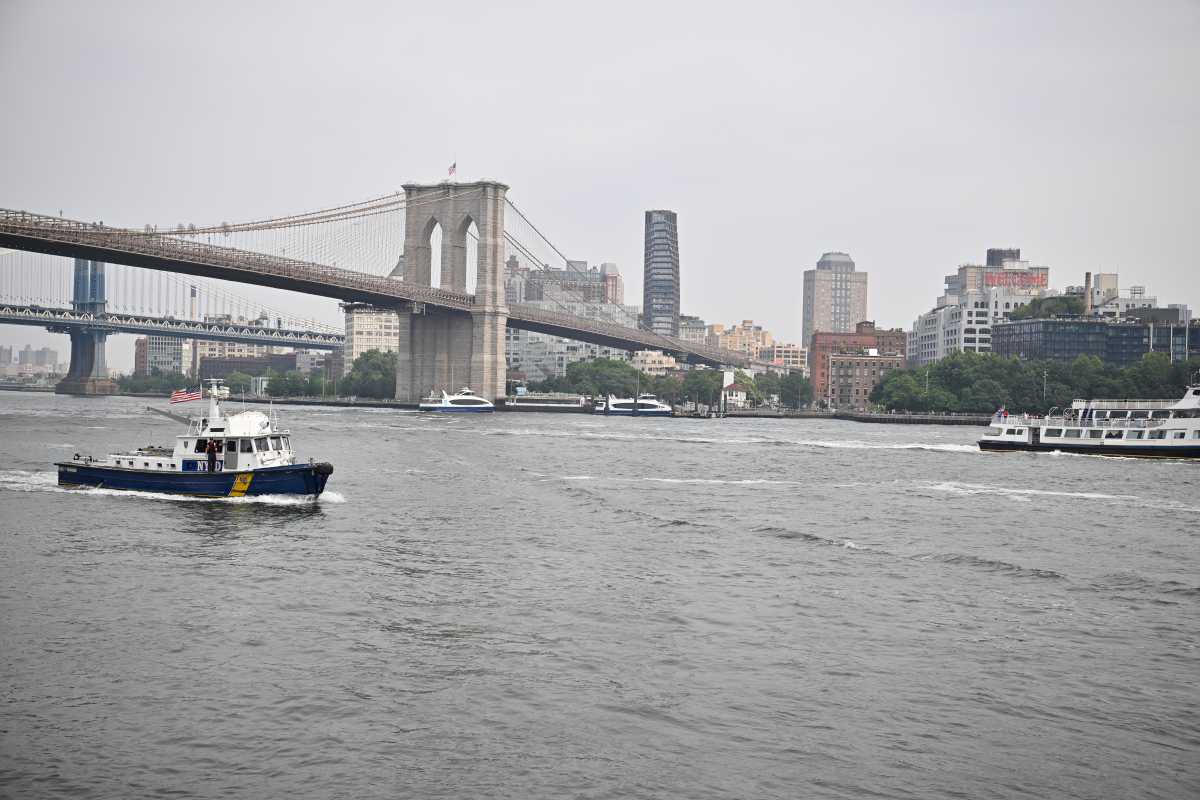
The decision affirms a lower court and stems from a 2019 suit brought by environmental advocacy organization Riverkeeper, which argued the city was violating local law by not immediately notifying residents every time its sewage system overflows into its rivers.
“This is a victory for the health of all New Yorkers and for transparency surrounding environmental health,” said Mike Dulong, Riverkeeper’s legal program director. “It’s especially impactful for water users: the fishing, boating, and yes, even the swimming communities in New York that are affected by this.”
When it rains heavily, the city’s sewage system overflows into the East and Hudson Rivers at about 450 Combined Sewage Overflow (CSO) sites, resulting in raw sewage being discharged into water people touch, fish, boat, swim, and walk near, in, and on. Exposure to raw sewage can cause gastroenteritis, skin rashes, ear, nose, and throat problems, pinkeye, respiratory infections, meningitis, and hepatitis.
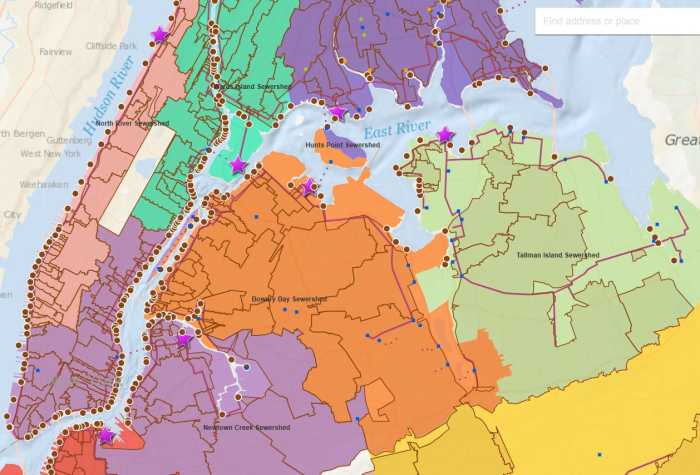 A map of all the sewage overflow sites in the city.
Previously, the city would only notify people when so much sewage was discharged into its waters it violated water quality standards. Now, whenever sewage is discharged into any water surrounding the city, officials will have 4 hours to notify the public via an electronic notification system.
“On one out of every three days, one of these CSOs discharges into the water,” Dulong said. “Previously, New York City only notified the public about a fraction of those discharges. Now they’ll have to notify the public of every single one.”
When asked for comment, a spokesperson from the city’s Law Department said it was reviewing the court’s decision. The Department of Environmental Protection could appeal it to the state’s highest court, the Court of Appeals.
The city had argued that, because it kept a running list on its website of all the places sewage was overflowing into the water, it was complying with the law, known as the Sewage Pollution Right to Know Act.
Riverkeeper, however, which pushed for the law’s passage, emphasized that the law required notifications when any discharge starts, which the Appellate Division, Second Department, agreed with.
Notification of any and all sewage discharge is important, the advocacy group said, because parts of the East and Hudson Rivers, where people kayak and walk their pets near, are so deep and wide that sewage being discharged into them would “hardly ever” result in a water quality standard violation that would trigger a notification.
“You could have sewage discharging in tune of millions of gallons, but there would be no notification to the public, who are kayaking and boating, and literally swimming in these waters,” Dulong said. “We’re just trying to make sure that everybody knows when there’s discharge.”