
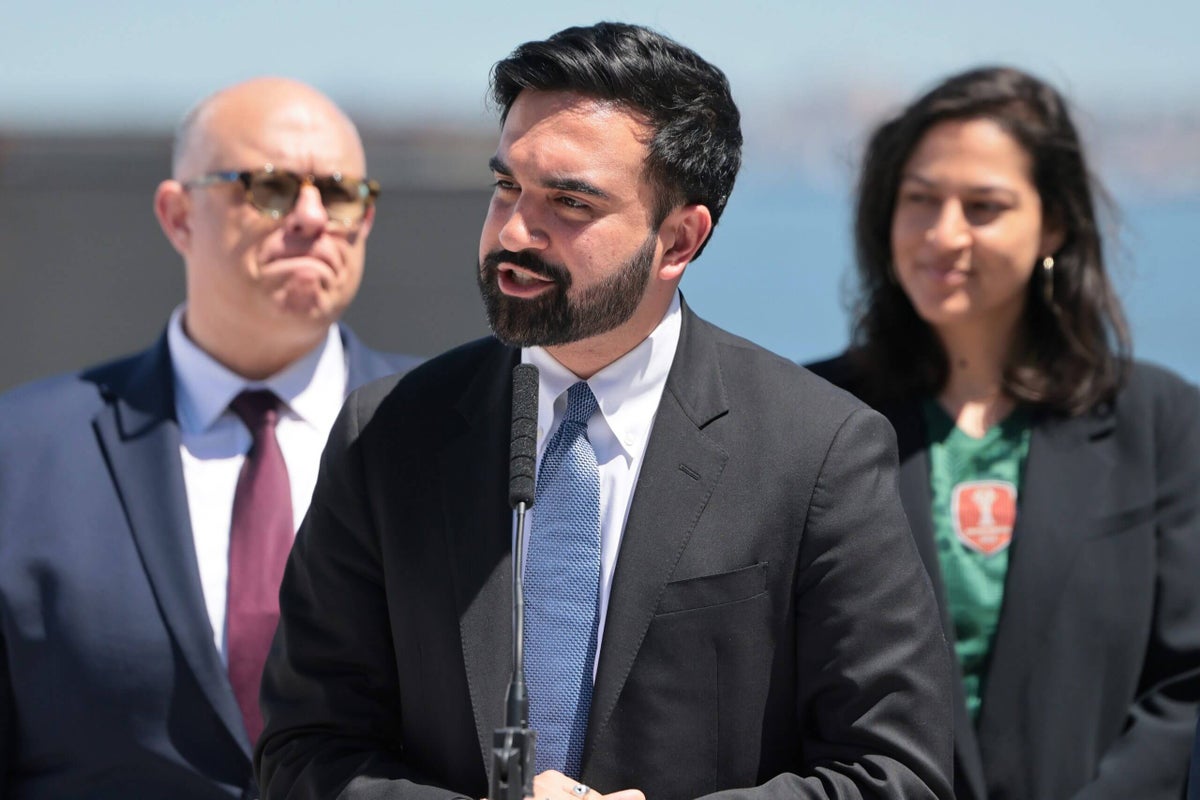
New York City mayor Zohran Mamdani wants answers from FIFA after the World Cup organizer reversed a policy at the last minute, meaning fans are no longer permitted to bring plastic water bottles into venues this summer.
During an interview with The Athletic at City Hall on Thursday afternoon, the Mayor said he intended to “follow up” with FIFA on the matter, saying he had been “concerned” after The Athletic revealed FIFA had altered its policy just one week before the start of the World Cup.
According to emails seen by The Athletic, FIFA have informed World Cup ticket holders that they have updated their code of conduct, telling fans that “reusable water bottles are no longer permitted at the FIFA World Cup 2026™ stadiums”.
This is in stark contrast to the policy in their code of conduct around three weeks ago, which then said: “For the avoidance of doubt, empty, transparent, reusable plastic bottles, up to (1 liter in) capacity, may be brought into the stadium.” This would have allowed fans to refill bottles at water fountains to keep hydrated. It also meant they would not be required to buy bottles of water inside venues. Coca-Cola is one of FIFA’s largest sponsors of the World Cup and its soft drinks will be on sale, including its water product Dasani.
In response to FIFA’s new policy, Mamdani told The Athletic: “I was just alerted to that (Thursday) morning and it is concerning because the heat that we are talking about is not just the heat that the players are in, it is also the heat that spectators are going to be subjected to for arguably a longer period of time, as they will be there before the game starts and after the game finishes.
“That is something that we are going to follow up (with FIFA) on to better understand the rationale. We don’t (want) anyone skimping on water because of the cost of water at the stadium, if they would otherwise be drinking. You (should) want to make it easier.”
In a 52-page report published in May, World Weather Attribution’s scientists claimed that approximately 26 of the 104 World Cup games are likely to be played when the host city’s Wet Bulb Global Temperature (WBGT) exceeds 26 degrees Celsius (78.8°F), with five games at the six-week tournament likely to be played in conditions with a WBGT that exceeds 28°C (82.4°F).
WBGT combines temperature, humidity, wind, and sunlight to provide a measure of heat stress, and it is used by the military, sports scientists, and safety experts to prevent heat-related illnesses.
Mamdani is not the only mayor to express concerns. Toronto mayor Olivia Chow told CTV News: “It is a pure money grab. Why do you need to buy a water bottle when you can just carry your water in? It is cheaper that way, and it is good for the environment.
“It is outrageous. They are just trying to make more money. They are already making billions of dollars. Stop it.”
Toronto’s mayor said the city was limited in its powers to fix the issue as FIFA operates the stadium sites under the terms of its host agreements. She said FIFA ought to make good to people after this faux pas by providing free water bottles for fans inside the venue.
“That would be good,” she said. “That is a good gesture and further they could make special FIFA water bottles with free Toronto water,” Chow said.
FIFA has claimed the decision has been made to protect fans and participants from the risk of injury, and also claimed the policy would bring FIFA’s approach into line with the venue’s usual regulations.
However, at the Club World Cup last summer, FIFA used five of the same stadiums as this summer’s World Cup and it implemented a policy that allowed fans to bring their own plastic bottles into venues to reduce the costs of staying hydrated. This underlines FIFA are not bound by any usual venue regulations, and it is therefore a choice rather than an obligation on FIFA’s part.
On Thursday night, The Athletic also revealed that members of FIFA’s security and safety teams expressed concerns during internal debates over the organization’s decision to ban fans from bringing water bottles into stadiums during the World Cup.
According to sources with knowledge of the situation, who remain anonymous as the discussions are confidential, there has been tension for months over the policy inside FIFA, explaining why the decision has evolved multiple times.
The original policy allowing fans to bring a bottle appeared to give greater priority to the health and safety of fans, which was deemed especially important after heat concerns in the United States became one of the dominant themes during last summer’s Club World Cup.
FIFA’s agreement with host cities means it is FIFA and its affiliates, rather than U.S. host cities or venues, who take home the bulk of revenue from concession sales at the World Cup.
The Athletic has also been told by a source within FIFA with knowledge of the planning that they believe the decision was highly influenced by commercial considerations.
Sources close to Coca-Cola insisted to The Athletic on Thursday that it did not have a role in the decision. The source added that the policy was set by FIFA based on safety and security considerations. FIFA did not directly respond to suggestions that it may have been influenced by commercial priorities, or those of Coca-Cola.
“FIFA is committed to protecting the health and safety of all players, referees, fans, volunteers, and staff,” began a FIFA statement on Thursday night.
“The decision to prohibit capped water bottles is based on a number of factors related to safety and security, including mitigating risks to players and spectators, ensuring a safe and efficient ingress experience for all attendees, and the presence of additional heat mitigation and alternative hydration strategies at FIFA World Cup 2026 stadiums.
“Bottles from outside the stadium are already prohibited at several of these venues for safety considerations, and FIFA is applying this consideration across its tournament stadiums.”