
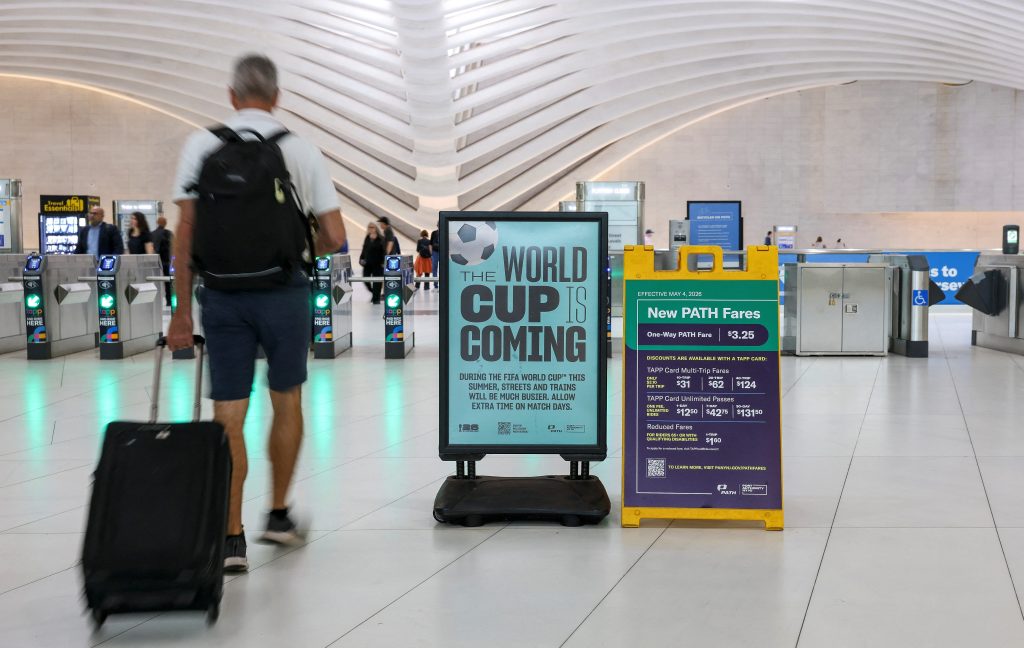
The World Cup is coming to NYC later in June, with the first match in North America kicking off in Mexico next week. Eight of the global soccer tournament’s matches — including the final — will be played across the Hudson River in the MetLife Stadium in the New Jersey Meadowlands.
That means if you commute to or from New Jersey, take the subways that travel through midtown or just find tourself anywhere near Penn Station on a game day, you could find yourself caught in classic NYC gridlock.
Organizers have called those games a “a public transit-first” event. And as hundreds of thousands of fans descend upon New York for a chance to cheer on their team, here’s what you need to know about getting to, from, or simply around the 2026 World Cup.
What’s the best way to get to a game?
The short answer is leave the car home and take mass transit, with the bulk of the fans attending each match expected to get to the Meadowlands via special NJ Transit rail service or a special shuttle bus service.
The key is planning in advance.
The Garden State railway has committed to carrying 40,000 ticket holders per game, delivering them from NYC and around New Jersey to the stadium in the swamp. In order to do so, NJ Transit is running special World Cup service for the four hours leading up to each match, and the three hours after.
Fans headed to the game from NYC will need to head to Penn Station, where they will undergo a security screening before boarding a Meadowlands-bound train. Special trains will also ferry fans back to NYC at the end of each match.
An additional 18,000 or so people are also expected to make use of an official shuttle bus service transporting fans to the stadium.
But don’t wait until game day to figure out how you’re getting there.
Tickets for the train must be purchased in advance from New Jersey Transit.
The shuttle bus, which will depart Port Authority and two sites in midtown, also requires advance booking.
What about ride share services?
Those with a more spontaneous take on the world championship of soccer can take an Uber, Lyft or other rideshare service to the game, though trips to the game are likely to be subject to surge pricing.
But Uber has also announced it will run a $49 “shuttle” from MetLife as a lower-priced alternative for getting home at the end of each game.
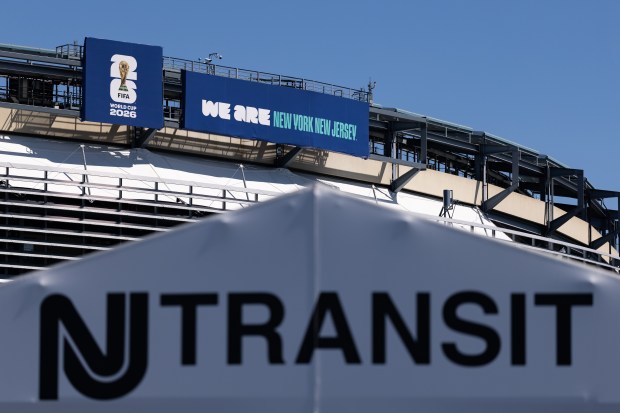 New Jersey Transit branding in front of MetLife Stadium ahead of the 2026 World Cup at New York New Jersey Stadium on May 1, 2026 in East Rutherford, New Jersey. (Photo by Dustin Satloff/Getty Images)
When are game days?
Mark your calendar:
June 13, June 16, June 22, June 25, June 27, June 30, July 5 and the final on July 19.
What if I need to get between New York and New Jersey on a game day?
For those needing to cross the Hudson on mass transit for reasons other than soccer, travel will be trickier.
Westbound NJ Transit rail service departing NYC for the Garden State will be shut down for four hours before the start of each match.
Eastbound service into the city will be suspended for up to three hours after each match in order to get fans home, but service in the opposite direction will continue.
PATH train service, ferries, and Amtrak service will be unaffected on match days.
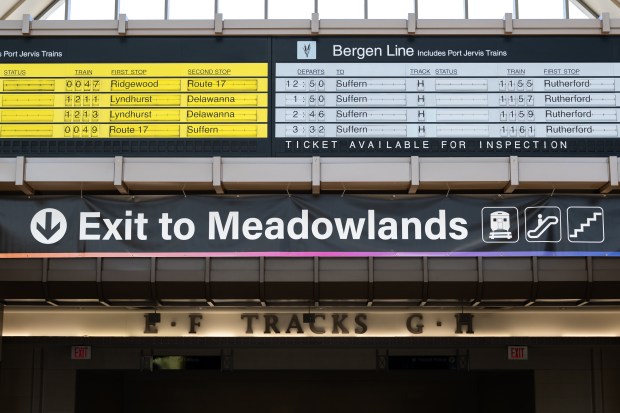 Meadowlands New Jersey Transit signage is seen at Secaucus Junction Station on May 1, 2026 in Secaucus, New Jersey. (Photo by Dustin Satloff/Getty Images)
What about getting around NYC by subway on game days?
While an influx of fans is expected to hit the city this month, city officials and leadership at the MTA says they’re ready for it.
The subway system — which moves about 4 million people daily — does not expect the World Cup tourism to cause any capacity issues.
But nonetheless, MTA honcho Janno Lieber has announced his agency will increase the number of trains running to Penn Station on match days, as well as the frequency of the No. 7 line serving much of Queens.
The MTA will also reschedule any planned work that had been set for match days, in an effort to reduce the chances of delays.
What will the streets be like?
Above ground, the situation will be a bit more complicated, as the city takes steps to limit traffic around Penn Station and Port Authority on match days.
West 33rd St. will be closed on match days between Sixth and Eighth Avenues, as will West 32nd St. between Sixth and Seventh Avenues, in anticipation of the crowds at Penn Station.
A large section of 42nd Street and some blocks around the Lincoln Tunnel will be converted to bus-only zones during match days, and portions of Fifth and Sixth Avenues will get additional bus lanes.
Closures in the heart of the city can create cascading problems and gridlock well beyond midtown. All eight match days have been declared official “gridlock alert days,” a designation meant to warn would-be drivers of expected traffic jams.
Mayor Mamdani has told New Yorkers they should plan to get around without their cars, if possible.
“If you can avoid driving into Midtown Manhattan on a match day, I am encouraging you to do so,” he said.
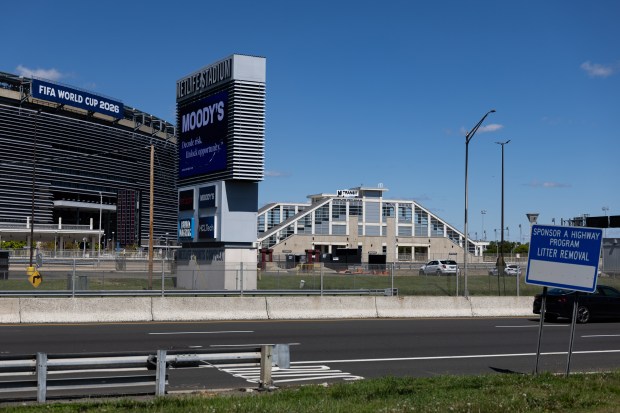 The Meadowlands New Jersey Transit stop is seen in front of MetLife Stadium ahead of the 2026 World Cup at New York New Jersey Stadium on May 1, 2026 in East Rutherford, New Jersey. (Photo by Dustin Satloff/Getty Images)
What if Penn Station melts down, again?
There were fires inPenn Station twice last month, with each blaze shutting down service for hours and creating commuting nightmares.
In addition to those high-profile incidents, the tracks between Penn and the Meadowlands have a history of issues, and are prone to problems with power and signaling wires.
Amtrak, the federal passenger railway that owns the tracks and Penn Station, said this spring that it was making efforts to improve the corridor. A new bridge over the Hackensack River partially opened to train traffic earlier this year.
But should a problem arise during the World Cup, NJ Transit officials say they’ve contracted hundreds of buses that can be mobilized as a contingency plan. But that’d add traffic to the roads in and around the Meadowlands, creating what could be significant jams and delays.