
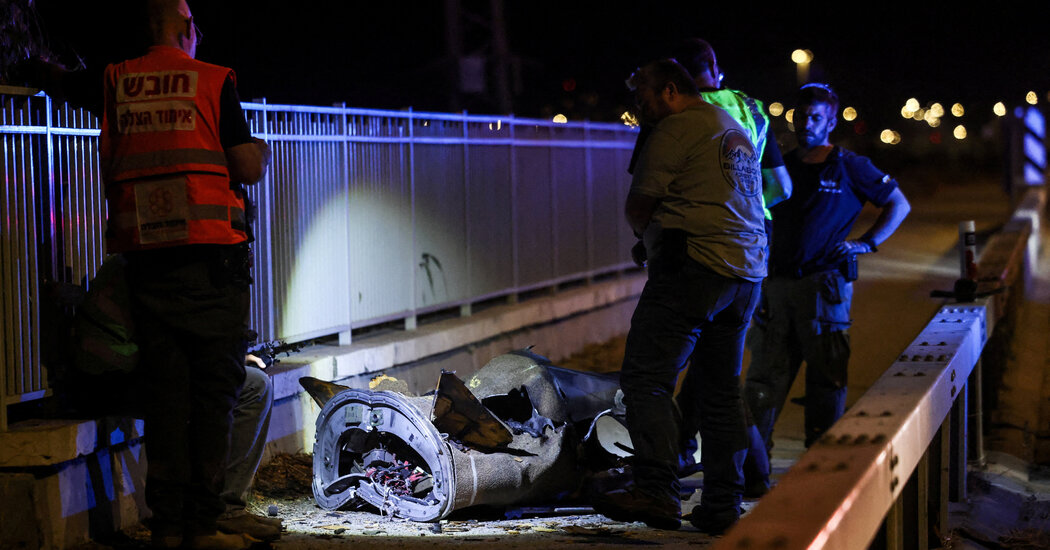
At first glance, Tehran’s retaliation for Israeli attacks in Lebanon might seem like a reckless act that risks rekindling a devastating regional war.
For Iran, those strikes were necessary — part of a more aggressive posturing that marks a strategic shift by its new rulers. For them, the lesson of the war has been that forceful retaliation has allowed them to survive, and even emerge with leverage against their more powerful enemies.
“Iran wants to project strength, and that they have the power to escalate,” said Omid Memarian, an Iran expert at DAWN, a Washington-based foreign policy think tank. “They are sending the message that they are ready to resume war if necessary.”
For the past decade under Iran’s previous supreme leader, Ayatollah Ali Khamenei, Tehran had been more cautious about striking Israel and the United States. In 2020, Tehran pursued only limited retaliatory strikes against Washington after the United States assassinated one of its most powerful military leaders, Qassem Soleimani. And it limited its entire retaliation to strikes on a single U.S. base in Qatar during the 12-day war last June.
In recent weeks, Iranian officials largely tolerated Israeli strikes on its most important ally, the Lebanese militant group Hezbollah. It criticized those attacks, warning that the fellow Shiite Muslim force should be included in the regional cease-fire it agreed upon with Washington in April. Yet as long as Israel’s strikes were contained to southern Lebanon, Iran did not respond.
Iran warned that calculus would change if Israel expanded those strikes to the southern outskirts of Lebanon’s capital, Beirut, where Hezbollah is dominant. On Sunday, Israel did just that.
“Iran’s attack in defense of Lebanon was not merely a military response; it was the formal declaration of a strategic doctrine,” said Sadegh Larijani, the chairman of Iran’s powerful Expediency Council, which advises Iran’s supreme leader.
“If any component of the Axis of Resistance is attacked, the response will extend beyond geographical borders and will alter the regional balance of power,” he said, using Iran’s term for the network of allied militant groups in the region that includes Hezbollah.