
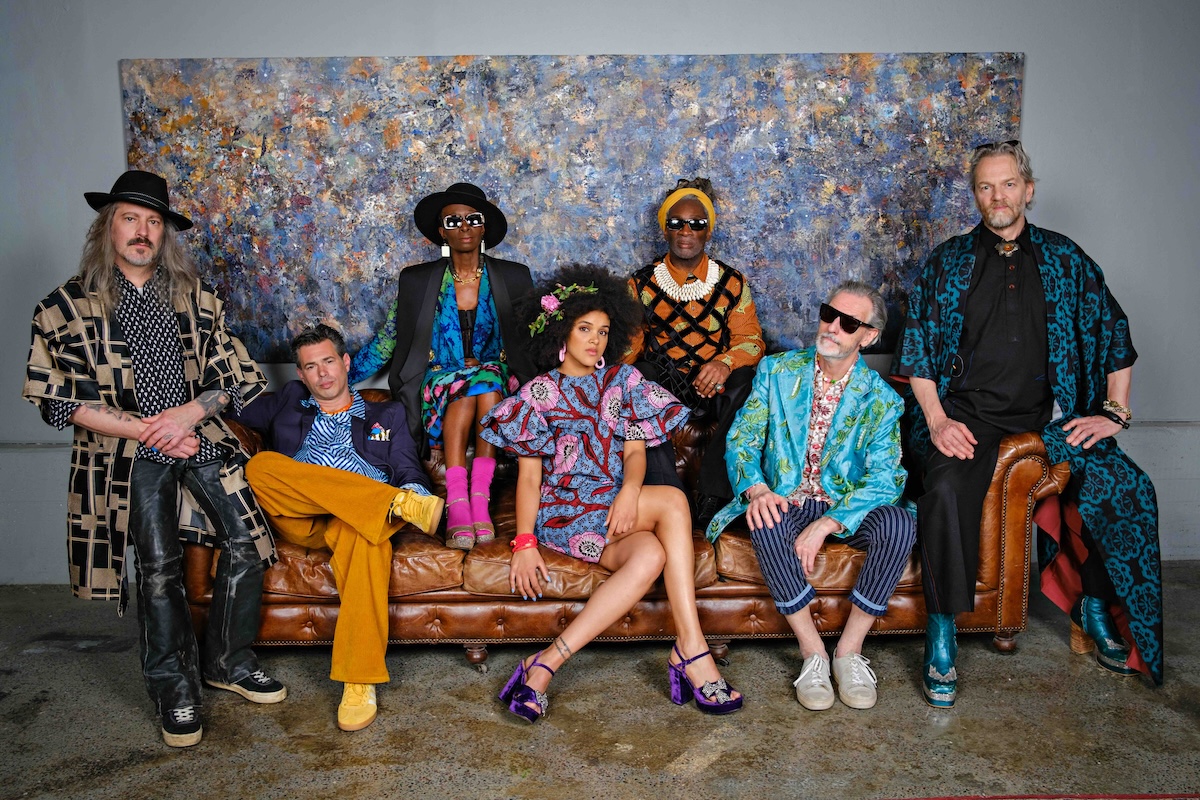
Years ago, when Brooklyn Funk Essentials first came on the scene, I held their name against them: a location I wasn’t interested in, musical genre as a descriptor, and generic catch-all word to round it out. Plus, they were formed by lauded producer Arthur Baker, who I had a negative interaction with not long before the Grammy nominated-collective, led by Lati Kronlund, released their landmark debut album, Cool and Steady and Easy in 1994. I was wrong about both Brooklyn Funk Essentials and about Arthur Baker.
Decades later, the Swedish-born Lati sits in his home in the South of France countryside. The fluffy clouds behind him are fixed against the bright blue sky, so much so that I thought they were a virtual background. “Do you see that guy walking across the roof?” he asks, which is the first indication I have that he is in a real setting. He confirms that he is, in fact, in a place so pretty that it looks like a picture. He landed here many years ago after leaving Stockholm, living in London, then New York. Prior to becoming the figurehead for the supergroup of musicians that are Brooklyn Funk Essentials, Lati left his mark on the dancefloor.
He wrote and produced the perennial favorite, “Where Love Lives (Come on In),” Alison Limerick’s debut single in 1990. It established him as a songwriter of interest, attracting other creators, including standard-setting producer and remixer Arthur Baker, whose legend was cemented with Afrika Bambaataa’s “Planet Rock,” New Order’s “Confusion,” and his Bruce Springsteen remixes.
They started Brooklyn Funk Essentials as a studio project, which soon evolved into a live band under Lati’s guidance. While always stellar, Brooklyn Funk Essentials has had a revolving door of musicians over the years, among them Tony Allen, Yuka Honda, Joi Cardwell, and Tony Taylor. In 2024, the group marked the 30th anniversary of Cool and Steady and Easy, reuniting with Arthur Baker for reimaginings of two of its classic songs, “Blow Your Brains Out” and “Brooklyn Recycles.”
Soon after that release, I interviewed Arthur Baker, who wiped out any memory of a less-than-positive experience I had with him decades ago with stories of his fascinating musical trajectory. He also shared tales of his early days, with Lati referring to him as “super-anal” and “super-specific”—both meant as compliments. He further stated that Brooklyn Funk Essentials wouldn’t have had the staying power they have had if Lati had not taken the project from studio to live performance.
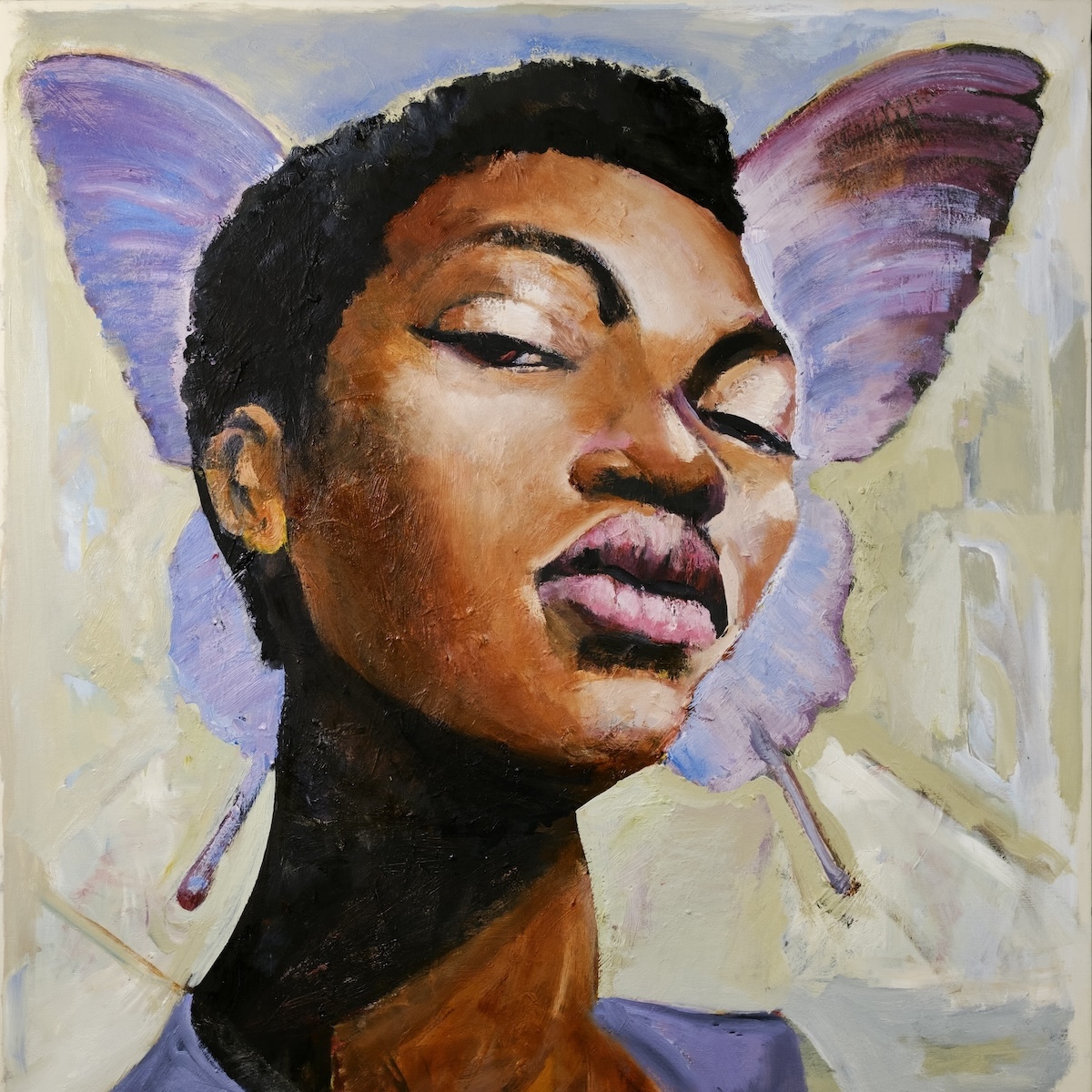
Earlier this year, Brooklyn Funk Essentials released their eighth studio album, Black Butterfly. It features some longtime members including vocalist/guitarist Desmond Foster who joined the band in 1999, and Alison Limerick, who rejoined Lati some 10 years ago as one of the band’s lead vocalists. The chemistry is a proven one, and if there was any doubt, “Where Love Lives” was back in the zeitgeist last holiday season in the UK when it was synced to a commercial for the John Lewis department store, which triggered highly charged nostalgia across the country, a great precursor to Black Butterfly.
Lati is not immune to seeing his work go viral, but, at the same time, he’s been at this music thing for so long, he has a grounded attitude toward it that I feel is at the core of his longevity. Then he tells me he read some of my writing on SPIN, and I am, naturally, charmed.
How did you connect with Arthur originally?
I’ve known Arthur a really long time. The first time I spoke to him, I lived in London. I was at my publishers, the phone rang, and it was Arthur. He said, “I love your song [“Where Love Lives”]. I’m coming to London. Can we write some songs?” Three days later, there’s a knock on my door, and there’s Arthur Baker with a pile of vinyl for us to sample. We got straight to working. It was as if we were friends for a long time. It continued like that. Shortly after, he asked me to join him in New York to work on this Al Green album. Brooklyn Funk Essentials was a spin-off of that. There were times in the studio when musicians wouldn’t show up, and we started working on BFE. He let me stay in the studio because I didn’t have anywhere to sleep in New York. He’s always been a really close, good friend. It’s funny that you said you had a hard time with him the first time you met. A lot of people have said that to me. He’s always been a really lovely guy to me.
How did you reconnect with Arthur a couple of years ago at the time of the 30th anniversary of Cool and Steady and Easy?
We’ve always been close, but two years ago, I was in the U.S., and me and my son went to stay with Arthur in Miami. We hung out for a week, and we did DJ gigs together. He said, “I still have tracks. We could make another record.” The kind of music we make, which is musicians playing, you need to physically meet somebody to really connect. It’s not enough to just be sending tracks across continents. We’ve done that too, but when we got to hang in Miami, it rekindled all those ideas we had initially in the early ’90s when we started Brooklyn Funk Essentials. Arthur has always, to me, been an enormous source of inspiration. It would often be me on a drum machine or keyboards. Arthur would be in the back, and he’d be like, “I don’t hear it now. You got to change. The snare drum is tired. We need a bridge, yeah.” He’d be sitting there flicking through Billboard or something, but he’s always coming up with relevant, really good ideas. He’s been very inspirational to me and a very good friend.
He mentioned to me that if Cool and Steady and Easy had only been released in its original version as programmed samples and not recorded with live musicians, he didn’t think it would still be talked about three decades later.
Brooklyn Funk Essentials was Arthur’s idea. We were waiting for a drummer who didn’t show up, and he had these tapes of Maceo Parker and Tower of Power, all kinds of stuff that he’d recorded in the ’80s, which was never released. He said, “Maybe we could do an Us3 kind of thing, put some beats together, maybe get some rappers in, put some singles out, get some club play.” That was his whole plan. He was not thinking, “Let’s start a band that’s going to be around for 35 years.” There were a lot of loops and stuff. That’s the way music was produced in the ’90s. I’ve been listening to some stuff that I missed in the ’90s, and I realized that everybody was trying to do the Soul II Soul loop, or everybody was using the same basslines. I think we managed to find stuff that was original.
There’s two versions of the Cool and Steady and Easy album. The Dorado version, and when we got signed to RCA, they were like, “Are there any samples we need to know about?” This would have been ’95 and all the craziness around samples was happening. They even put a clause in the contract that said if anyone were to sue us over a sample, it would be our responsibility, not theirs. For me, this was fine because we started to play live and I’d found the live musicians. Let’s redo all the percussive samples with E.J. [Rodriguez, percussion] and Yancy [Drew, drums]. Programmed beats can be fantastic, but when you merge them with live stuff you get a sound that only you have because it was actually recorded then and there, and it’s going to be an ID stamp forever on that track. You’re not going to sound like just everything else, because there was only X amount of loops you can use and eventually, people ran out. Arthur was like, “Now you guys are playing live, this is going in a different direction.” Having a funk band in New York was a dream come true for me. I couldn’t even believe my luck playing with those kinds of musicians. We were playing pretty much every week in New York around that time. It drifted away from Arthur because he wasn’t with us on stage, and he’d done his thing.
How does the songwriting process work with the band?
I have a kind of veto. If somebody brings something which is completely wrong, we don’t do that. But lately, we jam a lot in the studio, especially me and Desmond and Hux [Nettermalm, drummer] who we’ve had for the last 12 years. We are a really tight rhythm section. We like to play with grooves. That’s where a lot of the songs happen. Most of the horn arrangements were written by Ebba [Åsman, trombone]. She was in the studio with us, but she was in her own room so she could have isolation and I didn’t have her very loud in my headphones because I was concentrating on grooving with Desmond and Hux. When we listened back, I was like, “Ebba, this thing that you’re playing is absolutely beautiful.” She would be coming up with melodies on the grooves that we were doing. It just happened in the studio. Before, you can start a groove, but if you’re going to have a piece of music that’s going to sound like something more intentional, then it’s interesting to bring in breaks and actually have an arrangement. Then you get good at it and you’re on your tiptoe rather than just starting a groove. That was more an ’80s thing when you would just play and then you would edit stuff together. What we’re trying to do is to actually play the thing from beginning to end, and that will be the song. It’s very much a collaborative effort now, more than it used to be.
Did revisiting Cool and Steady and Easy have an impact on the creation of Black Butterfly?
Cool and Steady and Easy is a very popular record. I’m still spinning it and we keep playing those songs with the band live. The songs we do, they’ve developed. I thought it would be an especially good thing for people who can’t come and see us to get this 100% live record as opposed to the ’90s way of recording, which was hip-hop fashion with drum machines and stuff. We haven’t used machines in a long time and I really love that. It really works for us. That’s also how the new record came together, from the joy of us playing together.
The records we’ve done in the last 15 years have been really successful. A lot of bands, after a certain period become bands that tour around, playing the stuff from when they were successful back in the day. We’re really fortunate that people are actually digging our new stuff and following it. The inspiration is 100% musical, and that’s what it should be. This new album is songs we started on the previous album that we didn’t finish because if we continue to write, then we’ll never stop. Sometimes you just got to say, “Let’s take these 12 songs and make an album. These other 10 we’ll leave those for now.”
Despite your name, Brooklyn Funk Essentials is based in Europe, aren’t you?
After 9/11, me and my wife decided to leave New York. We moved to this house. Everybody moved. New York felt like a scary place. Then we took a hiatus of about five years. We got back together again and by that time, I had moved to Stockholm in Sweden, which is where I was originally from. The band was still U.S.-based, but we toured in Europe mainly. We did some U.S. gigs too, but it’s a hard country to tour. The promoters give you nothing. A lot of the time they even want you to pay to play. That system started in the late ’90s, early ’00s. In Europe, you get hotels, you get backline. You just need to get there and everything is there and the fees are better. One musician was like, “Sorry, I can’t make that tour,” so I had to find a musician here. I was living here, and bit by bit, the band became a European band.
I like it when you can link something to a geographical place, but it really doesn’t matter. It’s wonderful that Springsteen is always based in New Jersey, but he doesn’t have to be. He could have been from anywhere, because it’s the music, it’s the songs, it’s the lyrics. After a bit, I don’t think that anybody cared that Bowie was from London. To me, Brooklyn is a sound. It’s not about geography. It’s about the melting pot.
Is the promoter situation in the U.S. still like what you just described?
It’s even more so, and I’m really sad about that because I would love to play in the U.S. like we used to, but we just cannot afford it. I would have to put together a U.S.-based band again, and that would be a different band. The thing that’s really important about Brooklyn Funk Essentials is that it’s an all-star band. It’s not a group of musicians supporting a star. That inspiration comes from the bands of the ’60s and ’70s like Sly [and the Family Stone] or War and Ohio Players. All of those bands, it was about everybody. The other thing that’s really important is that it’s men and women together—preferably as many women and as men. It’s always been straight and gay. It’s always been Black, white, Asian, everybody together. That’s the whole idea of the band.
Are you finding at this point in your life that you’re a bit more relaxed in your approach to creation?
We operate 100% out of love and with no pressure. I used to freak out every time I had to say no to a gig because I couldn’t afford it. Now, I’m going to have to be fine with it because I can’t afford to lose money. The most fun gigs are always the ones in clubs when you’re right there next to the audience. But if you only do clubs, you’re going to be ruined in one year, so you have to play the big festivals, and then you’re in competition with everybody.
When we came out, we were hip [he uses air quotes for the term]. They would write about us in the right magazines and we would play the festivals with all the cool bands. Other bands came out that were more hip because they were younger and whatever. When we came back in 2005, we started to play jazz festivals more and more instead of the Lollapalooza kind of festivals with the young talent. We would be playing with Parliament-Funkadelic and Kool and the Gang, or even straight up jazz—which was great, but we wanted to support Björk and Massive Attack. But we’d moved away from that because we never belonged to that. That was really problematic, because I was like, “I love Kool and the Gang, but can we get one gig where we’re playing with some young talent?” These days, I’m really happy about being on the jazz circuit because a lot of those electronic acts, they’re not even around anymore and people don’t even know who they are. There’s so much that happens that disappears.
Being cool is temporary. Longevity is what you want.
Fuck being cool.