
Written collectively by Arman Amin, Monica Furman, Liz June, Ash Marinaccio, Karina Ordóñez
“Freeze the rent; Slam the door; Knicks, Knicks, Knicks, in four,” chanted Bronx tenants as they marched down the Grand Concourse and rallied outside the heavily policed Rent Guidelines Board (RGB) Public Hearing in the main theater of Hostos Community College/CUNY on Monday night, demanding that the RGB stop landlord bailouts and freeze rent for the 2.4 million rent-stabilized tenants in the city on both one- and two-year leases.
Organizers from the New York State Tenant Bloc, CASA, CUNY CARES, Bronx Defenders, Met Council on Housing, the Democratic Socialists of America, and Youth Alliance for Housing, along with Councilmembers Pierina Sanchez and Althea Stevens, marched and rallied against predatory landlords, refuting landlords’ attempts to use their borough to block a citywide rent freeze.
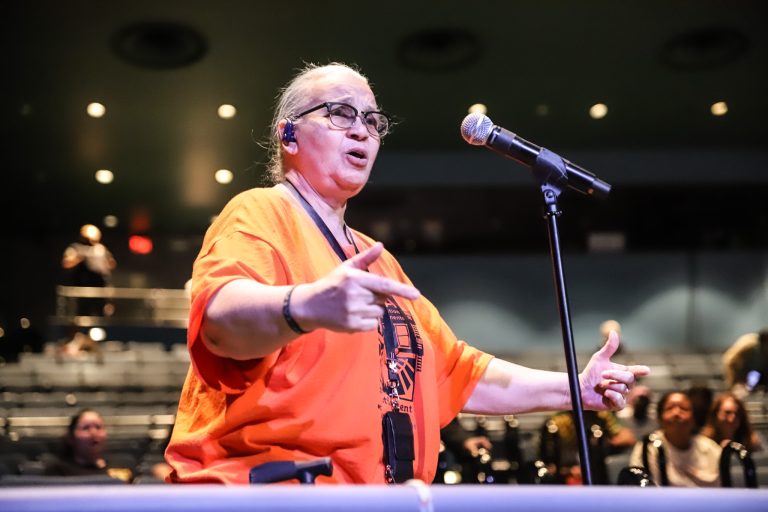
“For 32 years I worked. I’m a disabled senior, with a disabled dependent…My rent went up $300 a month,” Patricia Jewett testified before the board. “We can’t afford to eat chicken. We have to eat soup.” At night, I have to worry about whether I’ll have an eviction notice on my door – and it ain’t because I owe rent. It’s because they are always trying to find a way to put out the tenants who have been there. They want us out so they can get new blood in. It’s disgusting,” Jewett closed.
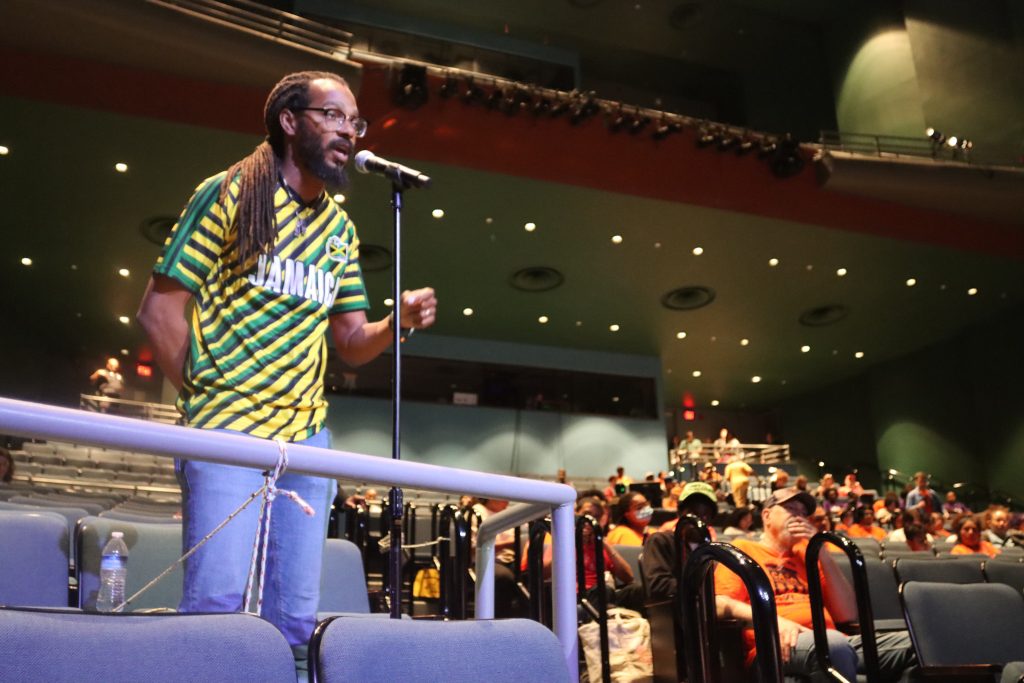 Photo by Liz June
According to the NYS Unified Court System Division of Technology and Court Research, 1 in 11 households in the Bronx have an eviction filing.
“Tenants know what the data shows because we live it every day,” explained Sumathy Kumars, NYS Tenant Bloc Executive Director. “Tenants are facing wartime inflation, federal benefit cuts, and ICE threats, while landlords have seen their operating incomes and profits rise for years. Landlords continue to push for a blanket rent hike, but tenants refuse to reward them for long-term neglect or bail out their bad bets. Tenants need and deserve a rent freeze on one- and two-year leases. We’re turning up in record numbers at the RGB hearings to demand it, and we’re going to win it,” Kumars finished.
Currently, multiple subsidy programs are available to landlords. The Mayor’s new housing plan has allocated $2.2 billion to remove the most neglected buildings from landlords’ hands if they will no longer manage their upkeep. A recent report by Moody’s Analytics found that a rent freeze would not be the economic catastrophe that landlords predict.
Andrea Ngoulou, an organizer and tenant in a Bronx rent-controlled building, said, “There’s black mold. There are rat infestations. We recently had a bedbug infestation. One tenant’s entire ceiling collapsed on them in the middle of the night.”
Ngoulou commented, “People deserve a safe space to live with dignity and respect. You know, we’re people. We’re not cattle, we’re not animals, and we deserve to be treated humanely. The way they treat our living arrangements, our quarters, is a direct reflection of how they see us as people, and it’s less than.”
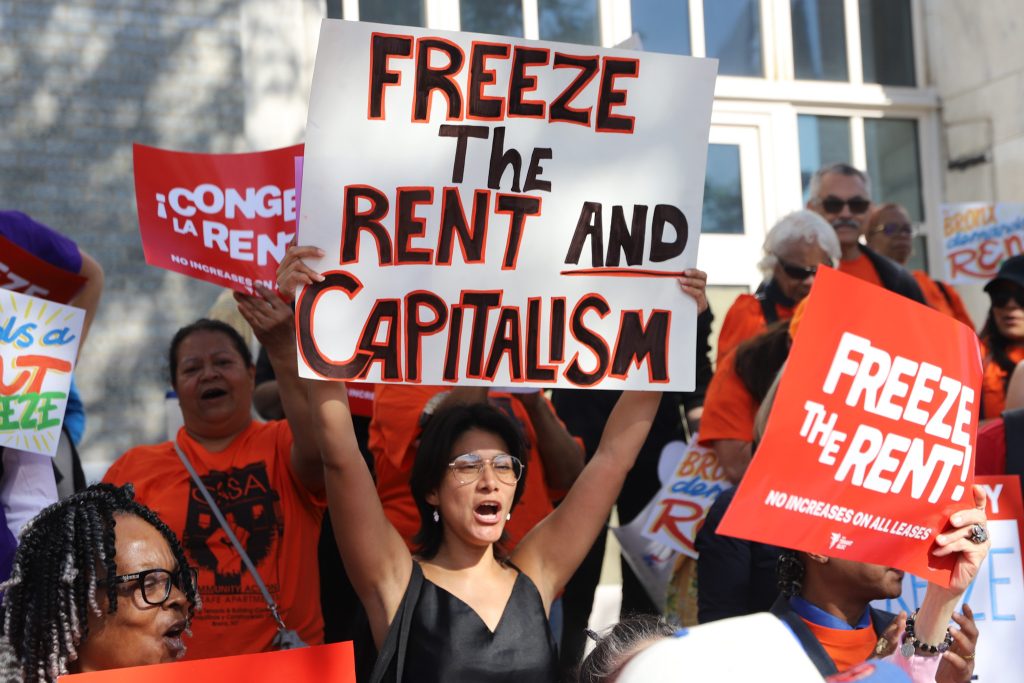 Photo by Ash Marinaccio
The misconception that housing remains a “youth issue” faded as stories emerged of people in their 60s and 70s organizing for tenant rights in their spare time. Tenants described living in their apartments for decades, only to be tricked into leaving and forced to resort to shelters. The most vulnerable were those who lifted their voices and waited in the hot sun to be screened through metal detectors.
Nilda Peña, an immigrant from the Dominican Republic who has called the Bronx home for 25 years, described the Bronx as “all that she had known since immigrating. New York in general is expensive; the Bronx was cheaper to live in.” She described how much she loved the programs in her community for young people and seniors, and how she wanted to be around her loved ones. However, as rent continues to rise, she worries about having to leave.
South Bronx resident Alexander Ruiz referred to the building standards and living conditions in the area as “neglect,” saying the people who own these buildings do not care. He stated, “The fact that individuals don’t even know how dangerous the presence of black mold is, but it’s commonplace in a lot of these buildings, is violent.”
Ruiz described a rent increase as the most violent thing this Board can do to NYC residents, advocating for a rent freeze as the bare minimum for Bronx residents and potential systemic change to make the Bronx more affordable.
While tenant groups and organizers showed up in droves to advocate for their right to dignified and affordable housing, they also made it clear that appealing to the Rent Guidelines Board itself was not a real pathway to change. “It’s time for our yearly humiliation ritual,” noted Marcelo Lopez (Unity Democratic Club, DSA, WFP) regarding testifying before the Board. “But the problem is, there is nothing your mandate can do to actually impact the housing crisis. You must freeze the rent, because there is no positive effect to raising it. There is not going to be a magical increase that people will just be able to pay more, and it will fix all the repairs that were ignored for decades. None of that is possible. We are asking you to freeze the rent because it is what is correct to be able to maintain people in their homes.” Marcelo Lopez.
“I worked hard to get a promotion. These landlords aren’t doing a good job. If you’re not doing a good job, why should you be paid more?” said another organizer for the Democratic Socialists of America.
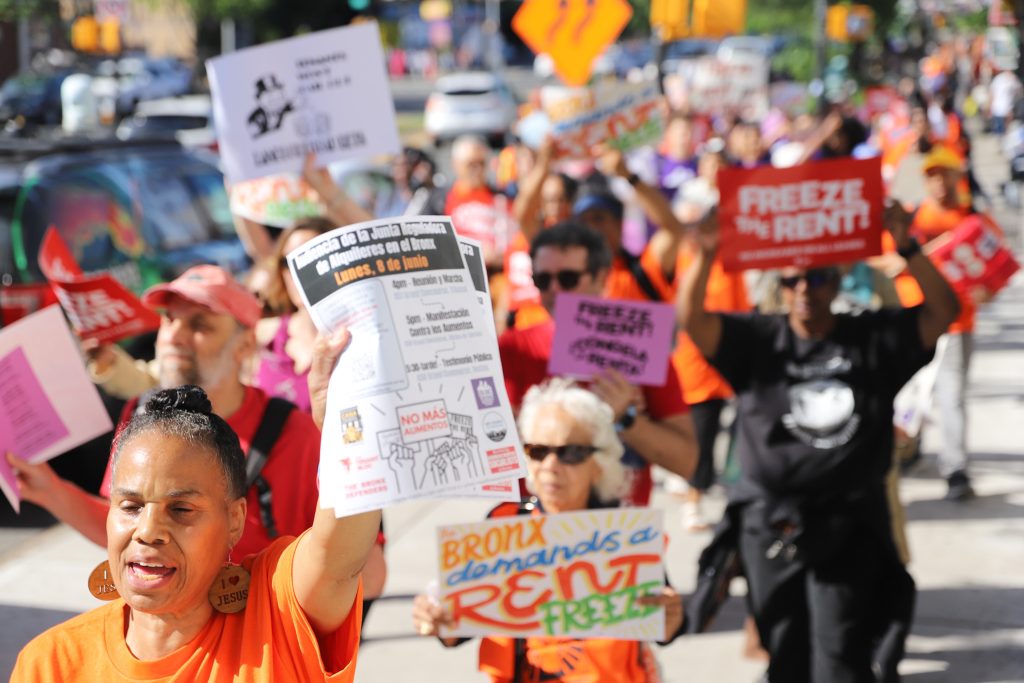 Photo by Ash Marinaccio
Andre Easton, an independent congressional candidate for District 15 and member of the Party for Socialism and Liberation, remarked on the limitations of the process. “I think all decisions that affect working-class people should be publicly discussed, should be publicly debated, and should be beholden to the consensus of the masses of the working class. If we are not the ones who determine how a decision is made, then it cannot be said that we live in a democracy.” He also clarified that although this hearing is participatory, it is not democratic. “I think that it is an attempt to acknowledge the desire of the working class. We don’t want it to be a performative gesture. We want it to be an actual demonstration, an actualized expression of the will of the masses of people, and only we can make that happen.”
So how do we make it happen?
When it comes to housing, Easton isn’t alone in his view that power is in organizing. “The working class is the decisive factor in history. Regardless of whether we win or lose, whether we sink or swim, it all depends on how well we are organized and how well we channel our desires into discrete, disciplined structures that are beholden to our interests. That’s the only thing that’s gonna give us the world that we deserve. We’re not gonna be able to vote our way. We have to actively participate in shaping the world that we want to see.”
This article was coauthored by members of DocBloc’s Artist as Citizen Journalist Initiative which brings together theatre artists and journalists to share in civic reporting and the growing need for community-based storytelling.The ACJ initiative tests a hybrid model of reporting and performance, positioning theatre artists as civic witnesses and collaborators in local journalism. To learn more visit docbloc.org or connect on Instagram @docblocprojects.