
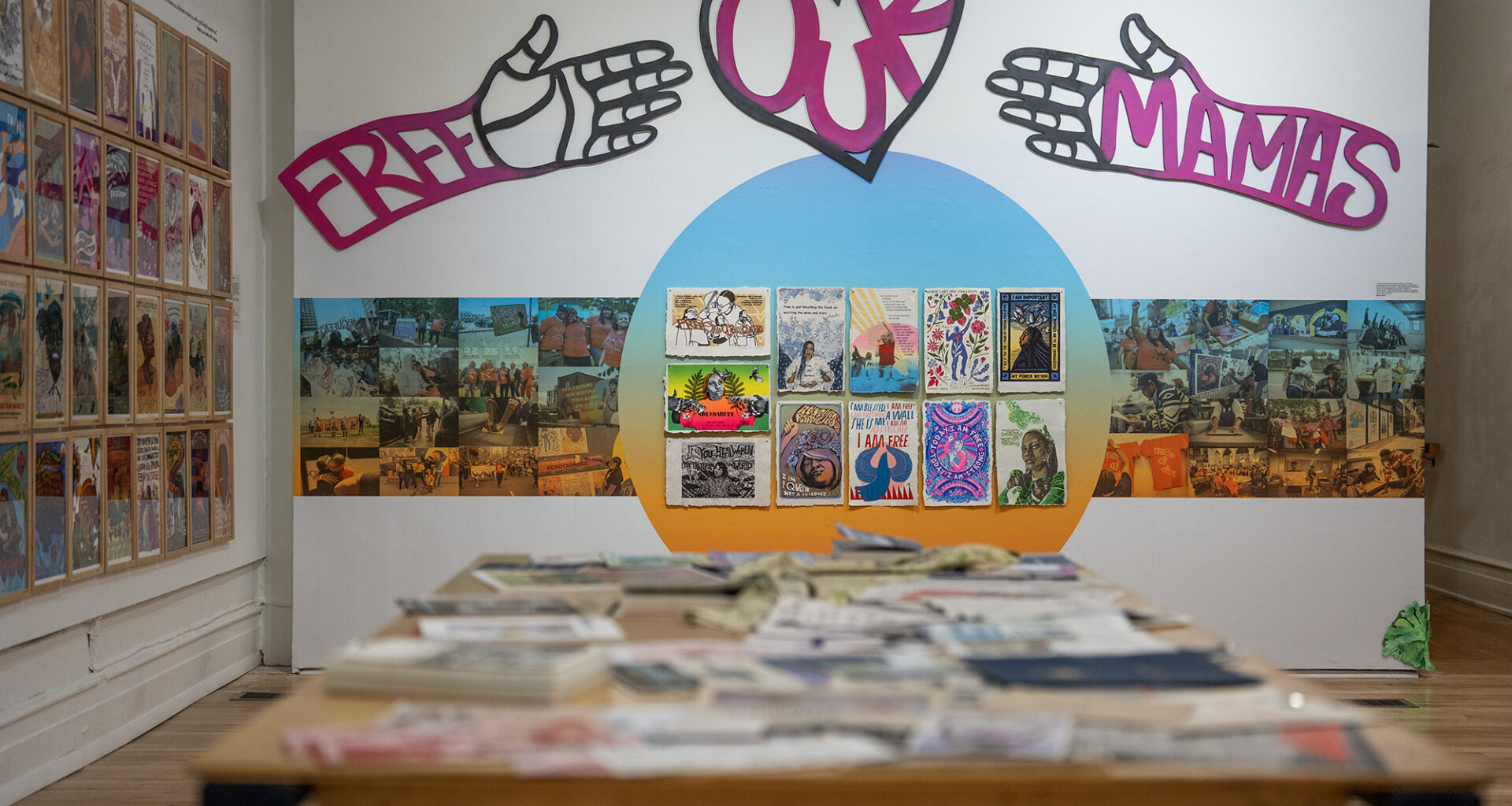
Let’s Get Free: Ecologies of Care, Love & Abolition
1708 Gallery
May 1–June 14, 2026
Richmond, VA
Let’s Get Free: Ecologies of Care, Love & Abolition is a full-throated celebration of twenty years of liberatory cultural organizing. It includes the curators the People’s Paper Co-op (PPC) and fellow activists jackie sumell, The People’s Flower School, Planting Justice, and Dennis Williams II. In coordination with the exhibit, PPC had on hand copies of a book they just published also titled Let’s Get Free. The show is packed with photographs, wall text, installations, and artworks referring to the projects spanning those twenty years. Unifying Let’s Get Free is the rhizomatic theme of plants and ecosystems as metaphors of—and potent vehicles for—regeneration, empowerment, community, and resilience.
From 2014 to 2024, PPC, a collaboration between Richmond Virginia-based artists Courtney Bowles and Mark Strandquist, worked with communities in Philadelphia caught up in its broken criminal justice system. For Let’s Get Free, PPC installed hand-made paper sheets, hanging in rows against a red wall, each one made from a pulped criminal record with a polaroid of the person and a hand-written note expressing how they felt about having their criminal record expunged. These sheets were the fruit of a collaboration between PPC and Philadelphia Lawyers for Social Equity (PLSE) that designed a series of free legal clinics to help people either expunge or clean up their criminal records. Above one picture of a young woman with a pretty smile the note read: “Imagining my life without a criminal record is like thinking of a beautiful flower in a dark place finally being surrounded by sun and other beautiful flowers and growing to its fullest extent!” On the polaroid she wrote: “see me as a mother that CAN care about others!” The installation held scores of such testimonials about lives that had been given a new lease through the literal and figurative recycling of their criminal records.
jackie sumell, Planting Justice, and The People’s Flower School all work with incarcerated people. For Let’s Get Free, sumell created a sculpture, Flush the System (2026), made from biodegradable materials. Molded from a prison toilet/sink from a decommissioned Louisiana jail, Flush the System recalls sumell’s long-standing abolitionist project, The House that Herman Built, with Herman Wallace, a member of the “Angola 3” who lived in solitary confinement for over forty years. On the wall behind the sculpture is a mural of Wallace’s cell. Infused with seeds and mushroom plugs, Flush the System is designed to break down, transforming an emblem of punishment into a site of renewal.