
Strawberry Fields
Magenta Plains
May 7–June 20, 2026
New York
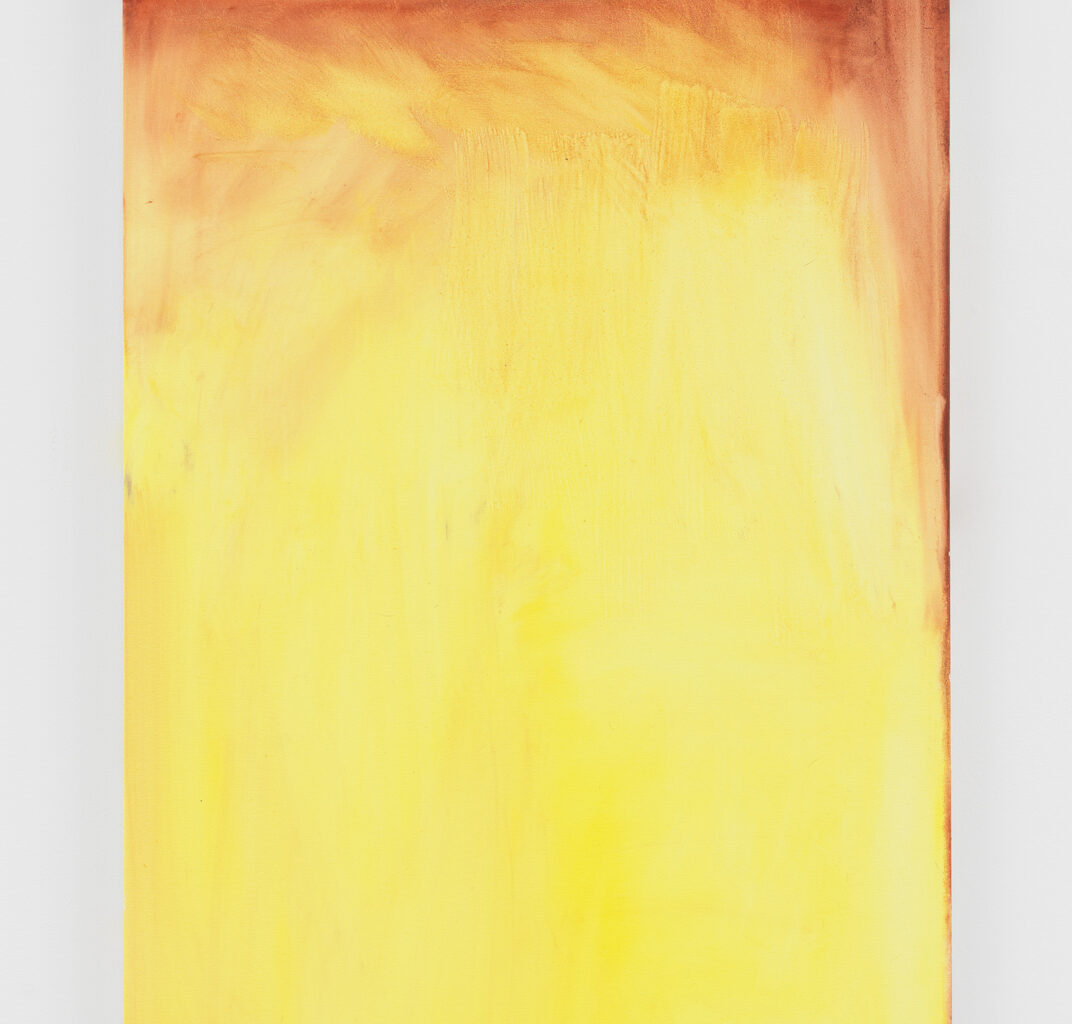
Jane Swavely’s new paintings at Magenta Plains are electric. They engage the optical and bodily senses in a sharp, but pleasant, way with acidic hues and metallic washes that catch and reflect the light. They are hung low, but this enhances their effect, letting them stand out as objects in a walkable space. In the diptych Strawberry Fields (2026) (the painting which lends the exhibition its title), the scale and format of the canvases implicate the human body—in this case two bodies, wryly invoking Swavely’s fascination with doubles, doubling, and twins.
The installation is a testament to the art of paring things down to essentials: light, color, gesture, form, matter. This is a quality that Swavely also manifests in her work. A single large work anchors three of the gallery’s four walls, and on the last, a pink and turquoise canvas is paired with two pastel drawings. The intimacy of the latter medium and Swavely’s use of soft pastel tones contrasts with the paintings, which are more exuberant in palette and scale. The laid, toothy texture of the drawings’ Bugra paper is also perfect for capturing the delicate, powdery grains of the handmade soft pastel the artist is fond of using.
The smaller painting that greets visitors at the gallery’s entrance is airy and hot, with bright yellow seeming to lift a descending cloud of red, tussling a bit in the process. As we can observe in this work, passages of different colors often wrap around the edges of Swavely’s paintings and drawings, reminding us of the natural border of her chosen format, which is usually vertical in orientation.
Like the artist herself, the paintings and drawings here are straightforward and intuitive, betraying no sleight of hand or eye. What you see is what you get, but there is a lot to look at in these works. This isn’t exactly beautiful painting, but it is incandescent, like the swirling red inferno of Not Yet Titled (2026), which perhaps steals the show. This is not static painting either, as it encapsulates the dynamic urban energy of the Bowery home and studio where Swavely has lived and worked for over four decades.