
New York City received the go-ahead from a judge on Wednesday to move its main intake shelter for homeless men 20 blocks south, to a building in the East Village of Manhattan, ending a lawsuit that had delayed the move for more than a month.
The judge, Sabrina B. Kraus of State Supreme Court, said that the city had “given a rational explanation” for the decision to move the shelter to the East Village building, which already housed a shelter.
She rejected arguments from neighbors of the East Village building that turning it into an intake shelter was a change major enough to have been subject to several types of reviews of its effect on the neighborhood.
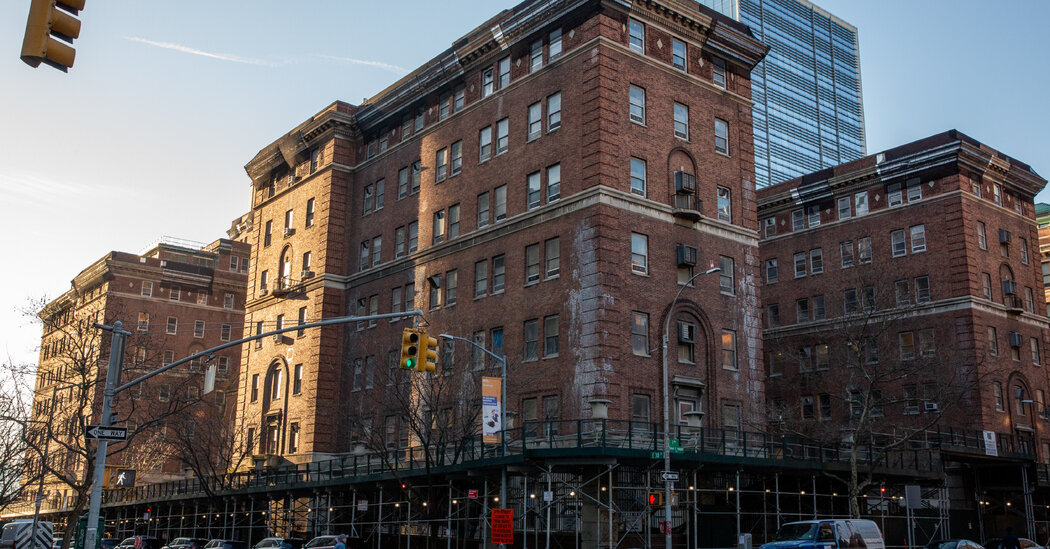
For several decades, the first stop for men entering the shelter system in New York City had been a hulking former psychiatric clinic near Bellevue Hospital on East 30th Street that had decayed badly in recent years.
In March, the city announced that the building was in such dangerously poor condition that it needed to close immediately and that it would move the intake shelter to 8 East Third Street, a building on a narrow side road that had served as the intake center in the 1980s. The East Third Street building was most recently a shelter for homeless men with substance abuse problems.
After neighbors of the Third Street building sued the city in April, Justice Kraus temporarily blocked the city from moving its intake operation there as she heard arguments from both sides.
The East Village neighbors said that the more transient nature of the intake shelter — people typically stay there for only a few days, while the men in the substance-abuse program regularly stay for months — would lead to disruption and chaos.
But on Wednesday, the judge wrote that while she understood the residents’ “frustration with the lack of opportunity to be heard on an issue that may indeed change the character of their block and neighborhood,” she could not substitute her judgment for the city’s.
Randy Mastro, a lawyer for the residents who had sought to block the move, said that his clients were considering appealing the decision.
“These cases are always a challenge because the legal standards are so deferential to city government and its decision-making,” Mr. Mastro said. “That’s why we have to hold government officials accountable when they do things like this.”
The battle over the intake shelter is one of a handful of ongoing challenges to the city’s shelter plans.
Last week, a judge dealt the city a loss by temporarily blocking the opening of a 110-bed men’s shelter at a Ramada hotel in the Crown Heights neighborhood of Brooklyn while a lawsuit challenging that move proceeds.
At a community board meeting last month where the shelter was discussed, some residents said that the city did not give sufficient notice about the plan and that the neighborhood was already home to several social-services facilities.
The city said it had moved to open the shelter in Crown Heights because the closing of the Bellevue intake shelter left the neighborhood short hundreds of necessary beds.
A spokesman for the City Department of Social Services, Nicholas Jacobelli, said in a statement that “we continue to evaluate and optimize existing capacity across the system so we can continue to identify suitable placements for all single adult men in need of shelter.”
Another shelter that the city plans to open in Brooklyn because of the Bellevue closing, a 130-bed men’s shelter in a former Red Roof Inn on Flatbush Avenue, also faces opposition from neighborhood residents and businesspeople. The building is across the street from Kings Theater, a historic landmark in the Flatbush neighborhood, and near several luxury apartment buildings.
The city’s shelter system, consisting of hundreds of buildings run by dozens of nonprofit contractors, is constantly in flux as the homeless population grows, shrinks and changes. At any given time, the city is in the process of opening, closing or repurposing many shelters.
People who live near shelters often say that the spaces bring crime, open drug use and street harassment to the neighborhood, and try to block the city from opening them.
Some residents argue that the shelters are not fairly distributed across the city. A 2023 study by the city comptroller’s office found that the density of shelters varies widely by community-board district. Some districts have none, while some have as many as 90 shelter beds per 1,000 neighborhood residents.
In that analysis, Crown Heights and the East Village ranked in the middle of the pack for number of shelters, and Flatbush ranked in the lower third.
In the financial district of Manhattan, residents are trying to close a “safe-haven” shelter — a type with fewer rules and restrictions — that opened a few steps from an elementary school.
Last September, a judge blocked the city from opening the shelter, at 320 Pearl Street, ruling that the city had done an inadequate job evaluating the shelter’s effect on the neighborhood and ordering a new impact study. The city finished the new study in January and opened the shelter several days later, during a deadly spell of cold and snow when the city was desperate to find places to move people indoors.
In late May, the neighborhood opponents of the shelter filed a lawsuit challenging the study.
Anthony Duke Hannigan said he recently moved out of the area because he did not want to send his children to the school next to the shelter.
“We’re not saying ‘not in our backyard,’” he said in an interview last week. “We’re simply saying ‘not next to our school.’”