
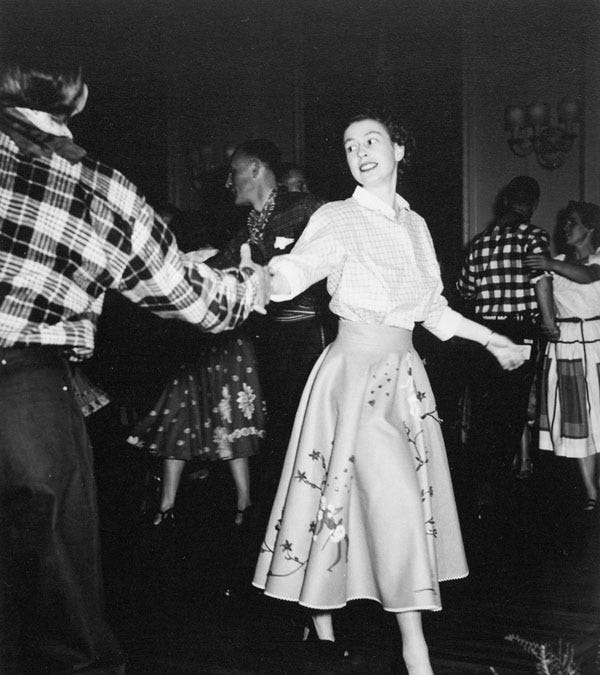
From October 8 to November 12, 1951, Princess Elizabeth and Prince Philip toured Canada. Massive crowds turned out to see them on their first trip. In Ottawa, an estimated 200,000 people saw them during their two-day stay in the nation’s capital, which was the size of the entire population of the city at the time.
Two of the outfits designed for that trip are part of an extensive collection of Canada-related items on display in the exhibition Queen Elizabeth II: Her Life in Style at the King’s Gallery, Buckingham Palace.
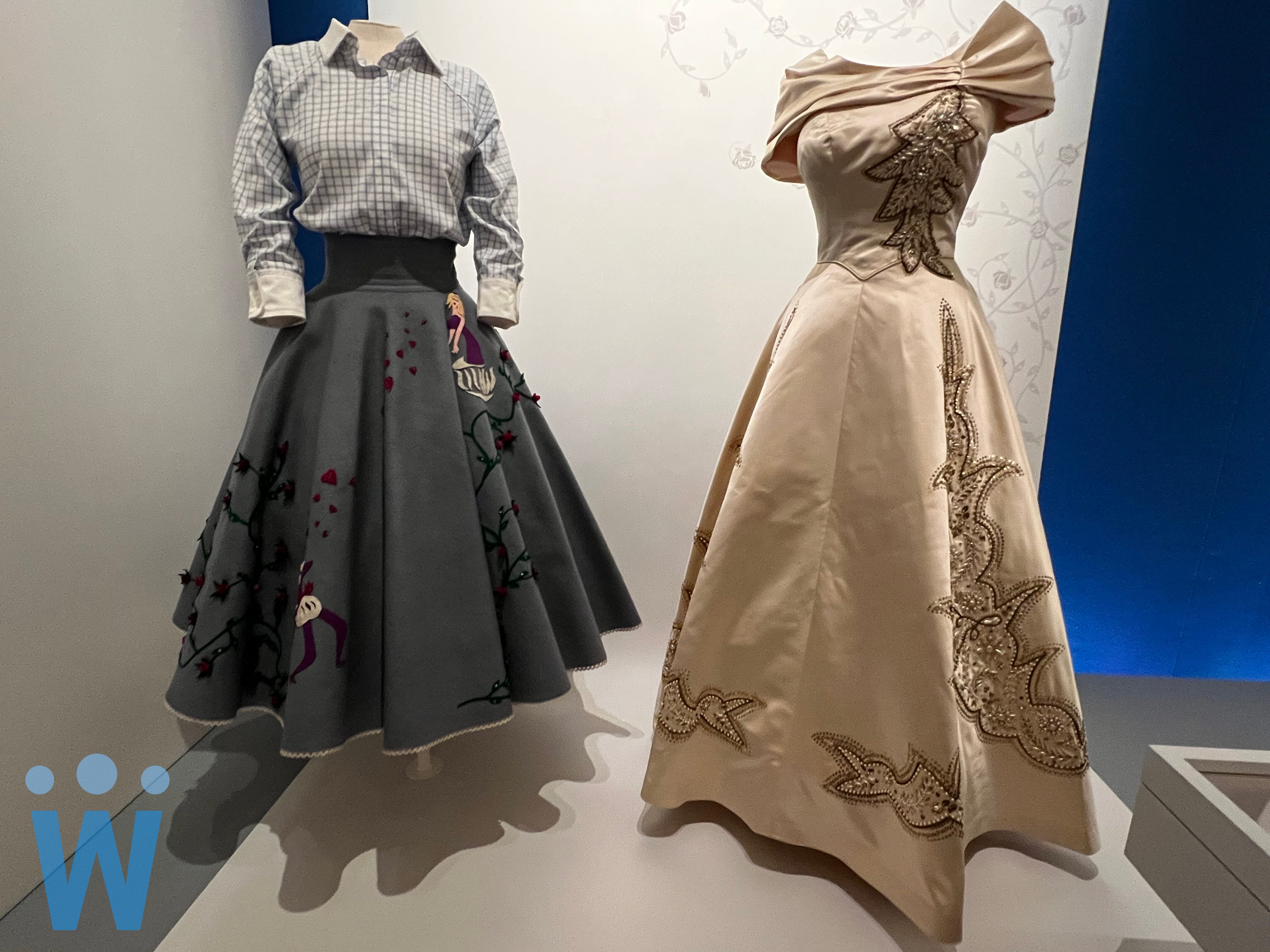 The poodle skirt outfit and the Hartnell gown are two of the many Canada-related items in the exhibition of Queen Elizabeth II’s style (Photo: Write Royalty Inc.)
Starting with this post, I will examine the exhibition’s Canada-related pieces in a new series: The Queen’s maple leaf style. The outfits range from simple dresses to embroidered evening gowns. As a bonus, you’ll get to see the most boho chic outfit ever worn by the monarch (seriously!) The series culminates on Canada Day with an iconic Canadian outfit.
Now, back to 1951.
Even before Elizabeth and Philip set sail for Canada for the first of their 23 joint visits, the Canadian theme of this tour was emphasized when the couple and their two young children, Charles and Anne, posed for a series of images taken by the acclaimed Canadian photographer Yousuf Karsh in their London home of Clarence House. They were published in newspapers and magazines around the world.
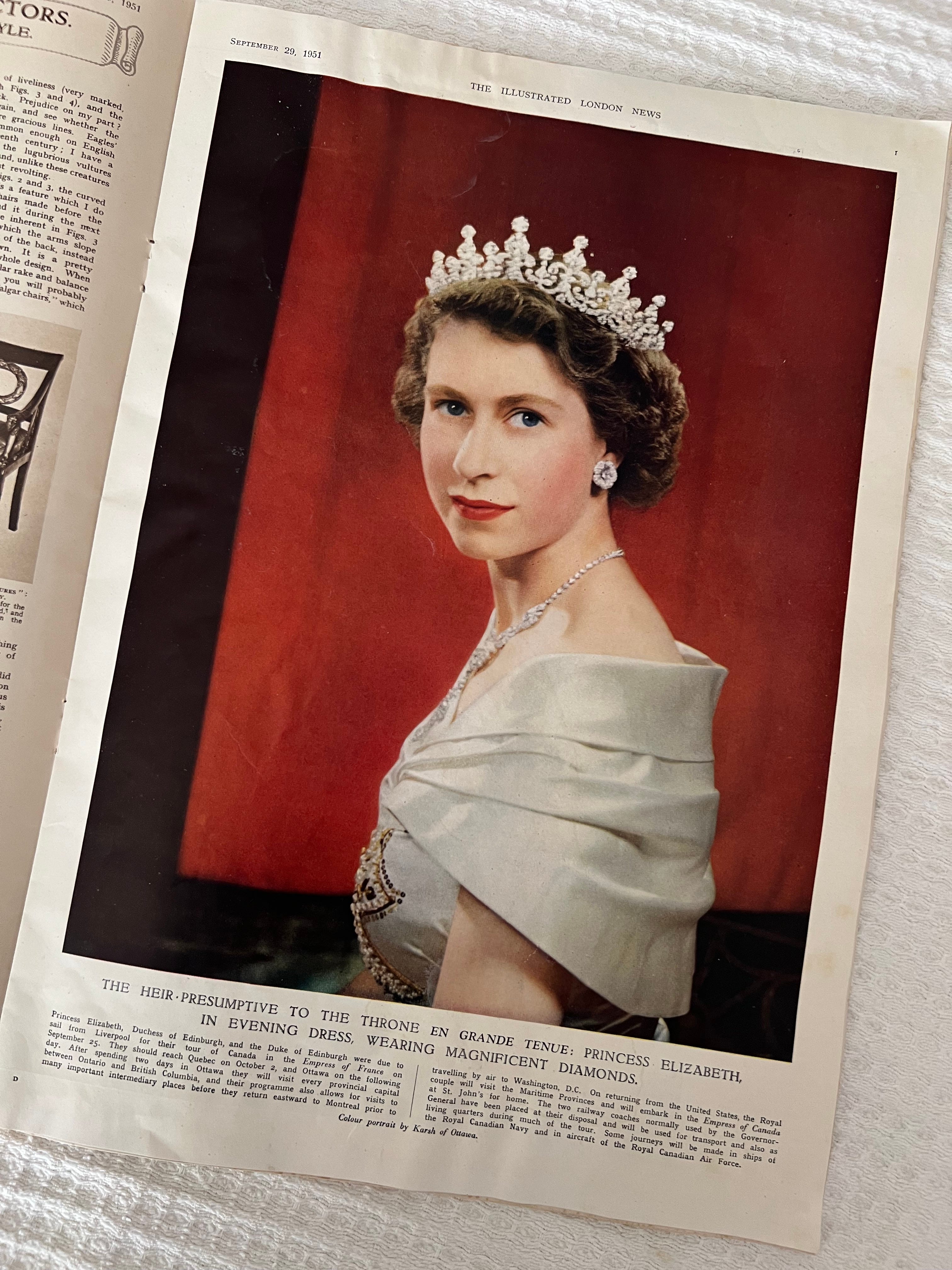 Illustrated London News was one of many magazines and newspapers to feature the Karsh image of Princess Elizabeth (Canadian Royal Tour edition, September 29, 1951)
In the most famous series of images from that photo session, Elizabeth wears a spectacular evening gown by Norman Hartnell, who would create her most memorable outfits until his death in 1979. This gown epitomized the design and embroidery of many of Elizabeth’s evening choices of that era.
As the official exhibition companion book explains:
For the portrait sitting, the Princess chose this cream duchesse satin evening gown embellished with a striking arrangement of embroidered motifs in gold sequins, pearls and crystals on the bodice and skirt. The dress has a pleated fichu collar, which is asymmetrically fixed to the bodice, a feature of a number of her early evening gowns. The collar was later removed and reattached to form wide straps [as seen in the exhibition.
For this photo shoot, she selected two pieces of jewellery that she wore frequently during her reign: the Girls of Great Britain and Ireland tiara and the Nizam of Hyderabad necklace. (She didn’t wear that Hartnell gown in Canada, yet such was the impact of those Karsh images that it is always associated with the trip.)
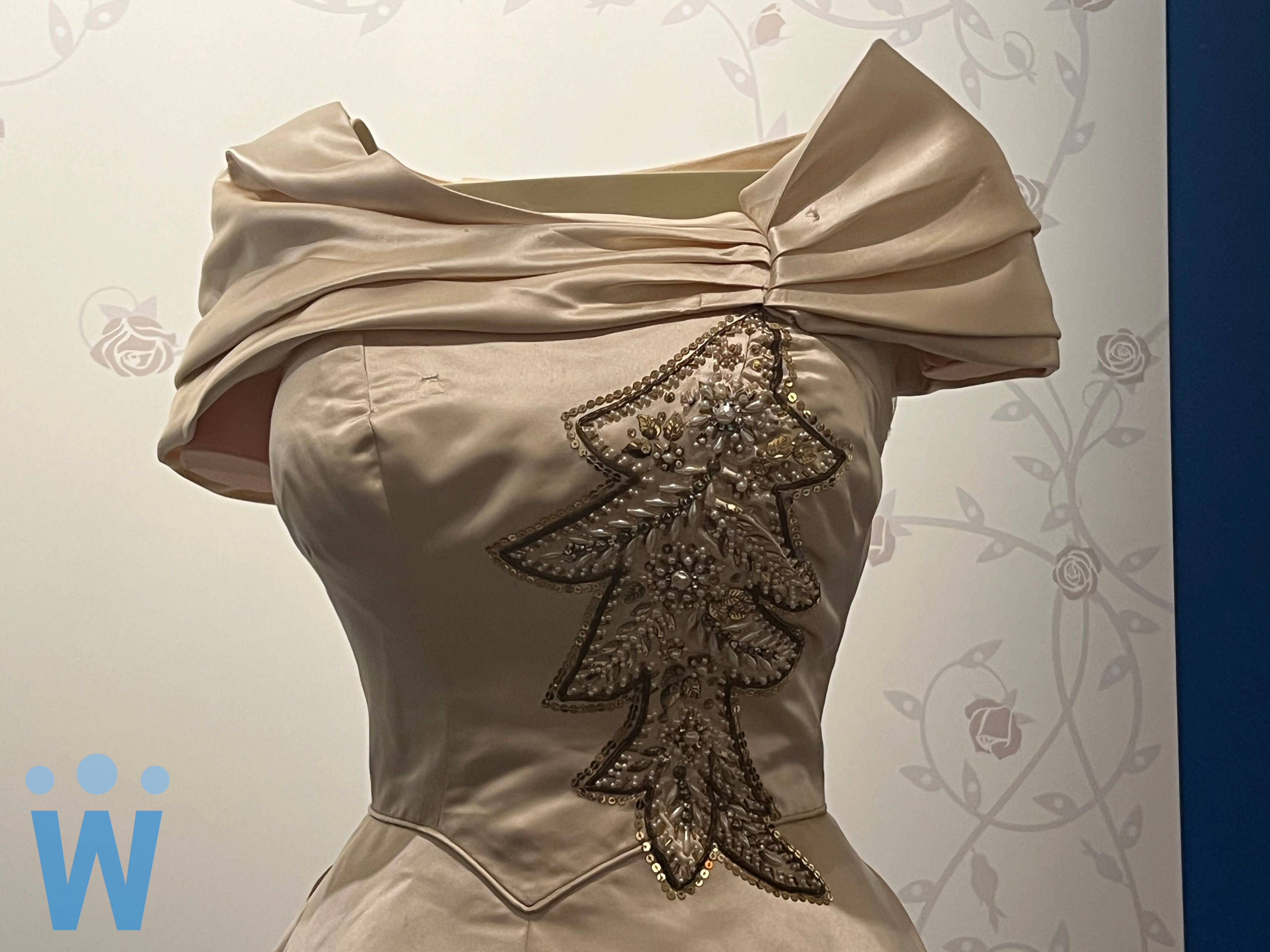 The elaborately embroidered bodice of the Hartnell gown worn for the official photographs of the Canadian tour of 1951 (The neckline was subsequently altered; Photo: Write Royalty Inc.)
In the exhibition, the Hartnell gown stands next to perhaps the most famous outfit worn on that 1951 trip – the checked cotton blouse and poodle skirt that she wore to a square dance in Ottawa. The juxtaposition of the two outfits highlights the range of clothes needed for the trip, especially as the temperatures kept falling as autumn turned into winter. In addition, as the heir presumptive of a monarch in failing health, she also packed black mourning clothes in her trunks. Less than three months after the Canadian tour ended, George VI died in his sleep.
Elizabeth wore the poodle skirt for a square dance that took place on their second day in Ottawa. With most of the ceremonial events out of the way, including an address to the country on CBC Radio, it was time to relax.
After hosting an informal buffet supper for 70 friends and the royal party, the Governor General, Viscount Alexander organized a private square dance at Rideau Hall. He enjoyed the relative informality of Ottawa and Canada and regularly hosted square dances at the Governor General’s residence, according to a historical account of the trip written by James Powell of the Historical Society of Ottawa.
The royal couple needed a half-hour lesson as well as traditional clothes for such a dance. For Philip, that was a plaid shirt, red kerchief around his neck, and stiff jeans, and for Elizabeth, it was a check shirt and a poodle skirt made by the designer who popularized the fashion craze: Juli Lynne Charlot.
As the companion book explains:
This wool and felt skirt is an example of the full circle skirts designed by the New York actress-turned-fashion designer Juli Lynne Charlot using felt from the factory owned by her mother. Her designs are associated with the carefree youth culture of the 1950s, each skirt including appliqued figures or animals in contrasting colours, with the most popular featuring images of poodles – as a result, all such skirts came to be known generically as “poodle skirts.”
Elizabeth’s steel-grey felt skirt didn’t include cut-out figures of animals but rather Romeo and Juliet, set among trailing roses.
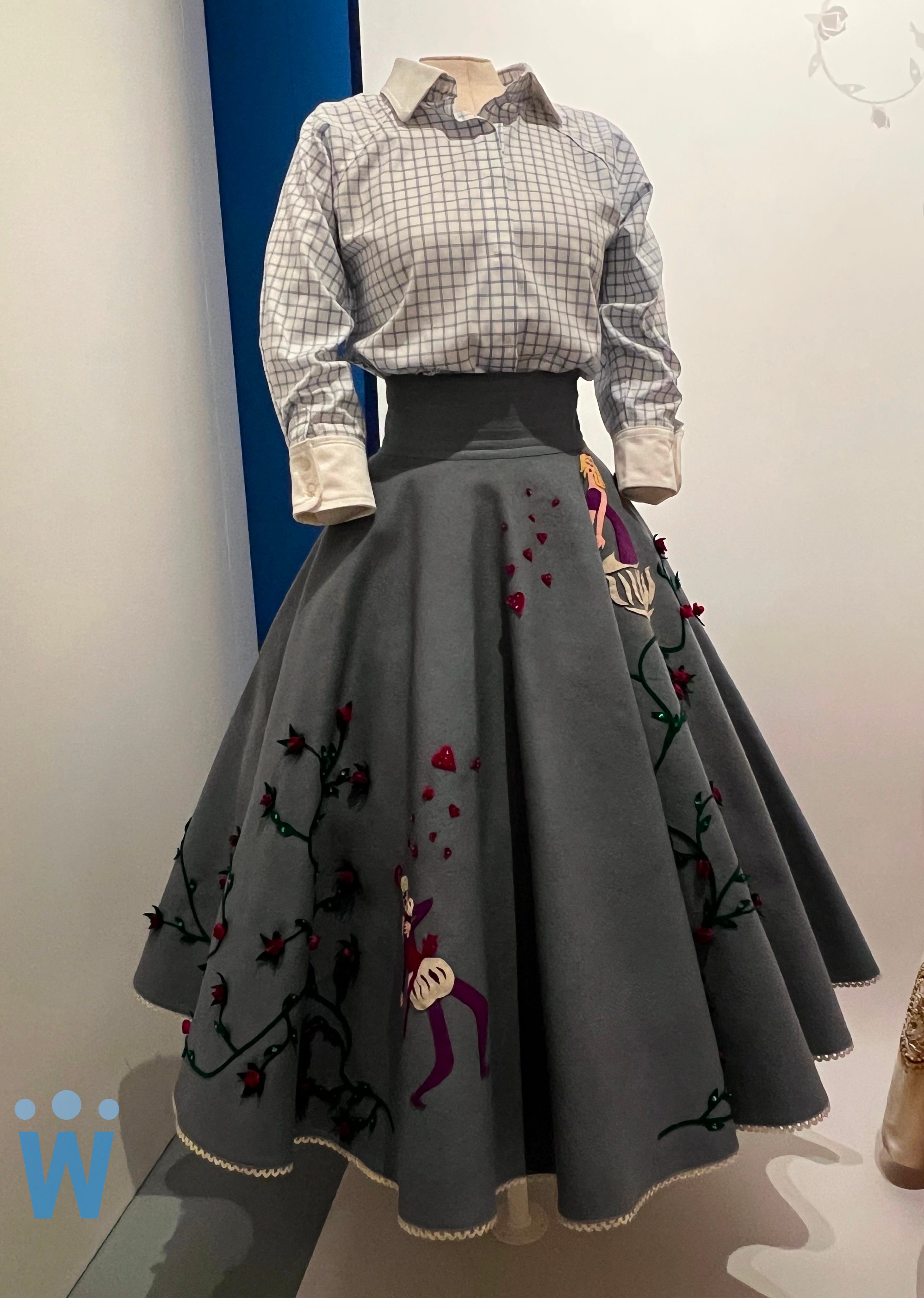 The checked shirt and poodle skirt worn by Princess Elizabeth at a square dance in Ottawa (Photo: Write Royalty Inc.)
They danced until 11 p.m. when the royal party headed to the train station, then located in what is now the temporary home of the Senate in downtown Ottawa. More than 1,000 people were waiting to see them say their official goodbyes before boarding their 10-car royal train.
While most of the King’s Gallery exhibition is devoted to clothes and accessories, there are pieces of royal jewellery worn by Elizabeth II, including the famous Maple Leaf Brooch, which has been pinned onto outfits worn by three queens and one princess: Queen Elizabeth the Queen Mother, Elizabeth II, Queen Camilla, and the Princess of Wales. It dates back to 1936 and was designed by Asprey & Co. (The Nizam of Hyderabad necklace, designed by Cartier in 1935 and worn in that Karsh portrait, is also at the exhibition.)
 Maple Leaf Brooch: Iconic, symbolic, and instantly recognizable
The exhibition also contains an intriguing photo of Princess Elizabeth wearing the Maple Leaf Brooch that her father presented to her mother ahead of their first trip to Canada in 1939. She pinned the brooch to a full-skirted velvet coat and was standing in front of a group of officers of the Royal Canadian Mounted Police.
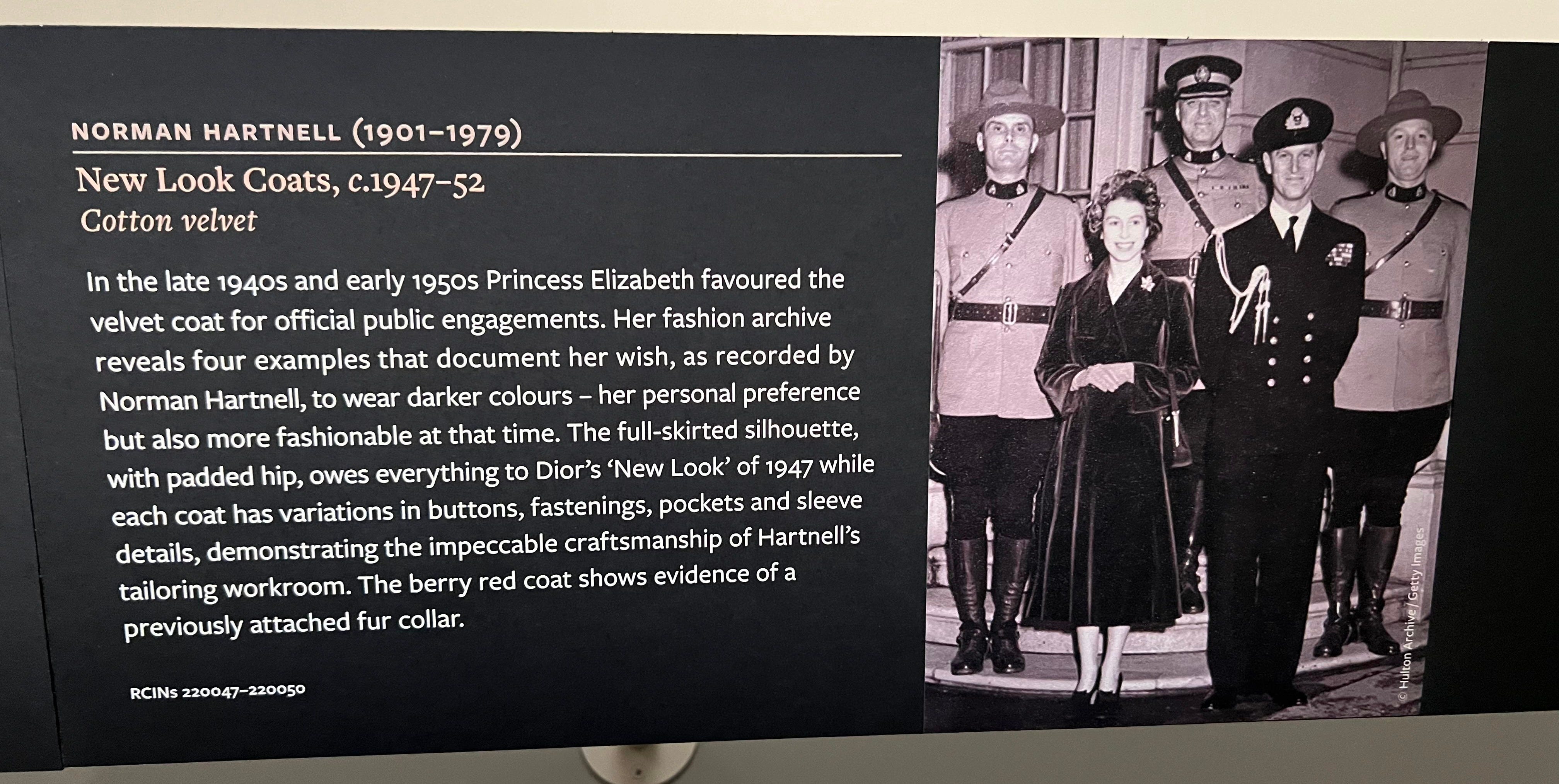
The photo and description is placed in front of a group of velvet coats that were representative of the style, fabric, and shape of outfits she frequently wore during that era. Alas, none of those particular coats can be traced back to the 1951 trip.
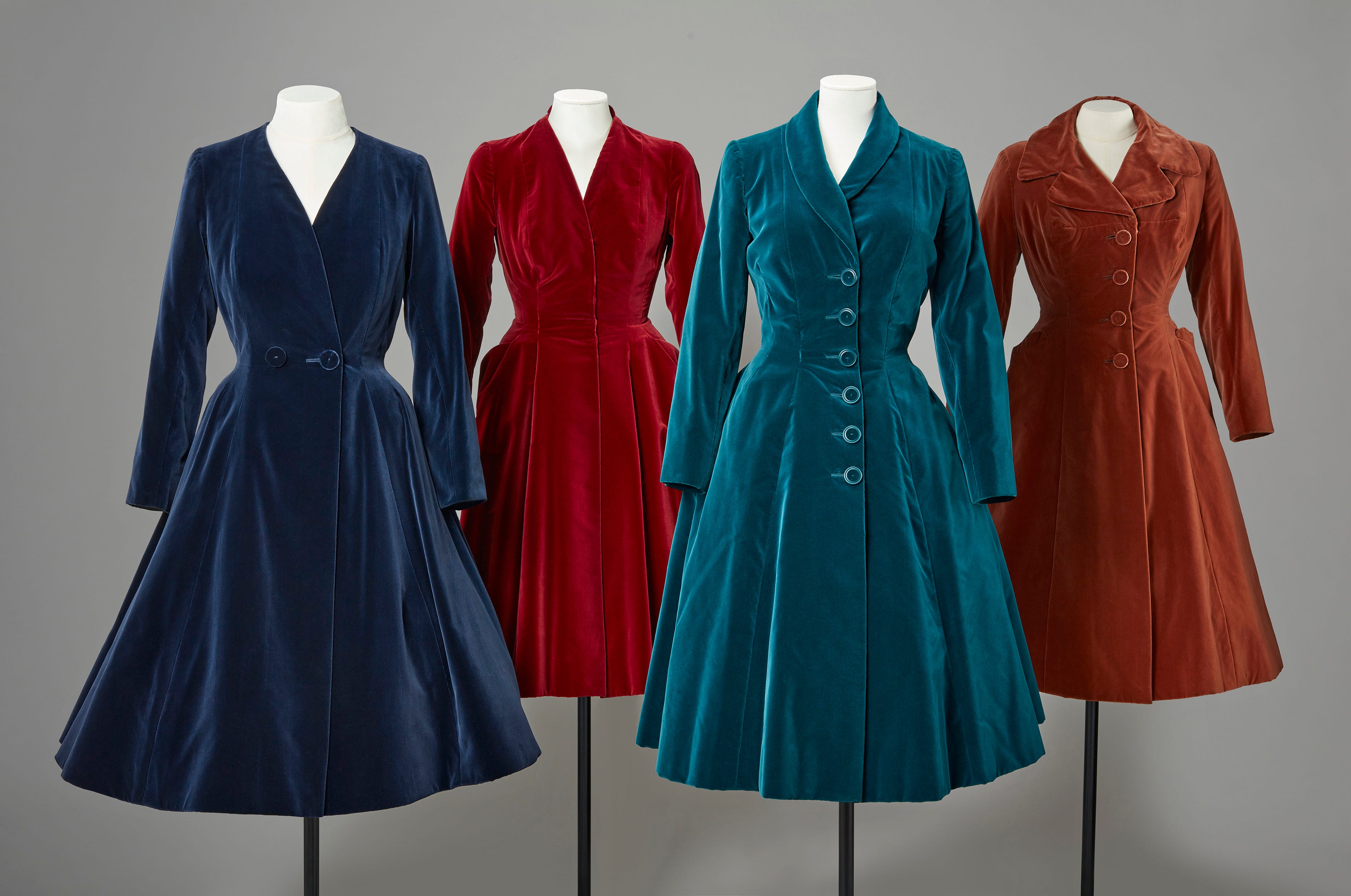
Furthermore, a higher-resolution version of the image itself contained within the Getty library makes it clear that the velvet coat to which she pinned the Maple Leaf brooch had large velvet lapels in addition to a cross-over front closing (it was taken on November 19, 1951) that is not one of those on display at the exhibition.
Such was the interest in the 1951 trip that the National Film Board of Canada produced an hour-long documentary account of the trip titled Royal Journey. That visit set the stage for a decade of long, exhausting tours that culminated in the massive six-week tour of Canada in 1959.
Thanks for reading WRITE ROYALTY by Patricia Treble! This post is public so feel free to share it.