
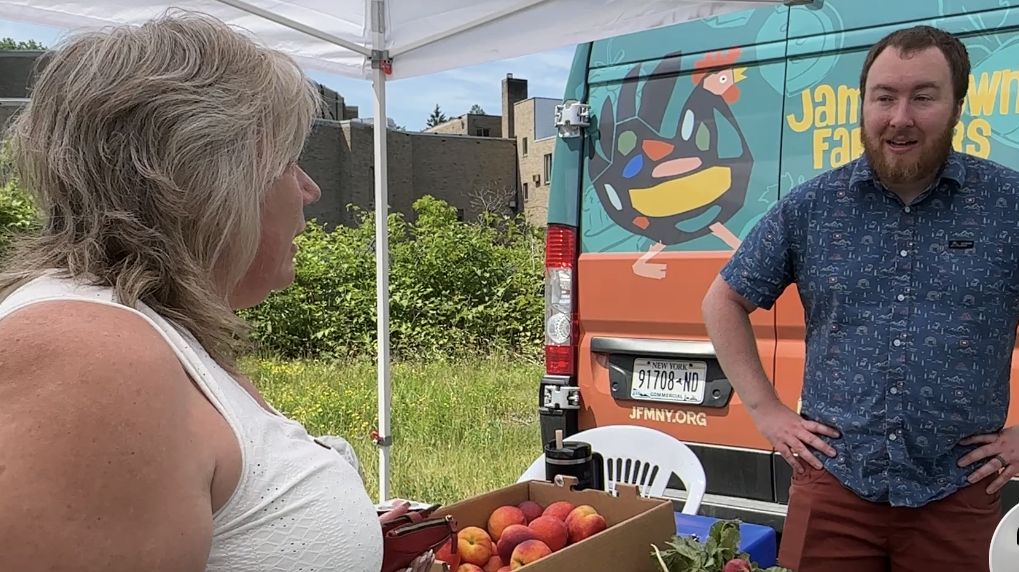
JAMESTOWN N.Y. — Produce, and a variety of other items, comes from local farms, that is then sold at various pop-up farmers markets across New York to people who need it the most.
Janel Blake is a recipient of the Supplemental Nutrition Assistance Program, or SNAP, and her husband is on Social Security.
“We just basically live day to day, I guess,” she said.
What You Need To Know
Farmers market season is well underway
SNAP recipients can use their benefit to purchase fresh produce
For evey dollar spent, 48 cents goes back to the local economy
Blake is one of thousands of upstate SNAP recipients and others shopping at local farmers markets for fresh strawberries and other assorted produce.
Not only can she use her SNAP benefits, but she can automatically save 50% on all produce through the Double Up Food Bucks program.
“Very beneficial, because you get more for your money,” she said. “I paid $8 for four pints of strawberries, which if you went somewhere else, you’d pay a lot more.”
Not only do the markets showcase local agriculture, but they also support small businesses and connect neighbors, who may not have access to grocery stores.
“Providing that third space for people, right, it’s not home, it’s not work. Seeing people come down to the market each week to support local farmers, local producers, local businesses, is really a cool thing to see,” said Nick Weith, director, Food Access Programs, Jamestown Farmers Market.
There are more than 400 farmers markets across the state that receive assistance of their own from the Farmers Market Federation of New York.
Federation leaders help support their members through market development and wireless EBT assistance.
“It’s vital. When you’re at a farmers market shopping for fresh and local produce, you’re really kind of getting the most bang for your buck,” said Jack Riffle, former executive director, The Farmers Market Federation of New York.
Leaders point out for every dollar spent at a local farmers market, 48 cents goes back into the local community.
“Aside from that, the social impact is priceless. You get to see a lot of your community members. You often see the same vendors week after week and you start to build these relationships with people that are in your community,” said Riffle.
While the summer farmers market season varies depending on its location, it typically runs through the end of October into early November.