
Co-op and condo owners are feeling some relief as the J-51 Exemption and Abatement program, which offsets capital improvement costs for co-op and condo owners, was renewed and expanded for the next 10 years as part of the Enacted NYS Budget that was signed into law at the end of May.
The average assessed value eligibility threshold for the program was raised from $45,000 to $60,000, and it will increase annually based on changes to the consumer price index. As a result, an estimated 1,500 co-op and condo properties citywide are newly eligible for it.
The new version of the program also allows co-ops to use the abatement to cover the J-51 application fees.
The announcement comes amid an extension period granted through Local Law 97, which sets strict carbon limits in NYC for buildings that exceed 25,000 gross square feet, giving owners until Aug. 29 to file their Quarter 2 carbon emissions.
In order to comply with LL97, many building owners must find ways of reducing carbon emissions through large-scale energy efficiency projects such as electrification of heating and cooling systems, upgrades to lighting and insulation, and other ways of reducing energy waste.
The tax incentive program supports capital improvements — such as heating system replacements, plumbing and electrical upgrades, and energy efficiency measures — in eligible rent-regulated rental buildings, co-ops and condos.
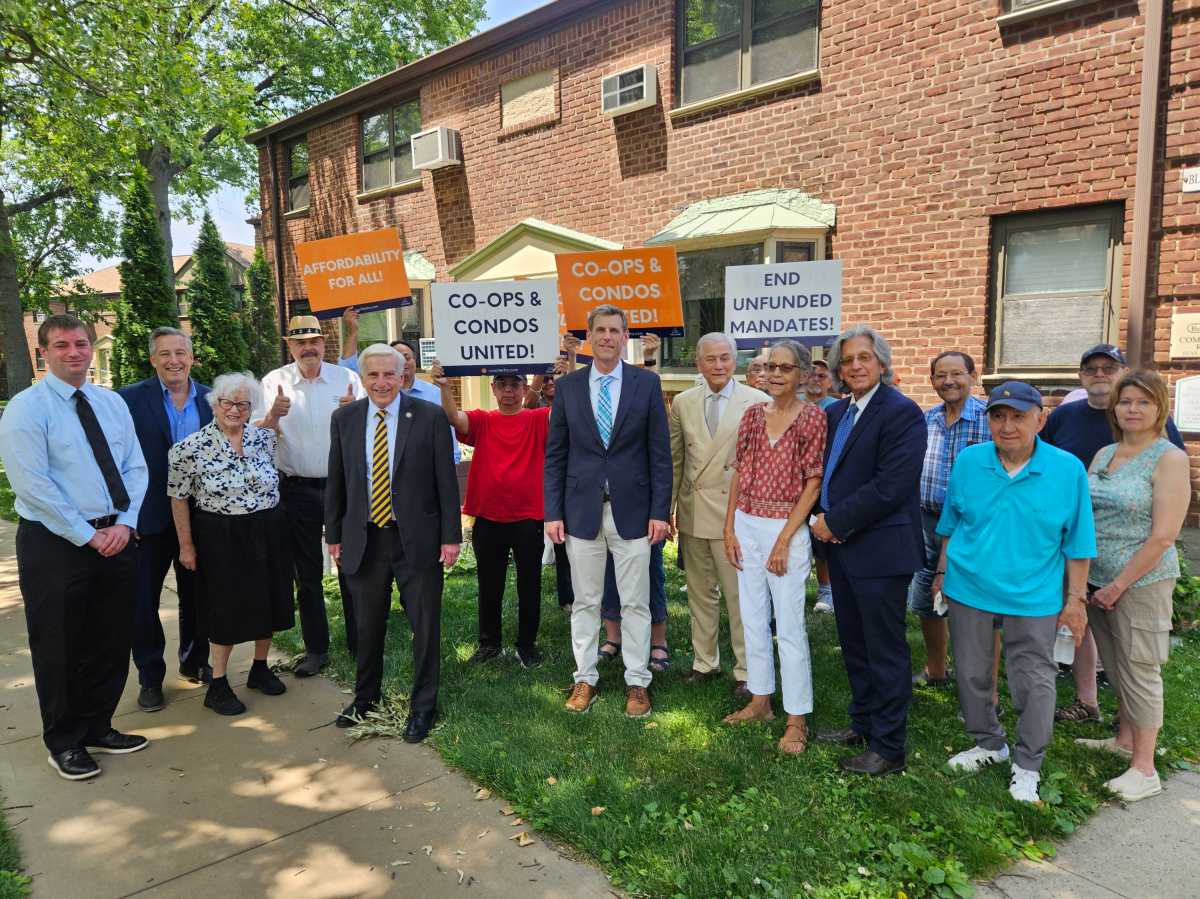
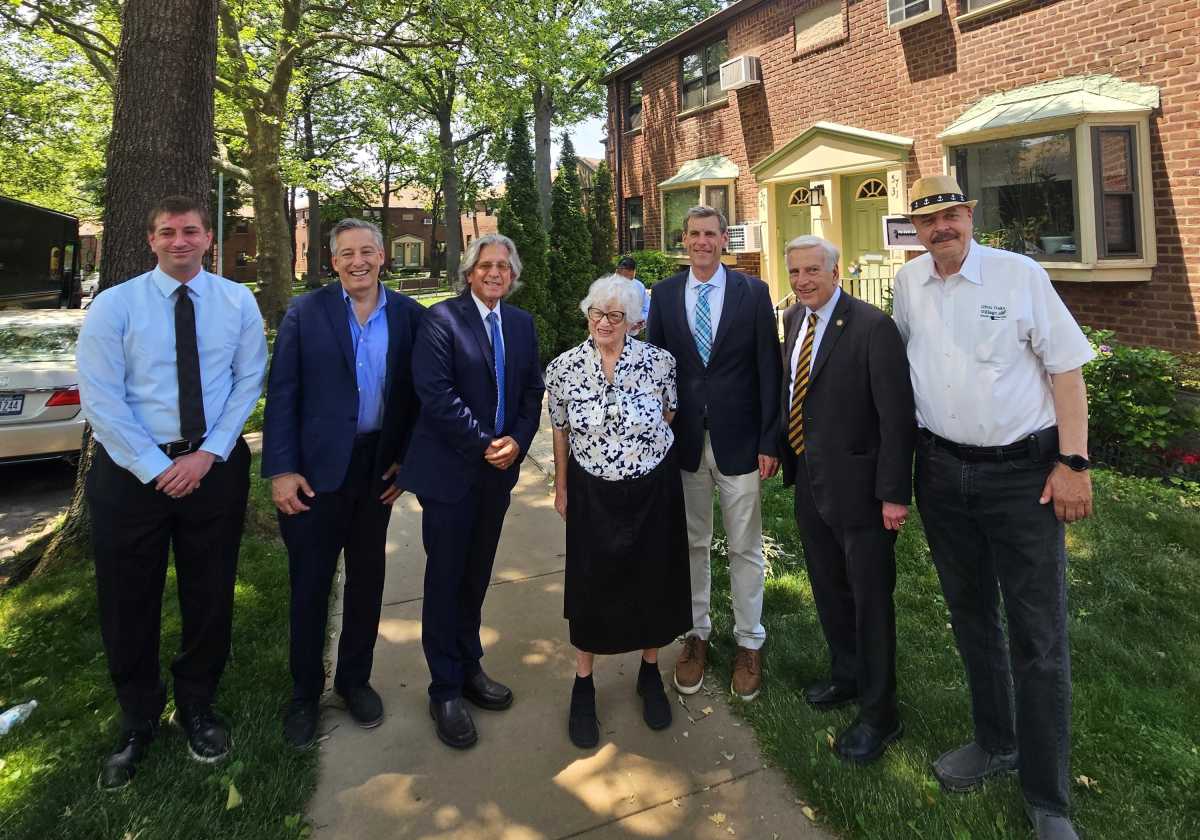 During the news conference at Beech Hills, elected officials and co-op leaders emphasized how important the J-51 program is for supporting middle income co-op residents. Photo courtesy of the Office of Assemblymember Edward Braunstein
Last Thursday, Assemblymember Ed Braunstein joined local co-op leaders, shareholders and elected officials at the Beech Hills Co-Op in Douglaston to announce and celebrate the renewal and expansion of the program.
According to a news release from Braunstein’s office, these changes to the program will ensure that more middle class co-ops, including Beech Hills, can apply for vital tax relief to support capital repairs.
Braunstein emphasized that he’s been a longtime supporter of the J-51 program, which he said offers residential buildings essential tax relief to support capital repairs.
“Co-ops are a cornerstone of middle-class housing in Queens, and by renewing and expanding the J-51 program, we are helping to preserve affordable homeownership in New York City,” Braunstein said. “This is a major victory for our middle-class co-ops, and I thank Governor Hochul, Senator Stavisky and all of the co-op and condo advocates who partnered with me to make it possible.”
Council Member Linda Lee, chair of the Committee on Finance, said the program serves as a lifeline for co-op and condo residents to comply with New York City’s climate mandates, including LL97.
“Since the passage of Local Law 97, residents have expressed concerns about being priced out of their homes due to the expense of necessary repairs and building upgrades,” Lee pointed out. “Together, alongside initiatives being pursued at the City Council level, I remain committed to supporting policies that protect affordability and preserve our cooperative housing communities.”
Bob Friedrich, co-president of the Presidents Co-op & Condo Council (PCCC) and President of Glen Oaks Village, said the program is a “big deal” because it means more middle-income co-op residents now qualify for its tax abatement benefits.
“By helping our residential co-op communities afford those urgent capital improvement projects, this new J-51 program will keep NYC’s aging residential housing stock in good condition,” he said.
In addition, Friedrich continued, application costs for the J-51 program have now been capped and can be included as part of the capital improvement project cost that will be refundable, just as tax abatements over a multi-year period.
He said even the value of the abatement under the new J-51 has increased significantly from covering 70% of the capital improvement costs to 100%.
“This is the type of legislation that may not be the headline-grabbing news flash or the intrigue of a who-done-it crime story,” Friedrich said. “But rather, it’s a story of keeping buildings standing, structurally sound and helping working class communities remain stable and safe.”
Stavisky pointed out that many co-ops and condos have aging infrastructure while construction costs continue to rise. She said J-51 helps make necessary repairs without passing the full cost to residents by raising the eligibility threshold, indexing it to inflation, increasing the benefit and lowering the cost of applying.
“We fought and negotiated for this reform because protecting the long-term stability of our co-ops and condos protects the families who live in them,” Stavisky said. “I thank Assemblymember Braunstein, my colleagues in the Legislature, and the Governor for helping to keep housing affordable.”
According to U.S. Rep. Tom Suozzi, the J-51 program helps address the number one issue facing families across the region — affordability.
“The renewal and expansion of the J-51 program will help buildings make critical repairs, modernize infrastructure, improve energy efficiency and meet environmental goals without placing an even greater burden on residents,” he said. “I commend Assemblymember Braunstein for his leadership and his continued efforts to strengthen this program for middle-class homeowners.”
“The renewal and expansion of the J-51 program is a massive victory for middle-class housing in Queens,” added Warren Schreiber, co-president of the PCCC and President of Bay Terrace Cooperative Section I, Inc. “We are incredibly grateful to Assemblymember Braunstein for his unwavering leadership in protecting housing affordability.”