
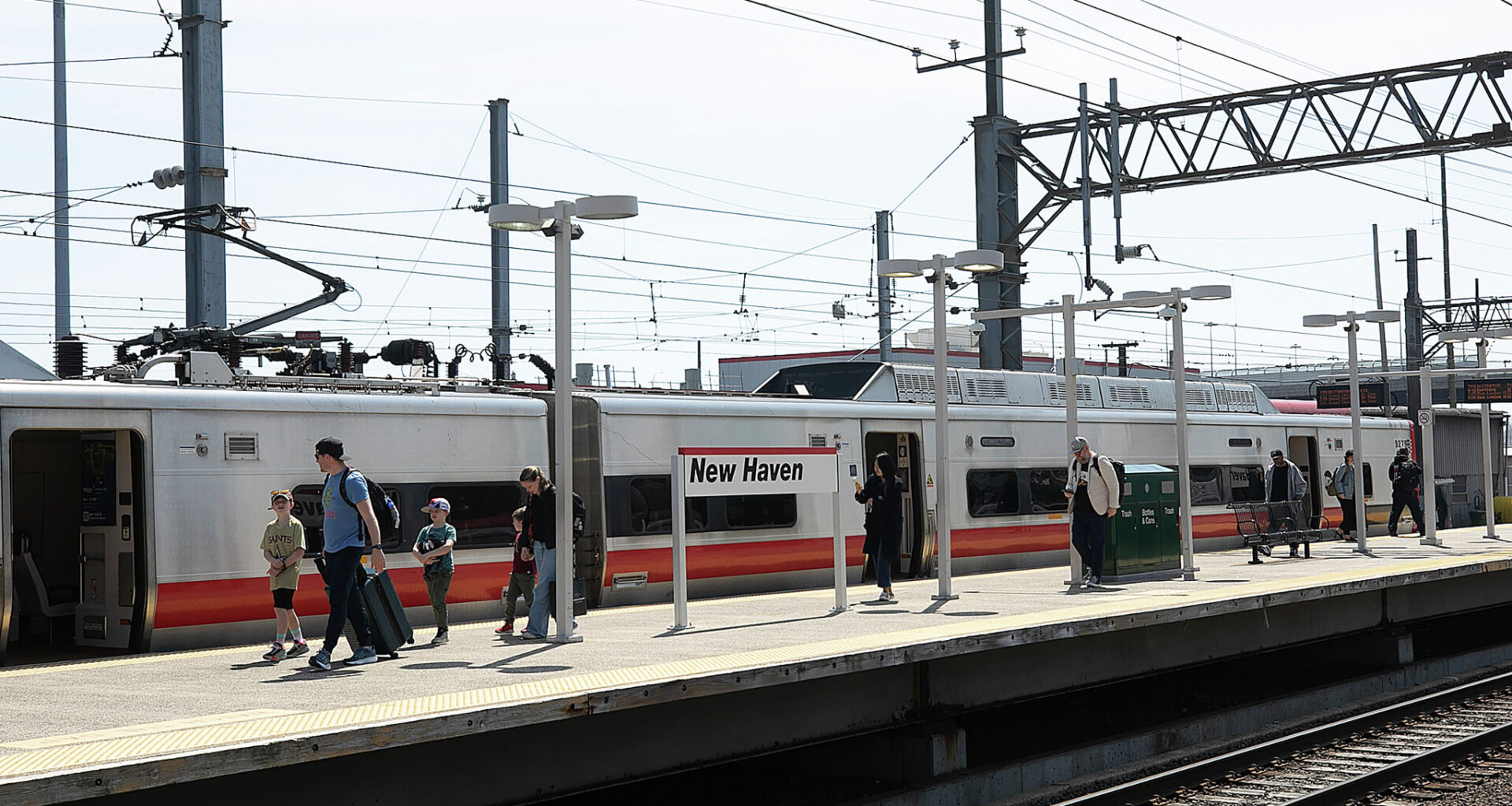
That means an adult passenger who buys a day pass to travel between New Haven and New York’s Grand Central Terminal on a weekend will pay $40.50 instead of the current $38.50.
Jim Cameron, a rail advocate and founder of the Commuter Action Group, said fare hikes obviously don’t encourage ridership.
“Every fare increase is another excuse for somebody to say, ‘I’m going to go back into my car. I’m going to try driving again,’” Cameron said.
But data from DOT’s public transit dashboard indicates that the New Haven Line’s ridership is nevertheless trending upward.
For commuters, rail is the better option because of congestion pricing and parking rates in New York City, Cameron said. He compared the choice rail commuters face to that of highway commuters grappling with high gas prices.
Cameron also argued that train ridership has increased because employers are requiring workers to spend more time in offices — not because of any improvements to rail service or deals for riders.
A spokesperson for the Metropolitan Transportation Authority, which oversees Metro-North, referred a request for comment to DOT, noting that MTA didn’t propose the fare hikes.
Despite the higher prices, rail is still “one of the most affordable and convenient ways to travel across the state and region,” a DOT spokesperson said.
“As equipment, labor and maintenance costs to operate these services continue to rise, fare adjustments were needed to maintain existing service levels and avoid reductions,” DOT’s Eva Zymaris said. “CTDOT is strongly opposed to service cuts at a time when ridership continues to increase. Fare revenue remains a critical source of funding to CTDOT and its service partners’ ability to operate a safe and reliable transportation system.”
brianna.gurciullo@hearstmediact.com