
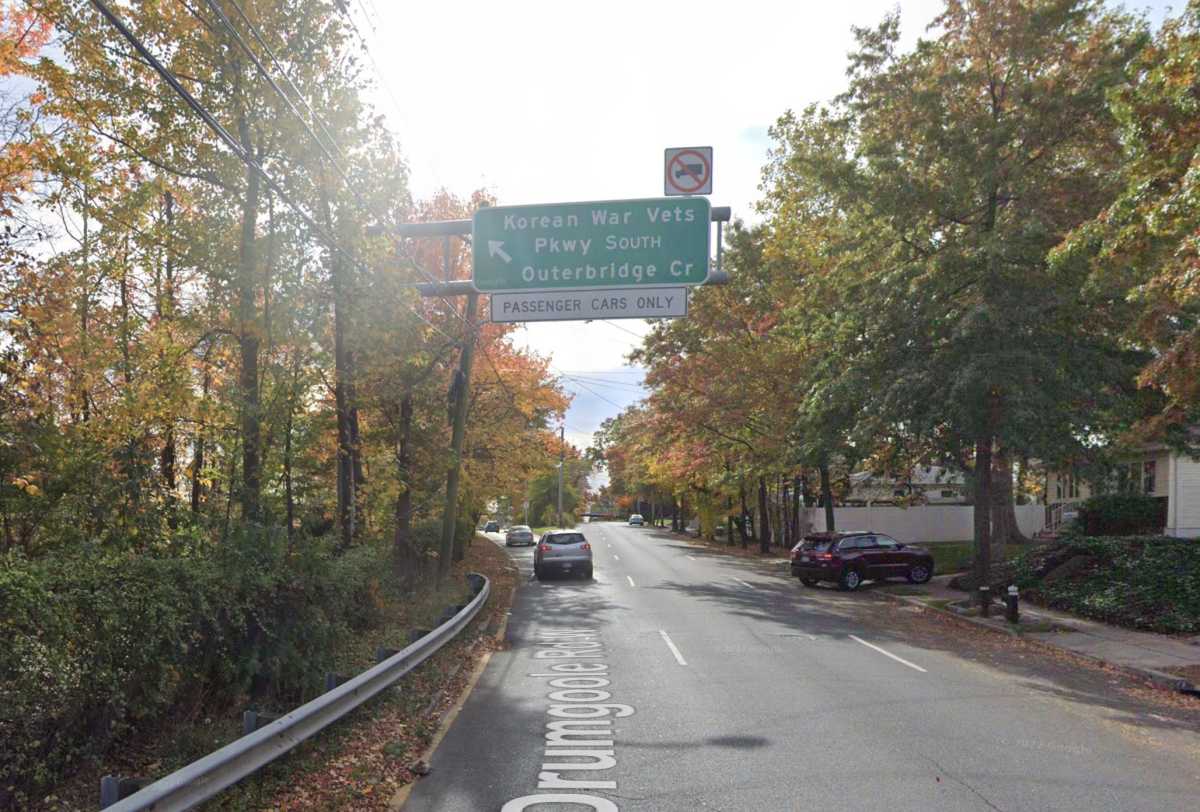
City officials are considering opening a restricted parkway on Staten Island to commercial traffic in a move that could shatter a long-standing precedent affecting every motorist in New York City.
The city’s Department of Transportation is considering opening the full-length of the Korean War Veterans Parkway (KWVP) to commercial traffic as a way to, it purports, reduce the amount of truck traffic operating on other local streets. The agency must get the green light from the state Department of Transportation, which controls the KWVP, to initiate the change, which has evoked great concern among Staten Island residents and elected officials.
The KWVP comprises four of the 100 miles of limited-access parkways running through the five boroughs of New York City, including the Bronx River Parkway, the Grand Central Parkway, the Belt Parkway, and the FDR Drive.
Most, if not all, of those 100 miles of limited-access parkway are built to accommodate large trucks and other commercial vehicles. One key reason for this is the low overpasses that make it impossible for trucks and buses to clear (these overpasses are a lasting reminder of the legacy of Robert Moses, who did not want buses carrying people of color from traveling the parkways to the beaches he built on Long Island).
Another key reason is the type of asphalt and concrete used to line the parkways themselves, which are equipped for passenger vehicles, not for heavier rigs. The KWVP, as it happens, is set to undergo a major renovation this fall to address wear-and-tear from heavy use over the years.
Despite these challenges, and ultimately the concerns of Staten Islanders, the city and state DOTs may nonetheless approve opening the KWVP to commercial vehicles — and we fear that could very well open the door for both agencies to eventually seek similar changes on other limited-access parkways in the city.
Inasmuch as limited-access roadways can help keep commercial traffic off the streets of residential communities, the city and state risk increasing commercial traffic volumes not just on parkways but also on designated expressways by lifting a commercial traffic ban on parkways.
What happens when a parkway or an expressway becomes tied up with traffic? Every car and truck driver knows the answer: Find the nearest exit, and take local streets to get around it.
And that would ultimately undermine the very goals the city DOT seeks to achieve in its vision to open the KWVP up to truck traffic.
The city DOT would be wise to abandon its plans for the KWVP, and put to rest any speculation that other New York City parkways could be commercialized.