
In an exclusive sit-down interview with amNewYork, Bragg cited statistics that demonstrate a 60% drop in shootings and a 64% decrease in homicides across the borough since 2021. According to Manhattan’s chief prosecutor, these numbers have been achieved by working with law enforcement in problematic areas of the borough and by investing in preventive programs.
Last week, the District Attorney’s office announced its latest youth gun violence prevention grants to community-based organizations, the fifth round of investments. Ten different organizations were awarded with $300,000 between them.
“When you see youth in a neighborhood where they’re vulnerable to gun violence, recording music with anti-violent lyrics, an activity to do that is affirming, and also hopefully that message impacts others. Or when you see, as a group did last summer, youth leading podcasts talking about some of these challenging issues, exploring their feelings, exploring facts, exploring what they’re seeing. Again, I think that helps them, gives them a positive outlet, keeps them out of harm’s way,” Bragg said.
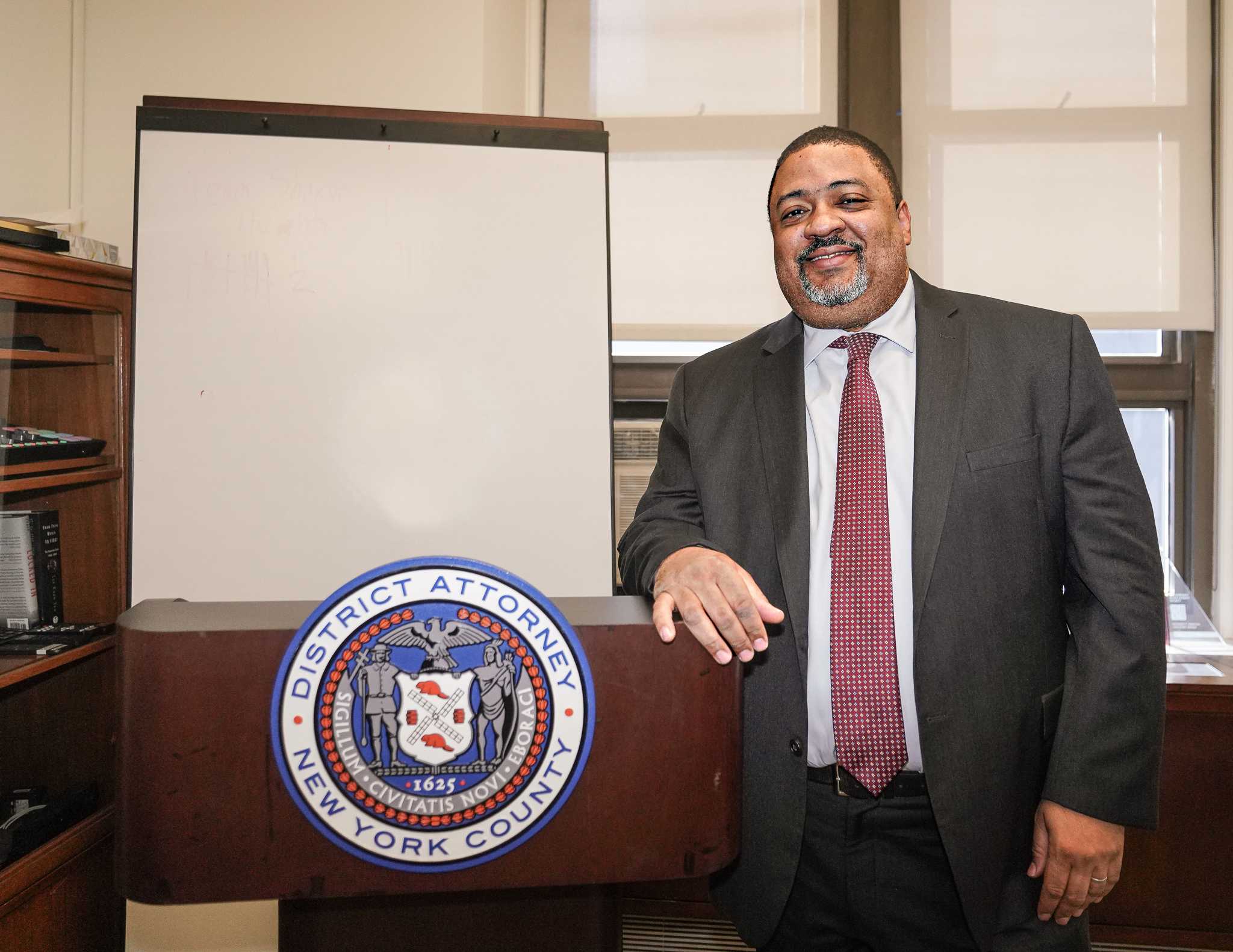 Manhattan District Attorney Alvin Bragg. Photo by Dean Moses
Bragg shared that over the previous four years, some 550 young people have been involved in these programs. And while he admits that the exact impact these initiatives have made is not easy to quantify or measure, he says he has seen at-risk youth transform from mentees to mentors, helping to guide others to productive paths in life rather than crime.
In addition to these investments, Bragg’s office participates in gun buyback programs — the latest of which took place on June 13 and saw 147 guns turned in — while also operating the Survivor Services Bureau.
Created in 2024, the Survivor Services Bureau provides free counseling and therapy services to crime victims, witnesses, and their families. Bragg told amNewYork this is a way to stop gun violence retaliation before it happens.
“We have increased the scope and size of our Survivor Services Bureau, focusing on those who’ve experienced gun trauma and helping them with that trauma before it metastasizes from them to their families, and their neighborhoods with gun violence,” Bragg said. “I’ve seen it personally in my life and see it in our docket, people who are a victim one month, a witness another month, may also be a defendant later that year. So, addressing that trauma through counseling and other services we provide before the trauma metastasizes is one, good for that victim or that witness, but also good for interrupting the cycle of gun violence.”
Although the District Attorney stated that he is proud of the major declines, he also expressed that he is not taking a victory lap. amNewYork quizzed him on areas in the borough where he feels more work still needs to be done.
“There’s still a lot of work to do, and so we’ve got Central Harlem, East Harlem, Washington Heights, the upper part of the borough, and then the Lower East Side, and so that’s where we’ve seen the historical concentrations, and again, there have been some significant declines. But we know those areas, the sort of chronic conditions that we need to be very vigilant about,” Bragg said. “The 60% decrease is good, 75% would be better, and so I think it’s continuing it with the same intensity and resources.”