
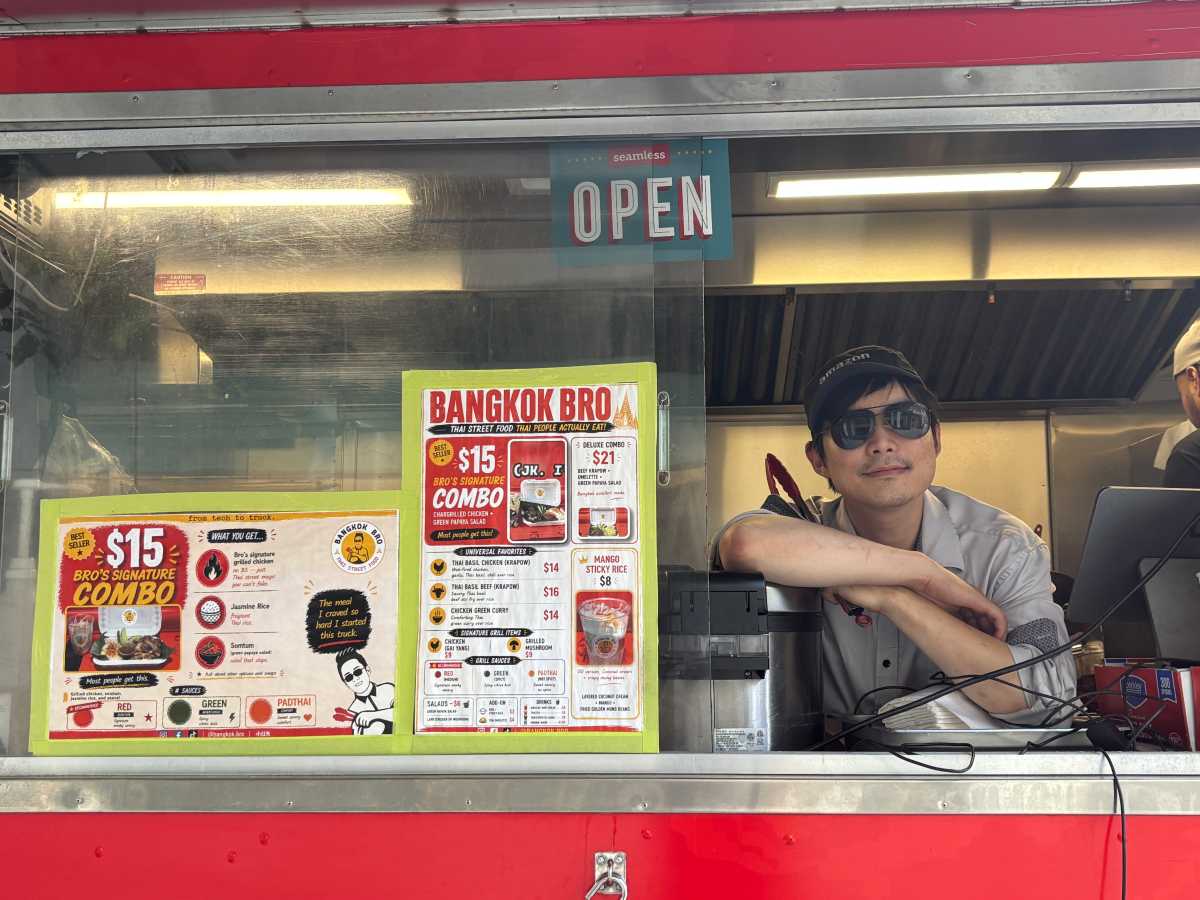
Nadhipat Vaniyapun has worked in tech, from Amazon to various startups, including some he helped launch, but his latest startup, Bangkok Bro, literally starts up every day in Long Island City – with a key.
A graduate with an MBA from the University of California at Berkeley, his latest startup is a Thai food truck based in Queens.
He was born in Thailand, where he lived until 15, coming to the United States for high school and college, as well as working as a product director at a manufacturer and for the Thai government to help startups.
He launched several startups and has now launched a business that brings the food he grew up with to customers in Queens and across New York City.
“I was thinking, why not try the food we actually eat, and that was the beginning of Bangkok Bro,” he said. “I knew I loved cooking. I worked in tech, but I wasn’t a professional chef, so learning the systems and what’s needed to get the truck going took a while.”
Bangkok Bro, a Thai restaurant on wheels, or at least a mobile kitchen, was designed and built in Long Island City, and is based at a Long Island City garage that also includes commercial kitchens that serve a small fleet of food trucks.
In addition to Vaniyapun’s Thai truck, two Mexican trucks, Greek, Chinese and Korean trucks, Indian carts and hotdog carts operate out of this home base for mobile meals.
“That’s where we store our ingredients, prep our food and clean at night,” Vaniyapun said. “We leave from there and return there every day.”
In addition to other locations, as well as private events, Bangkok Bro is a regular in Queens, setting up twice monthly outside Fifth Hammer Brewing in Long Island City, and every other Friday evening near Judy and Punch and Maggie Hall’s (side by side) in Astoria.
“We have a following, a crowd who likes us,” he said. “They’re excited to see us.”
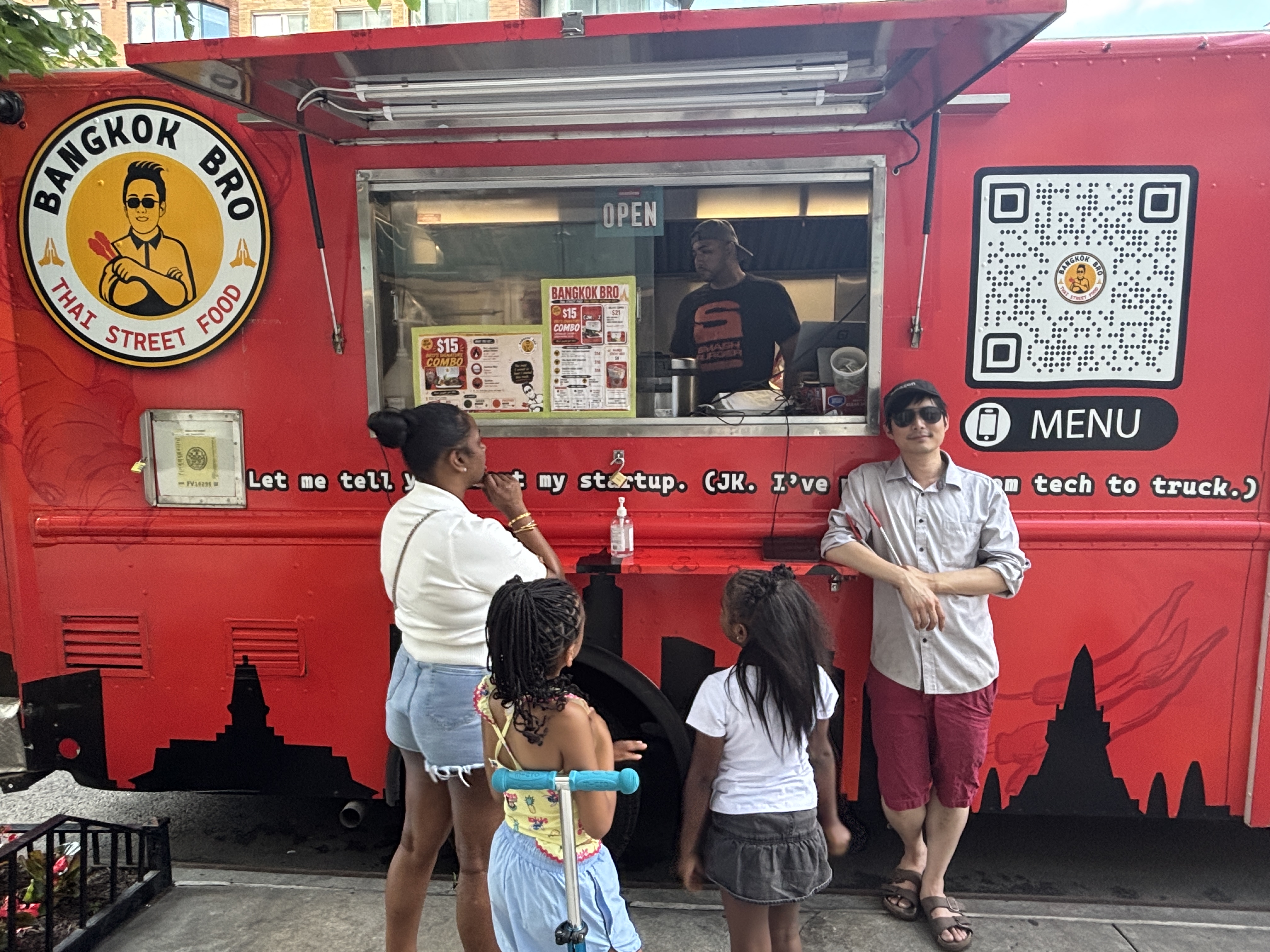 Photo by Claude Solnik
Tech is still part of the picture for Vaniyapun, but not the way it had been. They’re online at bangkokbro.com, and use delivery services such as GrubHub, Uber Eats and Door Dash. You can order online as well as by walking up to the truck.
“Regulars order ahead before they get there,” he said, noting Bangkok Bro also communicates with customers via Instagram, TikTok and other platforms. “We have a schedule, but the best way to find us is social media.”
The bright red truck has the words “Let me tell you about my startup. I’ve pivoted from tech to truck” written across it and greeting customers who sometimes get to know him as a company founder with food as the mission.
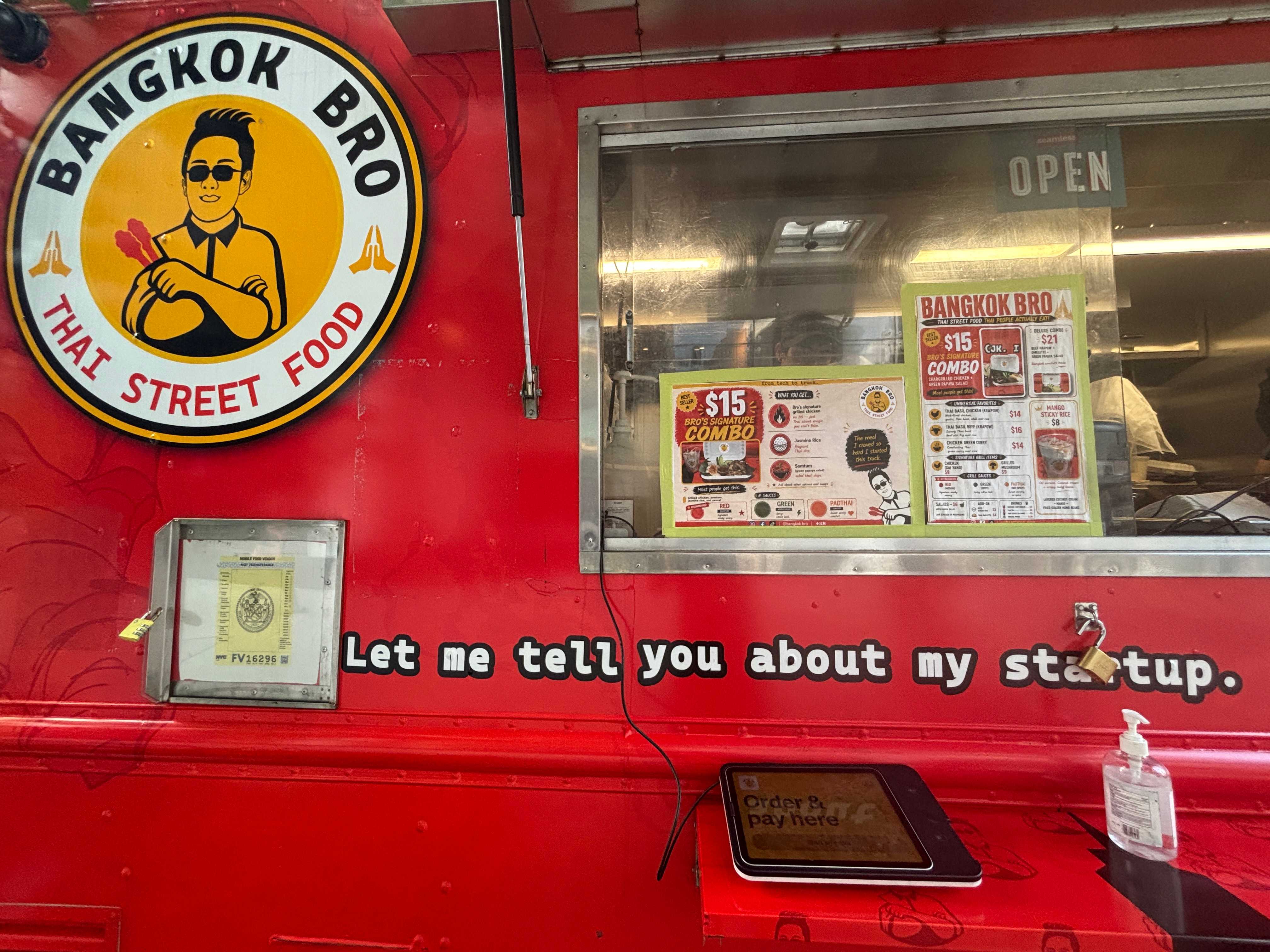 Photo by Claude Solnik
“I’ve been in Bangkok on two different occasions and I fell in love with Thai food for decades, but this is as good as anything I’ve had,” said Rudy Lucas, a regular customer, as he ordered. “I like being able to see it prepared and having a bit of a relationship with the team.”
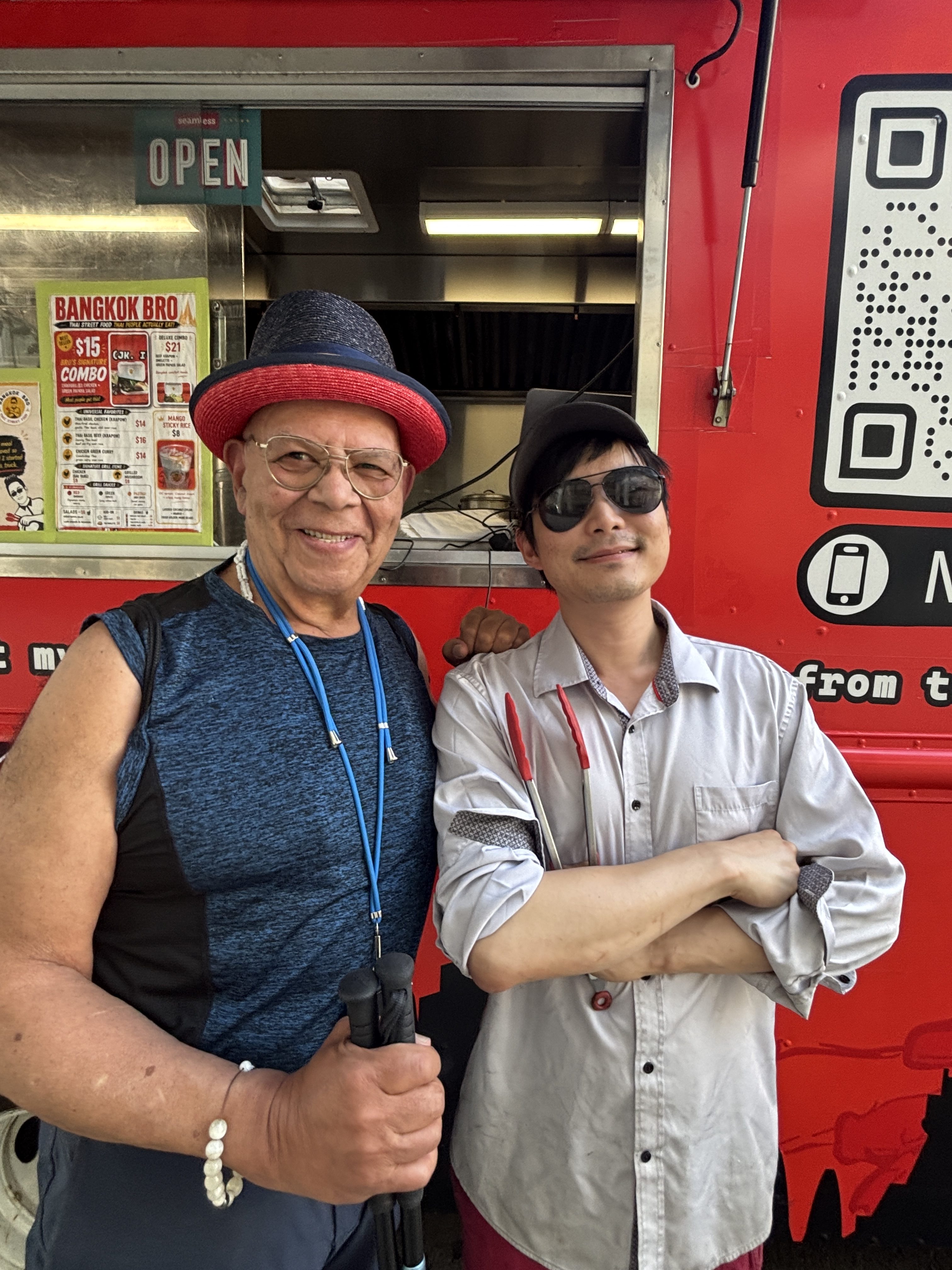 Rudy Lucas and Nadhipat Vaniyapun. Photo by Claude Solnik
If mobile food was once a hodgepodge of hot dogs and pretzels, New York City’s mobile food menu and market has gone global.
The New York Food Truck Association includes more than 100 food trucks, such as Yumbro Filipino and Hawaiian dishes; El Asado Mexicano, El Toro Rojo and El Gallo Negro; Nao’s Caribbean Flavors; Utopia Bagels; Vegan on the Fly; Shake Shack; Van Leeuwen Ice Cream and many more.
Vaniyapun comes from tech, having started and gotten grants for startups, including a 3-D manufacturing company that leveraged his knowledge of the footwear industry. “I couldn’t find the right team to grow it,” he said.
He also launched a company designed to use Zoom for education when Zoom was catching on.
“The hardest thing about doing a business is having the right people,” Vaniyapun said. “Finding people you know will stick with you in the beginning when you’re not necessarily making money.”
He worked for Amazon and several other companies before launching this startup in the form of a Thai food truck. Since it wasn’t easy to get investors, he tapped his savings and sold a family home in Thailand.
He got permits, had the truck built in Queens and hit the road around 10 months ago with a vehicle blanketed by a graphic based on his image as logo.
“I wanted my face on it because I believe in accountability,” Vaniyapun said. “This is who that represents. This is the food I miss from growing up in Bangkok. I couldn’t get it here. That’s the food I wanted to introduce to America.”
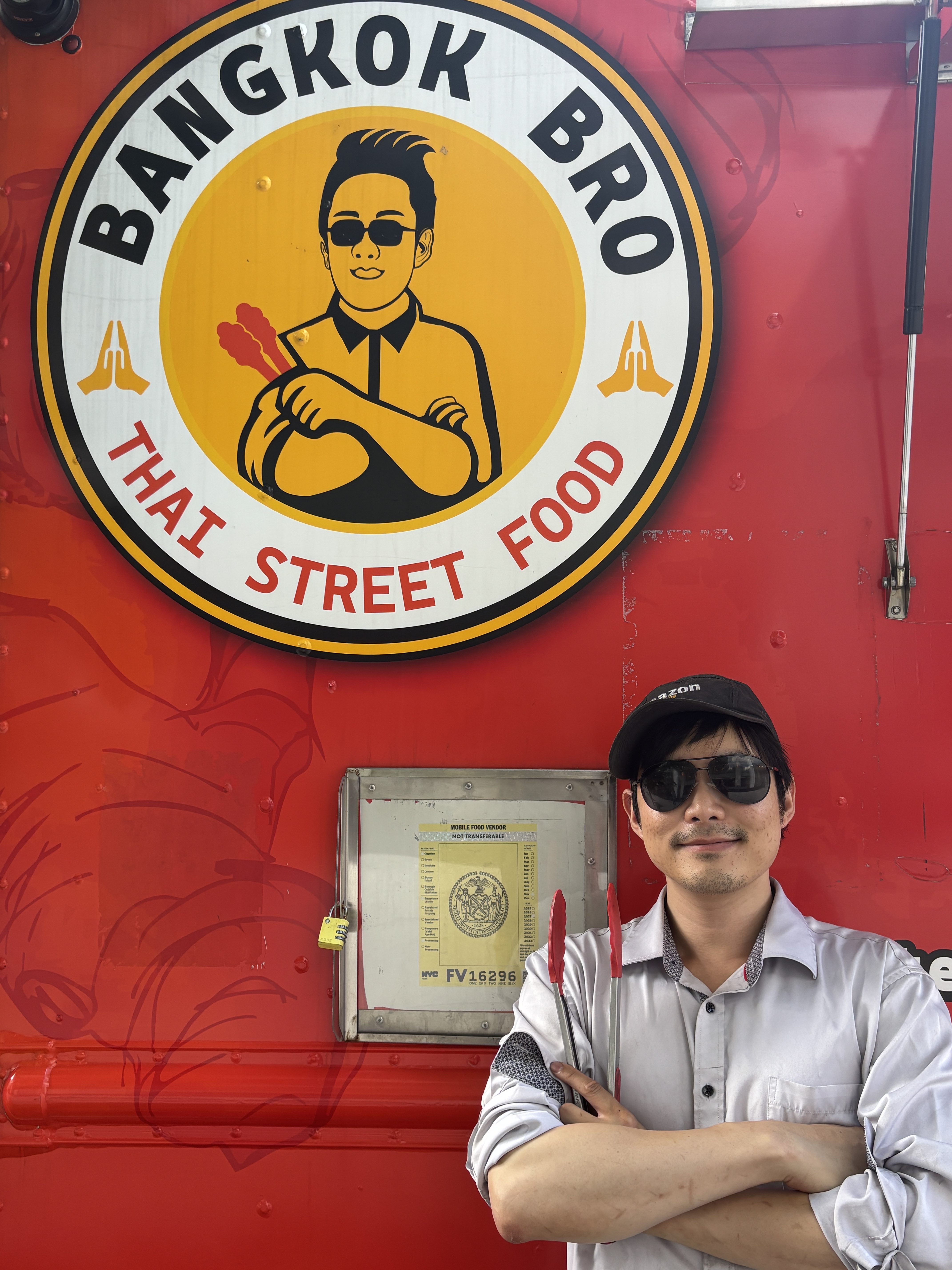 Photo by Claude Solnik
He has an E-2 visa for entrepreneurs and investors that lets him bring Thai food to town and is finding a good reaction.
“I’ve been going back-and-forth since I was 15,” Vaniyapun said. “One of the things that I missed living in the U.S. was authentic Thai food, the kind I ate back in Bangkok.”
He said a lot of tech skills are “not transferable,” but certain things are, such as hard work, tech, marketing and business training.
Bangkok Bro uses various apps and platforms, as well as a QR code menu so people can order without being there, as well as an ordering kiosk at the truck.
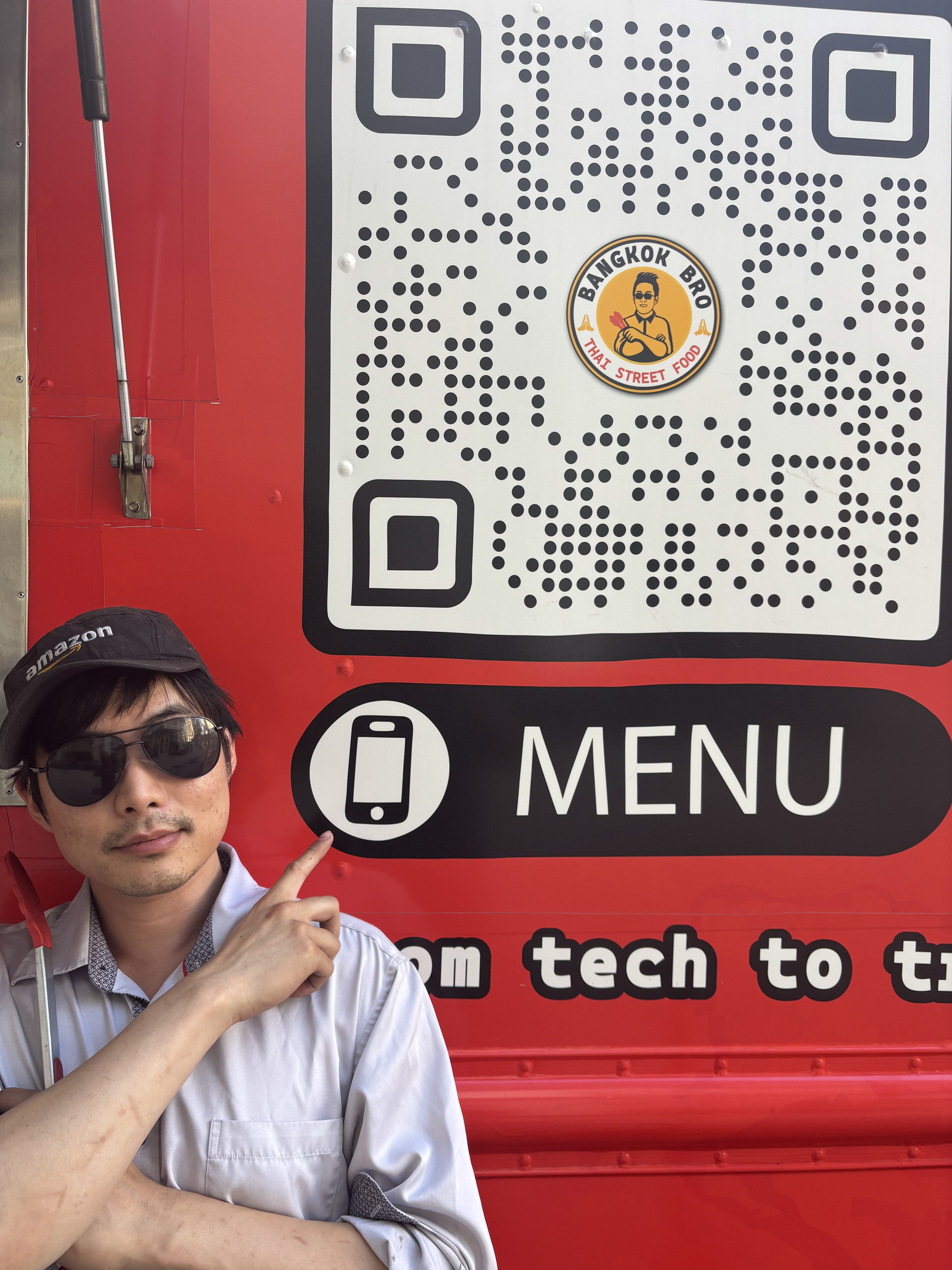 A QR code menu is available at Bangkok Bro. Photo by Claude Solnik
“I ping them whenever it’s ready, so it just makes life easier for everyone,” Vaniyapun said. “I have customers I know by name who come by for lunch and dinner almost every day that I’m on the same spot.”
Since he self-funded the business without deep-pocketed investors, he needed to be in the black quicker than many startups might.
“A lot of investors might expect you to be losing money for years with a lot of startups,” Vaniyapun said, “but in a food truck, you have to prove that you can make revenue almost right away.”
They were doing well for the first few months until “the worst winter in 10 years in New York.” Better weather means better business.
“Sometimes we can’t do the dinner as we want, because we are out of stock,” Vaniyapun said. “So right now we’re focusing on not selling out.”
BangkokBro has been attracting crowds, including people at work, tourists and those who love Thai food.
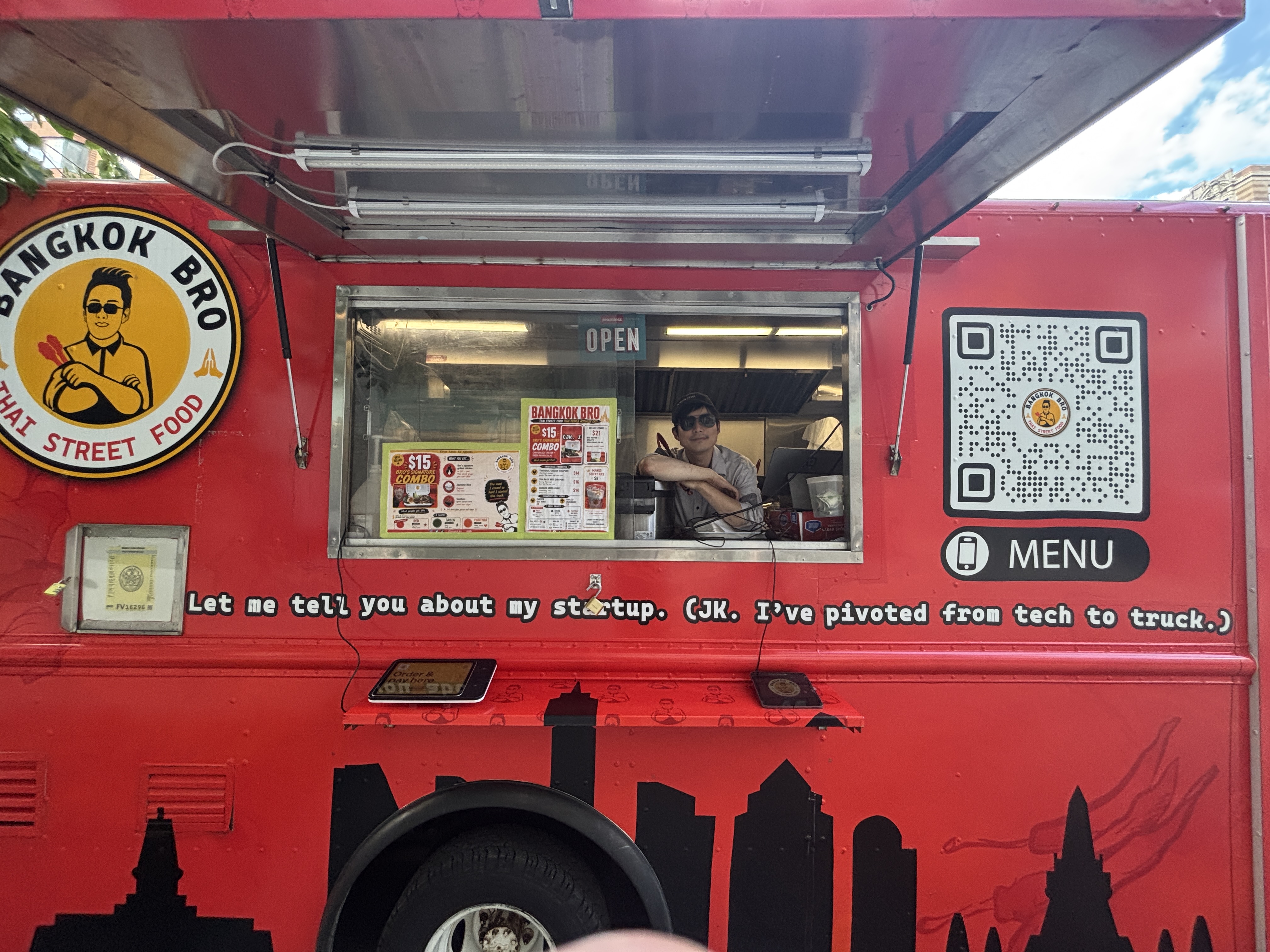 Photo by Claude Solnik
“The truck is a good conversation piece, but we are restricted by a lot of things here,” Vaniyapun added. “I can’t make food as fast as I want to in a truck.”
He would love to operate a ghost kitchen where people order online for delivery. “That will be step three of the plan,” he said.
He has worked on startups, although this is more about soft drinks (or mango shakes) than software and real cars, not clicks as traffic.
“No, I never thought I would do food,” Vaniyapun said. “I love food. I love eating, I love cooking, but I never thought I’d do a food business.”