
The carriage horse that collapsed and died in Central Park last week ingested a toxic shrub planted around the park, according to a necropsy shared Tuesday by the union that represents the city’s buggy drivers.
The horse, named Deniz, was under the care of carriage driver Nurettin Kirbiyik when he ingested Japanese Yew on the East Drive of the park. Deniz later died as he pulled two passengers around the loop.
The examination of Deniz’s corpse, which was conducted by the Cornell University College of Veterinary Medicine, revealed “abundant plant needles” in his stomach, mouth and digestive tract.
The horse’s death renewed calls from advocacy groups to ban the carriage industry from Central Park, claiming the animals are abused and mistreated.
But officials with TWU Local 100 on Tuesday blamed the Central Park Conservancy for planting shrubs that are toxic to horses. The union also demanded an apology from NYCLASS, the main group that’s long protested the carriage horse industry, as well as local lawmakers who have supported a law to bar the carriage horses from Central Park.
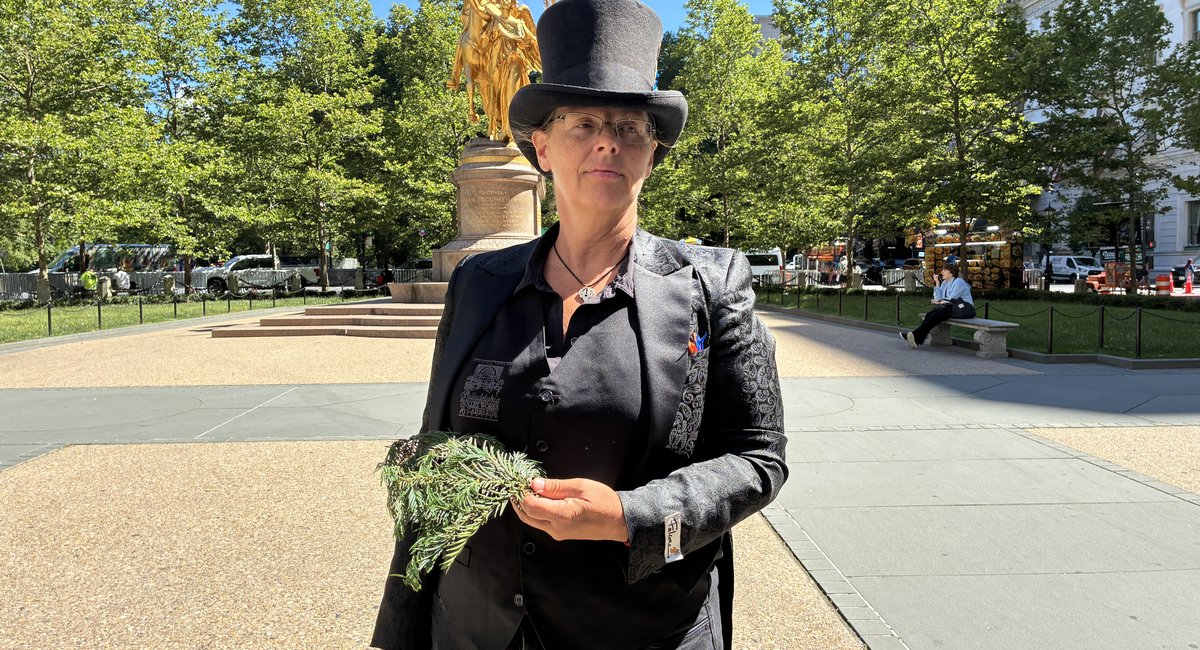
TWU Local 100 shop steward Christina Hansen said the carriage horse drivers can’t always control what their animals eat while they walk around the Central Park loop.
“We are supervising them, but a toddler just as easily could have ingested some of this plant,” she said. “The fact that it was anywhere within reach of a horse that was on the carriage drive, which was designed for horses to be on, is outrageous.”
In a statement, Central Park Conservancy’s Kate Blumm wrote that Japanese Yew is commonly planted across the United States and Canada and that it’s against park rules to allow horses to graze on any plants.
“This tragedy underscores something larger: it’s time for New York City to join other major cities around the world and ban horse carriages from our city,” Blumm wrote. “Today’s park is busier and more crowded than ever. For the safety of visitors, other animals, and the horses themselves, we continue to support a ban on carriage horse rides in the park.”
The pushback by Local 100, a politically influential union that also represents a majority of New York City’s transit workers, comes as some lawmakers are pushing to pass a bill to abolish the carriage horse industry. The measure is called Ryder’s Law, named after a horse that collapsed and died on a Midtown street in 2022.
“TWU’s own statement demonstrates a complete failure to properly supervise and protect a horse in their care,” said Edita Birnkrant, executive director of the animal rights group New Yorkers for Clean, Livable, and Safe Streets.
Mayor Zohran Mamdani has said he thinks the carriage horses should be exiled from the park, but has also said he wants to work with the drivers union to find a solution that prevents the loss of their jobs.