
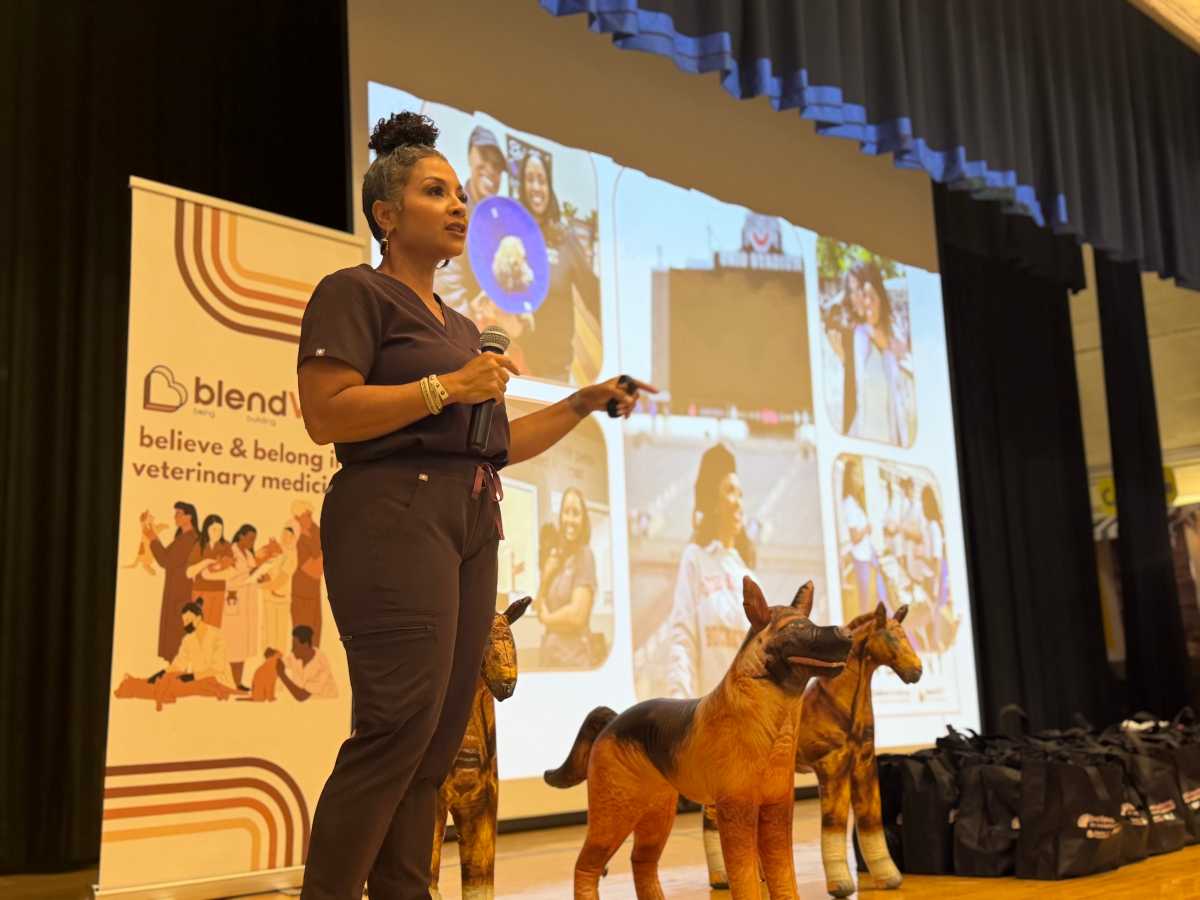
Queens native Dr. Niccole Bruno, a veterinarian and founder of the blendVET Foundation, brought her national STEM education program to the school in Kew Gardens Hills on June 5, teaching students about the field of veterinary medicine through hands-on training and career-ready skills.
During the Believe and Belong in Veterinary Medicine program, students spent the day rotating through interactive VETlabs across multiple veterinary specialties, including emergency medicine, forensic veterinary medicine, general practice, shelter medicine, surgery and nutrition.
Each classroom was stocked with lab-specific resources, including props and real veterinary tools for students to practice what professionals in the field do everyday.
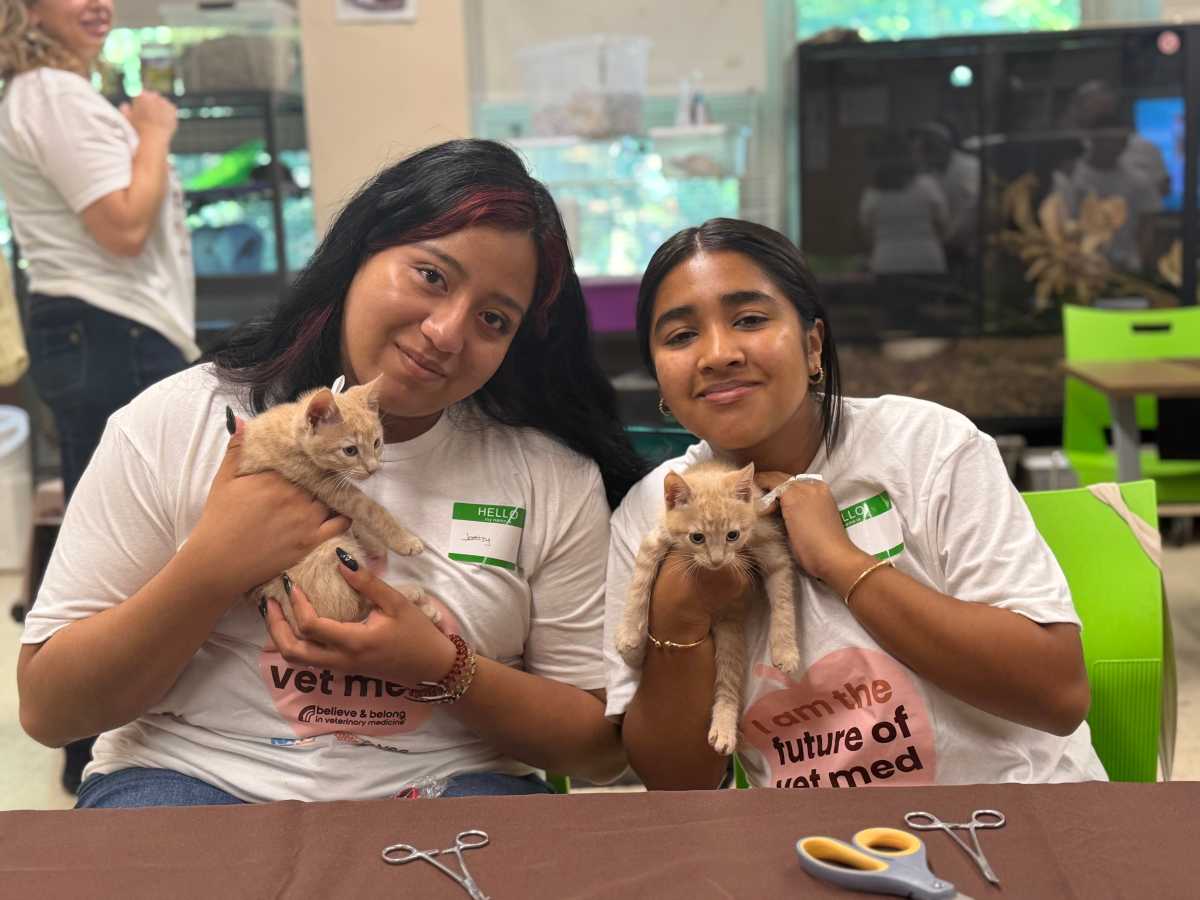 Students hold two kittens, Buffy and Spike, while learning about spaying and neutering procedures. Photo by Renee DeLorenzo
According to Bruno, the program is intended to expand student access to resources in underserved communities that experience significant barriers entering the veterinary profession, whether due to financial constraints or lack of programming.
She initially launched the program in 2023 after attending the annual North American Veterinary Community (NAVC) conference in Orlando, Florida, and realizing there was a need for it. Since then, her program has reached more than 1,300 students across North America through over 20 educational events.
The program is now sponsored by the NAVC and funded by the Zoetis Foundation.
Bruno becomes a veterinarian
Bruno said she knew at 12 years old that she wanted to be a vet. As a child growing up in an apartment in the Kew Gardens and Forest Hills area, she always found ways of caring for animals.
After seeing Disney’s Lady and the Tramp, she convinced her mom to let her sneak in two Siamese cats into their apartment, which she joked were the “loudest cats in America.”
“I think pet ownership really opened my eyes to being a vet because they were the best cats ever and let us do things like pretend to be doctors on them,” Bruno said.
She recalled telling her mother, who was a teacher, that she was interested in veterinary medicine. Her mother made a few calls and helped find Bruno a mentor, Dr. “G,” for her to shadow.
“[Dr. G] allowed me to see him do a surgery and follow him in appointments when I was 13,” she said. “That just stayed with me.”
While she said she didn’t want to leave New York for college, Bruno said she struggled to see herself in the veterinary profession. Her mother encouraged her to attend a school with a specialized program, leading her to enroll at Tuskegee University in Alabama, a historically Black college with a strong veterinary science program.
Eventually, she was accepted to Cornell University College of Veterinary Medicine — which currently has an acceptance rate between 6-8% for its 120-130 seat program — before finally entering the field professionally.
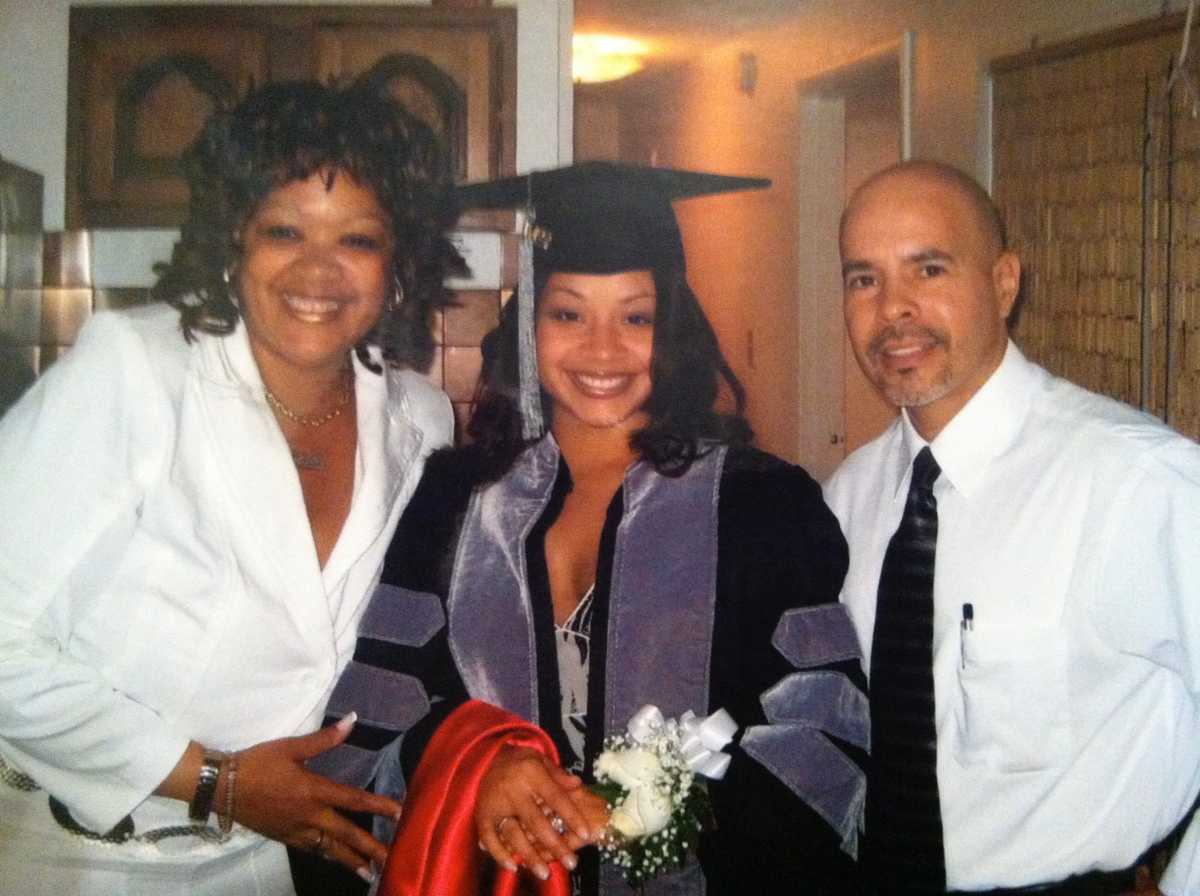 Bruno at her graduation ceremony at Cornell University in 2006. Photo courtesy of Inspire PR Group
Understanding how her own background experience and mentorship impacted her ability to become a vet, Bruno said she wanted to bring those same opportunities to other students.
Returning to John Bowne was a “full circle moment,” she said, and helped fulfill her dream of educating other children alongside her sister, who is also a veterinarian and works in animal welfare at the American Society for the Prevention of Cruelty to Animals (ASPCA).
Bruno breaks down barriers
After the COVID-19 pandemic, Bruno said she realized how many barriers there were in her profession that were leading to a shortage in veterinarians and veterinary technicians. She also noticed a lack of diversity in the field.
“We’re a very niche industry where you have to have experience to apply to these schools,” Bruno said, explaining that students must have a minimum of 400 hours of veterinary experience before applying. “Where do these students get these hours?”
Programs and schooling can also be expensive, she continued, creating financial barriers for families that can’t afford to send their children to college.
Even more challenges arise for first generation students whose immigrant parents might not know what programs schools offer and ways their children can connect with resources.
When students don’t have that experience or those resources, Bruno said they often feel like they don’t belong in the field.
However, she said when middle and high schools offer programs that give them real experience even before graduating, more students choose to attend colleges that offer animal science programs.
“My goal with the blendVET Foundation is to show a roadmap of different paths that you can take,” she said. “There are some schools that help place you and even support you afterwards.”
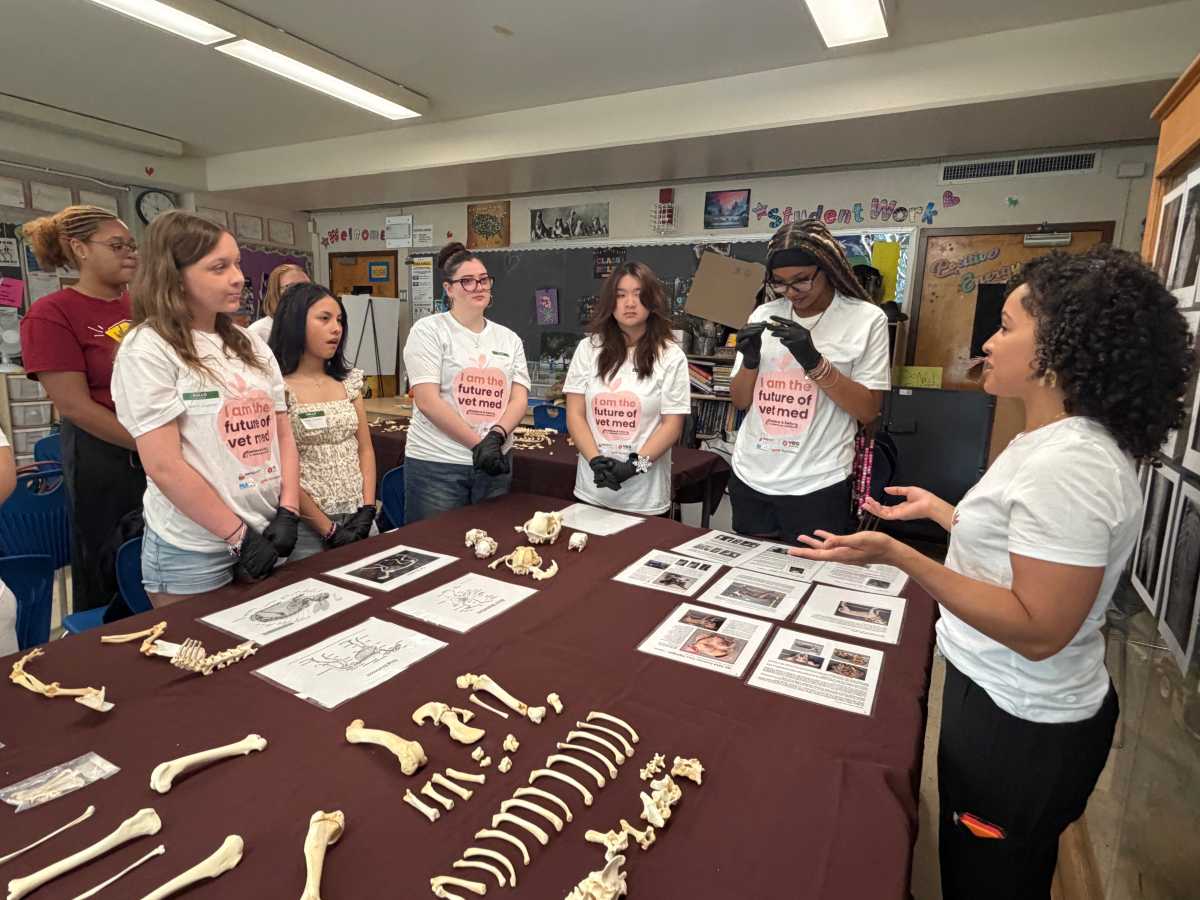 An instructor teaches students how to identify animals using prop bones. Photo by Renee DeLorenzo
She said her hope for the blendVET program is to bridge the gap between students interested in veterinary medicine and the resources they need to make a career out of it.
By partnering with NAVC, blendVET embeds itself in the organization’s existing programming and directly engages students as young as elementary school.
Bruno has even launched a program directed at parents to give them support and educate them about paths their children can take in order to enter the field.
Many students return to this programming, Bruno said, and not only to learn about veterinary medicine. They also learn essential job-placing skills like applying to colleges, writing resumes and interviewing for jobs.
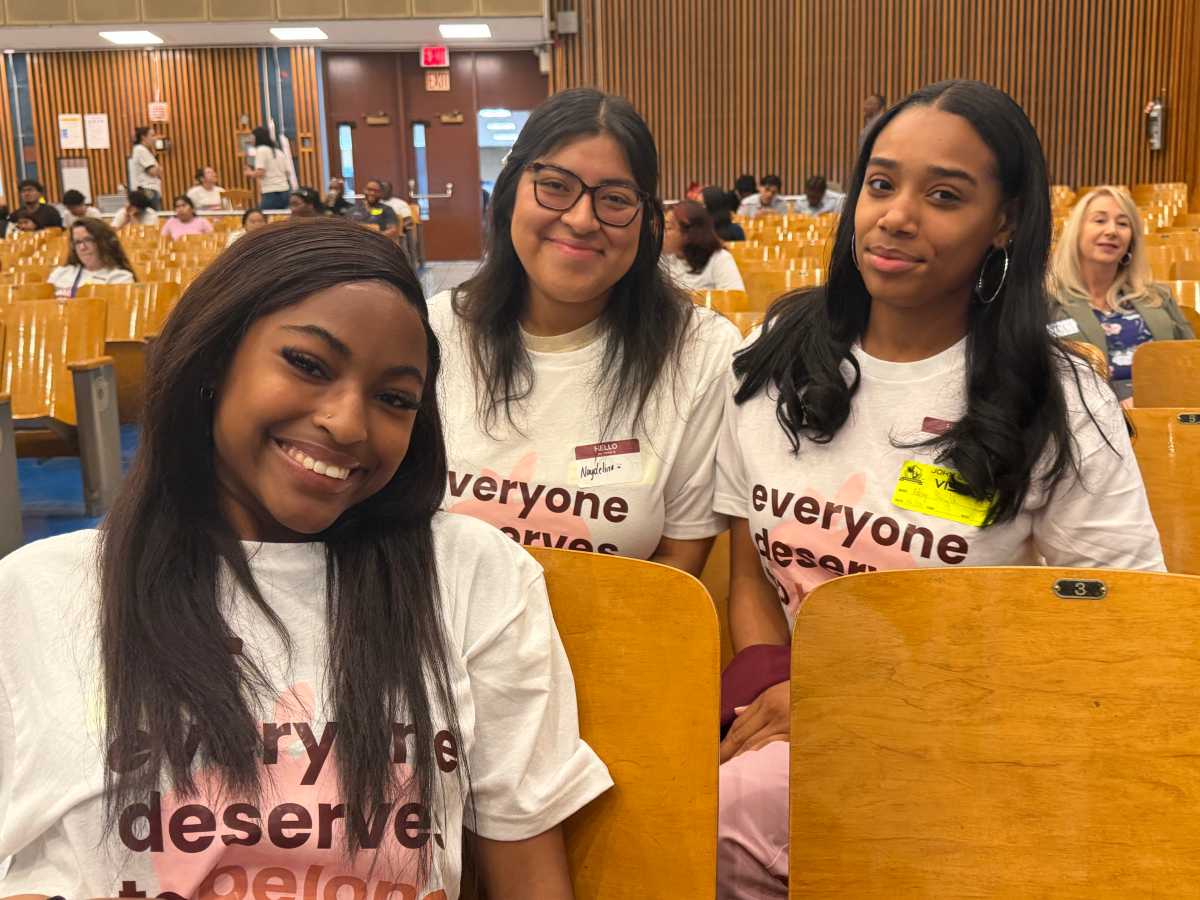 John Bowne alumni attended the program on June 5. Photo by Renee DeLorenzo
Real-life experience is essential
Dr. Kayla Charles, a doctor of veterinary medicine and John Bowne alum who grew up in St. Albans, said she originally applied to the high school for its agriculture program. She said she always thought the program would be plant-based until she was introduced to animals on the school’s nearly 4-acre farm.
The farm is part of the school’s Animal, Plant and Agriscience Institute, where students have access to a land laboratory that includes a poultry house, large animal barn and exotic animal laboratory.
Some students are even placed on farms throughout the state for the summer through the Farm Cadet Program, coordinated in collaboration with the New York State Department of Labor.
Charles said she didn’t have much experience with animals aside from her childhood dog, but she was exposed to many new animals during her time on the school’s farm. She eventually majored in animal science for the remainder of her high school career.
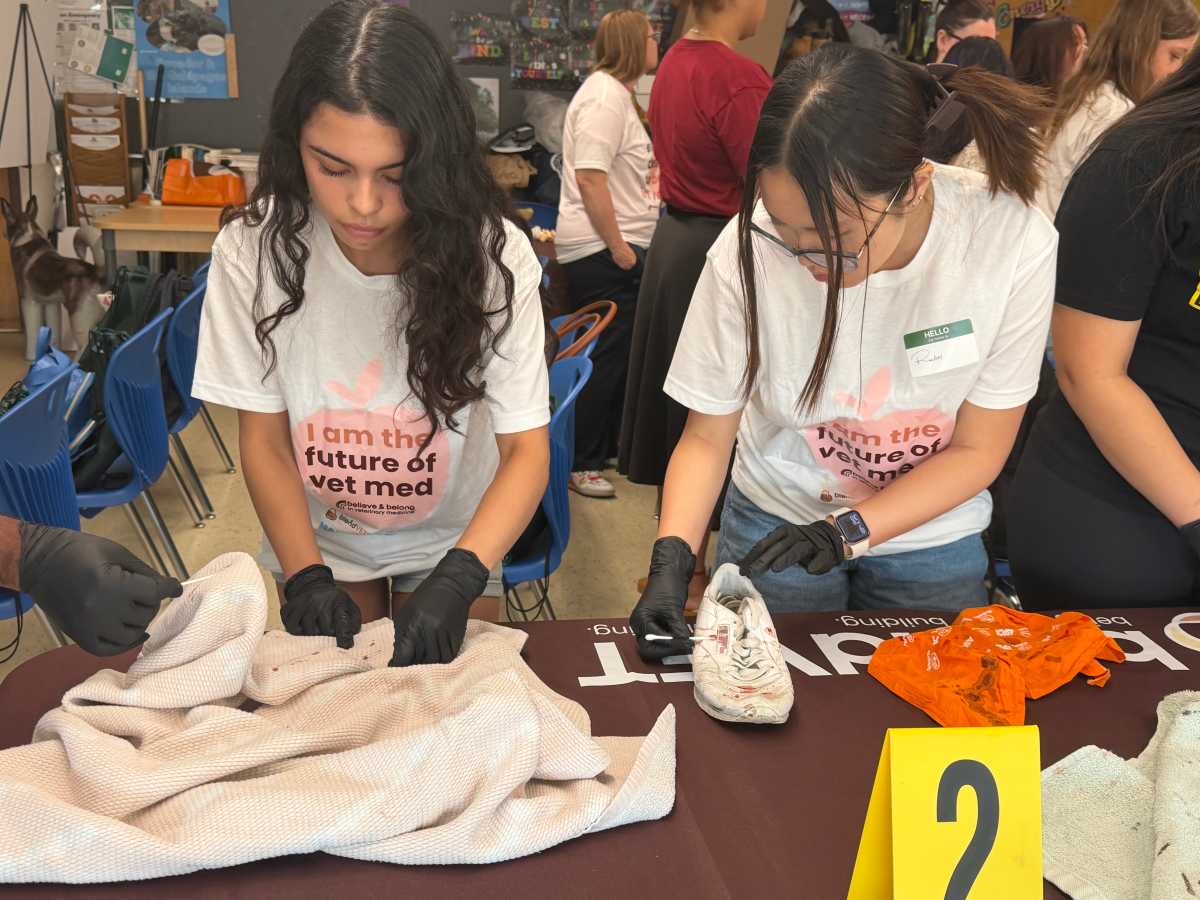 During a forensic veterinary lab, students practiced taking swabs of samples and testing them. Photo by Renee DeLorenzo
She said her time at John Bowne, and eventually at Ontario Veterinary College in Canada, opened her eyes to the many ways veterinary science impacts other fields, such as public health.
“I think all students who want to go into veterinary medicine should have that opportunity and explore it,” Charles said. “This high school opened up a lot of opportunities. Even if you don’t necessarily want to become a veterinarian, you can still work with animals or in agriculture.”
Josie Lando, a senior at John Bowne who will graduate this month and attend the University of Connecticut on a pre-veterinary studies track this fall, said she has been pursuing a path in animal and plant science since freshman year. While she doesn’t have any pets at home, she often works with animals of all sizes, including reptiles and birds, at the school.
Lando has been co-manager of the Exotic Avian Lab for two years now, and she has also been a member of the Future Farmers of America (FFA) for the past year. The senior even won second place in veterinary science at one of the FFA’s Career and Leadership Development Events, a competition that challenges members to apply real-world skills through public speaking, technical problem-solving and professional collaboration.
“It was really exciting for me — it was one of the goals I made during freshman year,” Lando said. “Being here in this program has really helped me with self confidence, public speaking and having more experience with other people in the industry.”
During her time at John Bowne, Lando has shadowed real veterinarians through the school’s program and worked alongside one of her teachers who is a registered veterinary technician.
“I’ve just worked with a bunch of people, and it’s been really amazing,” she said.
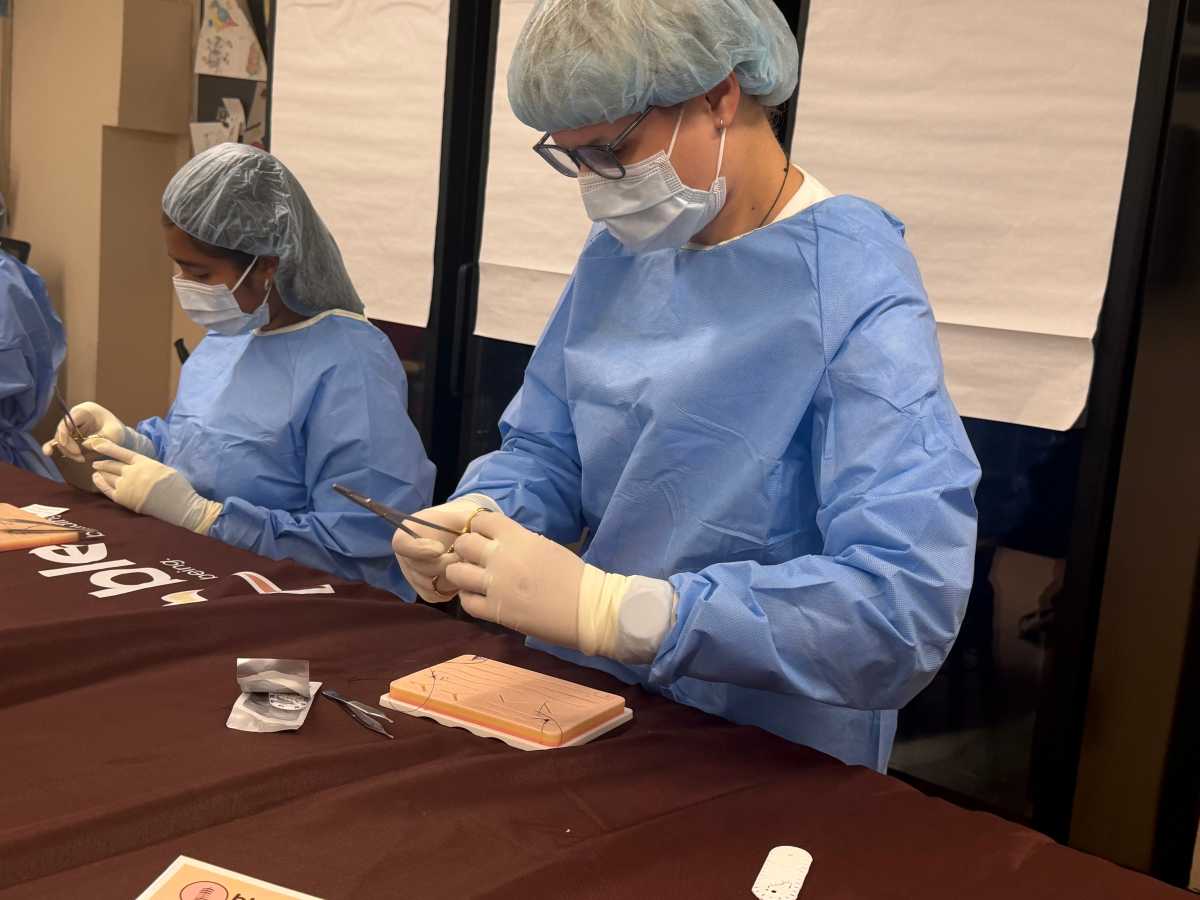 John Bowne student Josie Lando practices making incisions during a veterinary surgery training. Photo by Renee DeLorenzo
Support from NAVC and Zoetis
NAVC is the largest provider of continuing education for the veterinary community that supports anyone working in veterinary medicine, from the program managers to the doctors themselves.
In order to provide continuing education — which is required by all veterinarians — NAVC hosts in-person events, including the five-day VMX conference in Orlando, along with virtual meetings, publications and podcasts to help them complete their required hours.
“It’s really a unique group of professionals,” said Ellen Edmonds, vice president of public relations for NAVC. “They’re very selfless, humble and service-driven. It’s nice to be that provider of not just education, but experiences we build with in-person events. It’s a really stressful profession, so it’s important to make sure they have support with mental health and dealing with student loan debt.”
Edmonds explained that sponsoring the blendVET program helps them invest in the future of the veterinary profession by reaching students at every step of their journey. The ultimate goal, she continued, is to encourage students to go to veterinary school and pursue their career goals with the organization’s support.
“This program is really so unique — there are few others like it,” Edmonds said. “But I would say there are none to the magnitude that Dr. Bruno has grown it in such a short time. It’s so exciting to be at the front of that journey and see students sparking that interest, really learning and connecting with these professionals that have dedicated their lives to the care of animals.”
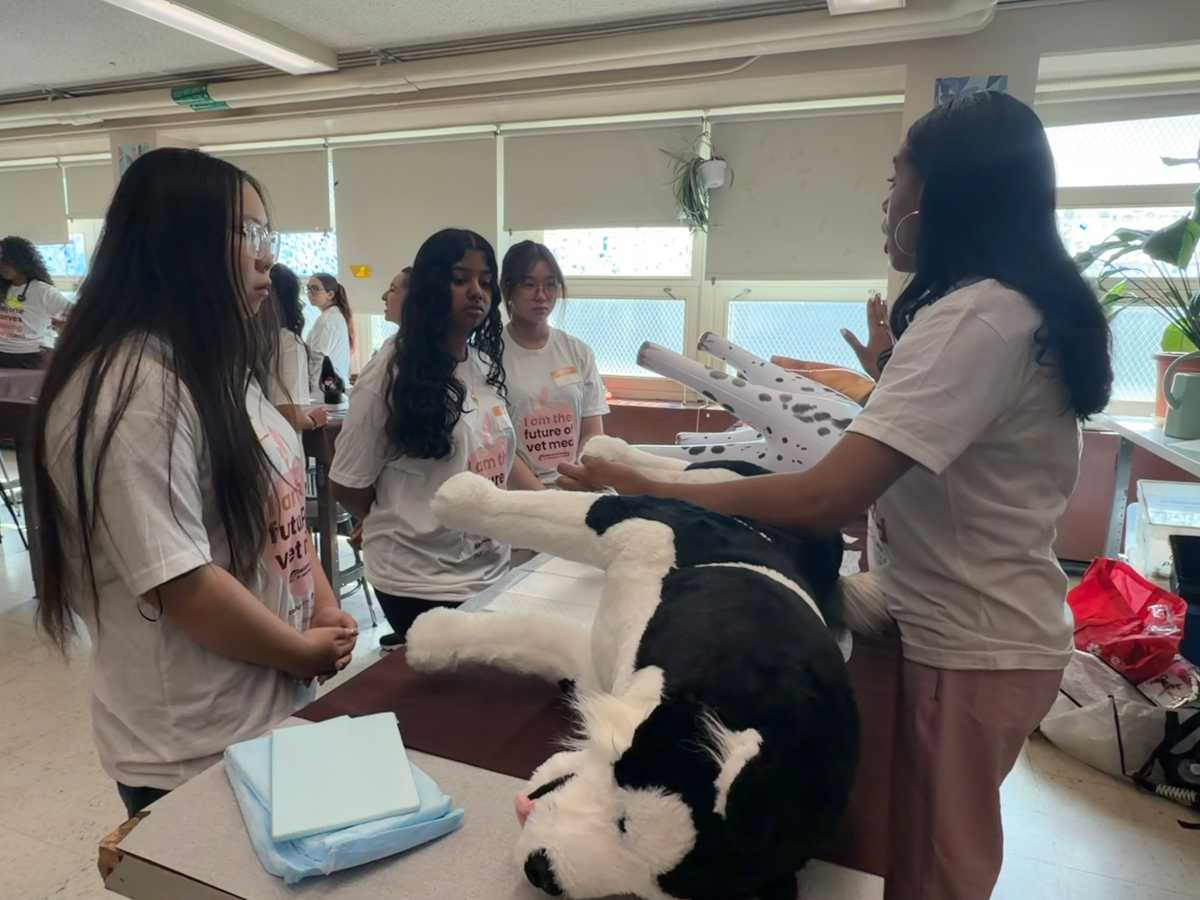 An instructor uses props to teach students how to perform medical procedures on animals. Photo by Renee DeLorenzo
Zoetis, the world’s largest animal health company, provides medicines, vaccines, diagnostics and several treatments across animal care that helps detect, prevent and treat animal disease.
The Zoetis Foundation, the nonprofit arm of the company, is dedicated to supporting organizations like NAVC and blendVET through educational grants, opportunities and initiative meant to provide not only resources to students, but mental health resources for veterinary professionals.
Since the foundation was founded in 2020, it has provided over $35 million in funding across many nonprofit organizations, including blendVET.
According to Jeannette Ferran Astorga, the executive vice president of corporate affairs and chief sustainability officer for foundation, the real goal of Zoetis is to support the people who care for animals in any way possible.
“We’re really thrilled to enable this pipeline of veterinary professionals that we need,” Astorga said. “We’re excited to see these programs that are career-oriented.”
Astorga said efforts like Bruno’s only amplifies why Zoetis is proud to support her, noting that there is a strong need to connect younger students with a focused career path. “[Bruno’s] approach is just transformative,” she said.
Hope for the future of the field
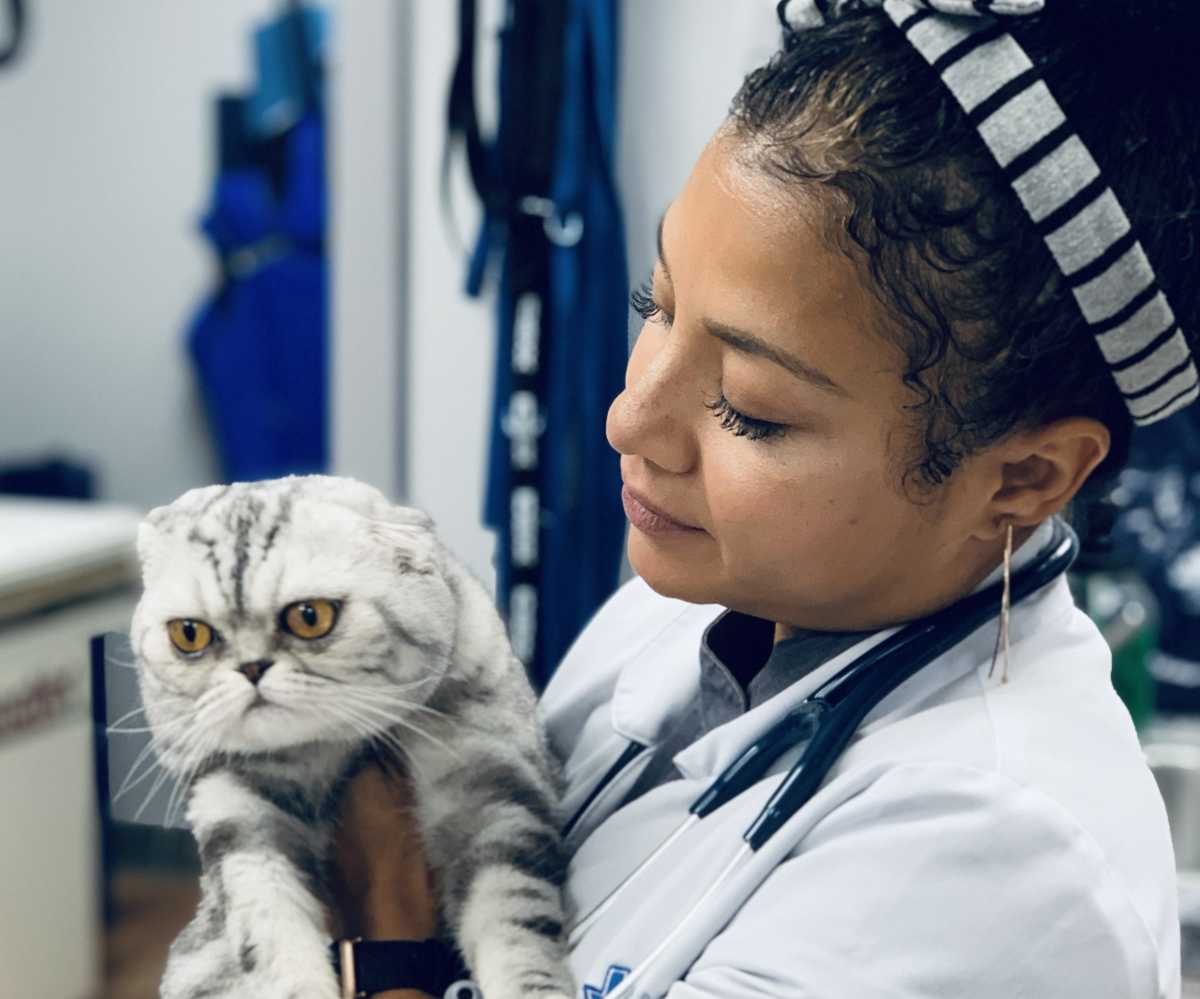 Bruno said she’s proud of the impact she’s had not only on students interested in veterinary science, but the profession itself. Photo courtesy of Inspire PR Group
Bruno said since working with students through blendVET, many of them have expressed gratitude for her help.
“Some of them just hug me,” she said. “They really appreciate that we took the time to come to them instead of them finding ways to get elsewhere.”
Even Bruno’s colleagues have supported her efforts to reach children, she continued, with some of her colleagues driving from as far as Boston and Baltimore.
“A lot of them have tears in their eyes because they didn’t have programs like this growing up,” Bruno said. “It’s all full circle, and it reminds me why I do my work. It’s really for the kids, but now I realize how I’m helping my profession.”