
In the summer of 1942, Los Alamos, New Mexico, became the center of the Manhattan Project, the U.S. Army’s secret mission to develop the atomic bomb during World War II. “The Manhattan Project was the U.S. Army project during World War II to build an atomic bomb. It ran from the summer of 1942 until the last day of 1946,” said Nicholas Lewis, a historian for Los Alamos National Laboratory. Lewis explained that the project was driven by fears that Nazi Germany, seen as a leader in nuclear physics, was developing its own bomb. “The fear that Nazi Germany was developing a bomb was very serious,” he said. Germany’s program included Werner Heisenberg, a Nobel Prize-winning physicist and one of the most influential scientists of his era. “Scientists in the U.S. and the U.K. believed that if anyone could build an atomic bomb, it was Heisenberg,” Lewis said. The U.S. responded by launching its own atomic bomb program, led by U.S. Army Corps of Engineers General Leslie Groves and theoretical physicist J. Robert Oppenheimer. Los Alamos was chosen for its remote and isolated location, making it easier to keep the project secret. Scientists at Los Alamos made breakthroughs in atomic fission, plutonium research, and bomb design. “This interactive exhibit shows how quickly scientists moved from theory to reality, transforming nuclear science into one of the most significant projects in American history,” said Royale Da, referencing an exhibit at the Bradbury Science Museum. On July 16, 1945, the world’s first atomic bomb was detonated at the Trinity test site in southern New Mexico. Less than a month later, atomic bombs were dropped on Hiroshima and Nagasaki, helping end World War II while introducing humanity to the devastating power of nuclear warfare. “There were probably as many thoughts and feelings and reactions to Hiroshima and Nagasaki among scientists as there were scientists,” Lewis said. For many New Mexicans, the story of the Trinity test did not end in 1945. Tina Cordova, cofounder of the Tularosa Basin Downwinders Consortium, advocates for families exposed to radiation from the test. “The fireball it created went over 40,000 feet into the air,” Cordova said, adding that generations in her family, including herself, have battled cancer. “Nobody warned us about the potential problems associated with being overexposed to radiation, and our government fully knew,” she said. Downwind communities fought for decades for recognition and compensation, achieving success in 2025. “But our work is not over, and we know that,” Cordova said. More than 80 years later, the Manhattan Project remains one of the most controversial chapters in American history. “It was weighing the consequences of developing an atomic bomb versus Nazi Germany possibly getting to one first,” Lewis said. The legacy of the Manhattan Project continues to spark conversations about power and responsibility today.
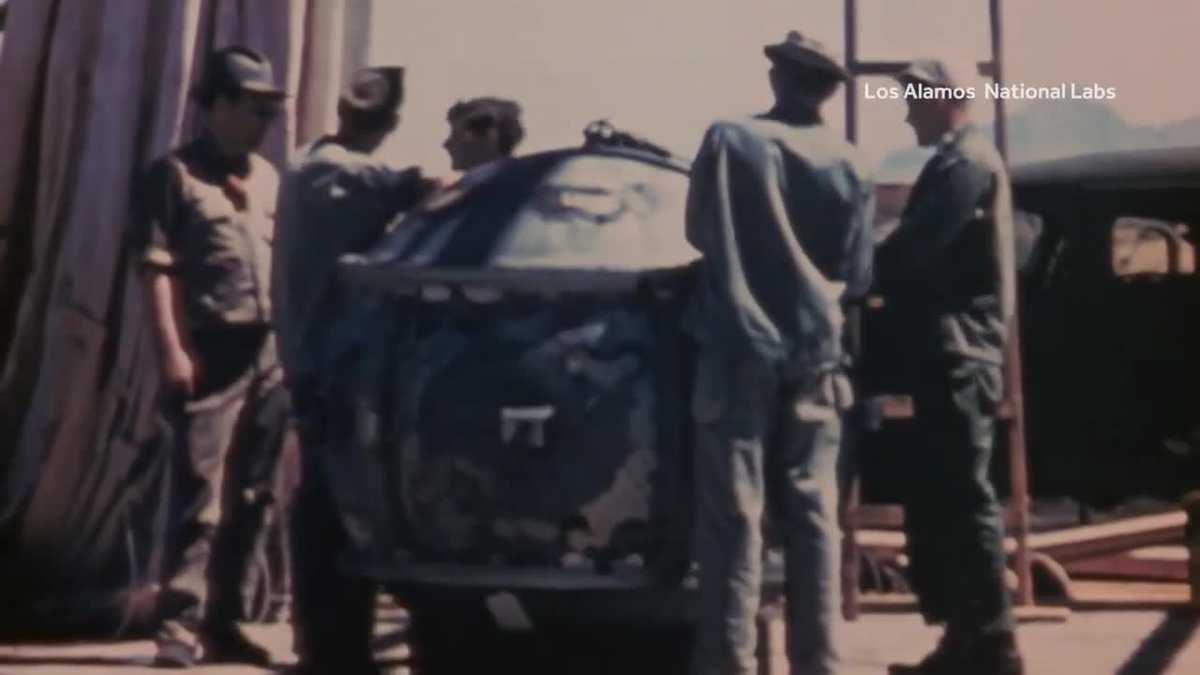
In the summer of 1942, Los Alamos, New Mexico, became the center of the Manhattan Project, the U.S. Army’s secret mission to develop the atomic bomb during World War II.
“The Manhattan Project was the U.S. Army project during World War II to build an atomic bomb. It ran from the summer of 1942 until the last day of 1946,” said Nicholas Lewis, a historian for Los Alamos National Laboratory.
Lewis explained that the project was driven by fears that Nazi Germany, seen as a leader in nuclear physics, was developing its own bomb. “The fear that Nazi Germany was developing a bomb was very serious,” he said.
Germany’s program included Werner Heisenberg, a Nobel Prize-winning physicist and one of the most influential scientists of his era. “Scientists in the U.S. and the U.K. believed that if anyone could build an atomic bomb, it was Heisenberg,” Lewis said.
The U.S. responded by launching its own atomic bomb program, led by U.S. Army Corps of Engineers General Leslie Groves and theoretical physicist J. Robert Oppenheimer. Los Alamos was chosen for its remote and isolated location, making it easier to keep the project secret.
Scientists at Los Alamos made breakthroughs in atomic fission, plutonium research, and bomb design. “This interactive exhibit shows how quickly scientists moved from theory to reality, transforming nuclear science into one of the most significant projects in American history,” said Royale Da, referencing an exhibit at the Bradbury Science Museum.
On July 16, 1945, the world’s first atomic bomb was detonated at the Trinity test site in southern New Mexico. Less than a month later, atomic bombs were dropped on Hiroshima and Nagasaki, helping end World War II while introducing humanity to the devastating power of nuclear warfare.
“There were probably as many thoughts and feelings and reactions to Hiroshima and Nagasaki among scientists as there were scientists,” Lewis said.
For many New Mexicans, the story of the Trinity test did not end in 1945. Tina Cordova, cofounder of the Tularosa Basin Downwinders Consortium, advocates for families exposed to radiation from the test.
“The fireball it created went over 40,000 feet into the air,” Cordova said, adding that generations in her family, including herself, have battled cancer. “Nobody warned us about the potential problems associated with being overexposed to radiation, and our government fully knew,” she said.
Downwind communities fought for decades for recognition and compensation, achieving success in 2025. “But our work is not over, and we know that,” Cordova said.
More than 80 years later, the Manhattan Project remains one of the most controversial chapters in American history. “It was weighing the consequences of developing an atomic bomb versus Nazi Germany possibly getting to one first,” Lewis said.
The legacy of the Manhattan Project continues to spark conversations about power and responsibility today.