
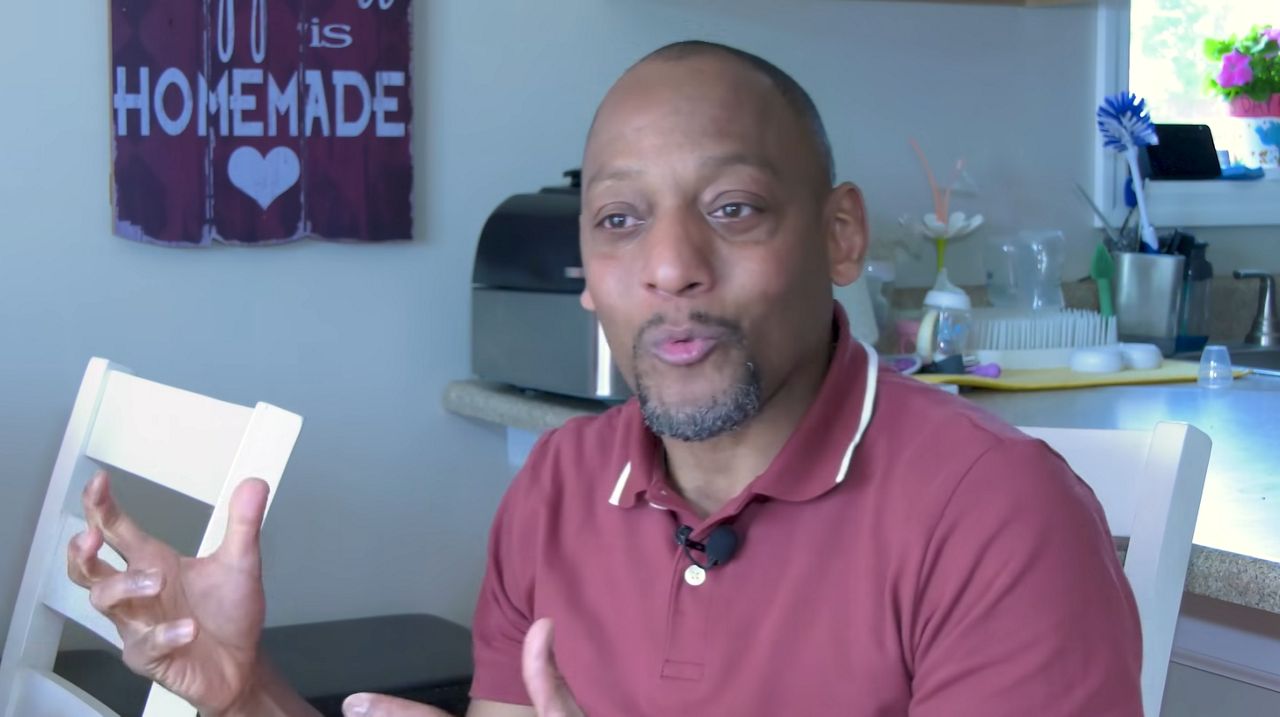
Only about 8-12% of former foster youth earn a two- or four-year college degree, according to research on the developmental hurdles facing children in the system. Antonius “Tony” Rivera has spent his life defying those statistics, and recently graduated from Russell Sage College with a doctorate in educational leadership.
Rivera’s journey began in the New York City foster care system, where he moved between 10 and 15 different group homes between the ages of 8 and 12.
“I would run away,” Rivera said, recalling a childhood defined by instability.
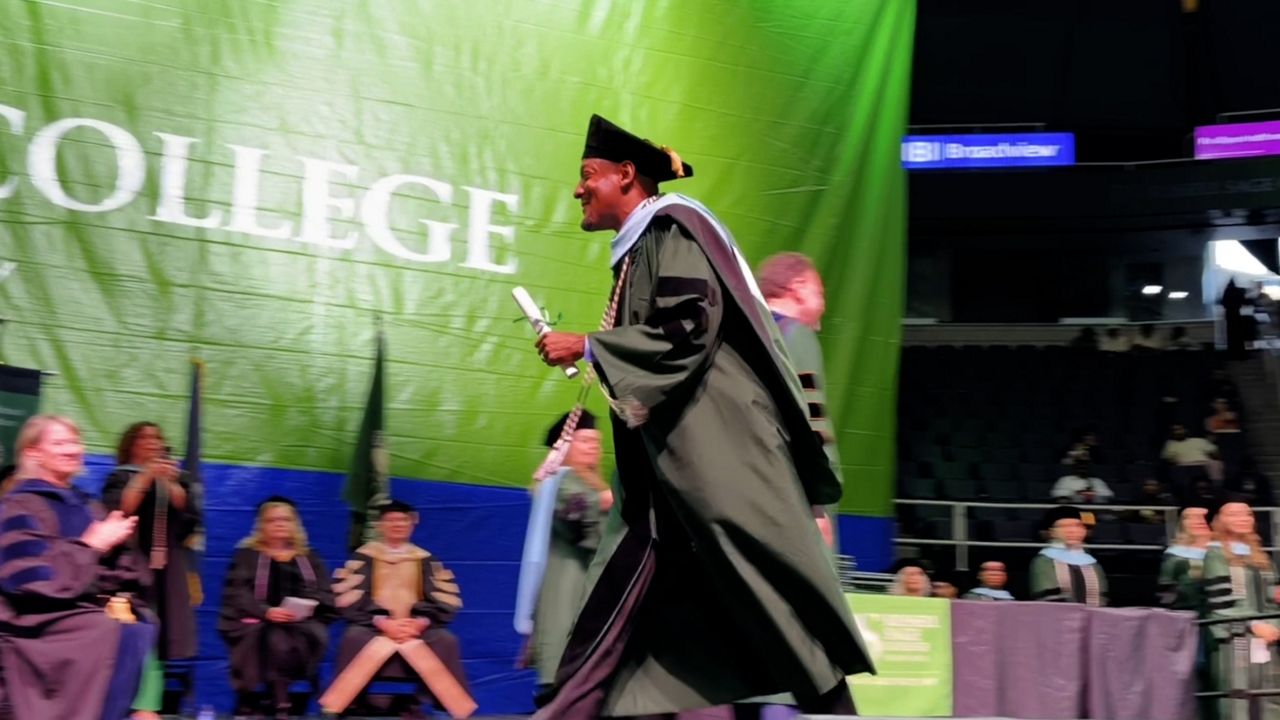
Tony Rivera walks the stage after receiving his diploma. (Courtesy of Russell Sage College)
When he eventually left for college, he carried his belongings in six or seven plastic bags.
Despite those early challenges, Rivera documented his path through photo albums and maintained a support system that helped him navigate higher education. He successfully earned associate’s, bachelor’s and master’s degrees in school counseling before pursuing his doctoral studies.
“I did it for all the people who thought they couldn’t,” Rivera said. “Whether they’re negative stats or positive stats, I still surpass the stats.”
Researchers say students who experience foster care are among the most educationally marginalized youth in the United States.
Rivera’s doctoral research focused on retention strategies for foster youth in higher education, examining how colleges can support these students through graduation, rather than just enrollment.
Today, Rivera serves as a school counseling professional and leads Fostering Minds, a nonprofit organization. The mission of the organization is to equip foster youth and their support networks with the skills necessary to improve long-term outcomes.
Rivera now uses his own story to mentor others, framing setbacks as part of a larger journey toward success.
“Failure… it’s a process, right? It’s not the verdict,” Rivera said.