
MORGANTOWN, W. Va. — There can be little argument that West Virginia, its love affair with its baseball team and the way the song “Take Me Home, Country Roads” has drawn them together have been a strong part, if not the foundation, upon which America’s fandom has suddenly become a key focus of the sporting public.
Eventually, it centered upon the New York Knicks’ run to their first NBA championship in 53 years, partially because it simply was in New York, where, as Frank Sinatra sang:
I wanna wake up in that city that doesn’t sleep
And find I’m king of the hill, top of the list, you bet
And I’m the right, king of the heap
Another song, another anthem, a celebrity-rich fan base and a shrine of American sports in Madison Square Garden as its home; all that and a championship culminated in a ticker tape parade down Broadway where the players were presented with keys to the city.
That included West Virginia’s own Deuce McBride, who was an important member of the team after a career of basketball heroics at WVU and who heard the crowd chant loudly as he was introduced, “Deuce, Deuce, Deuce!”
There is nothing like being a winner in New York, but you have to win to be “king of the hill, top of the heap” for there, for life, there doesn’t always include a parade.
WVU’s Sam Huff, the great linebacker, may have been the first Mountaineer to climb to the “top of the heap” there, reaching the cover of Time Magazine, having a documentary made for CBS on him and as a rookie he was part of a pre-Super Bowl NFL championship team but there was no parade and there was certainly no parade when he was part of the 1958 team that lost the first overtime championship to the Baltimore Colts.
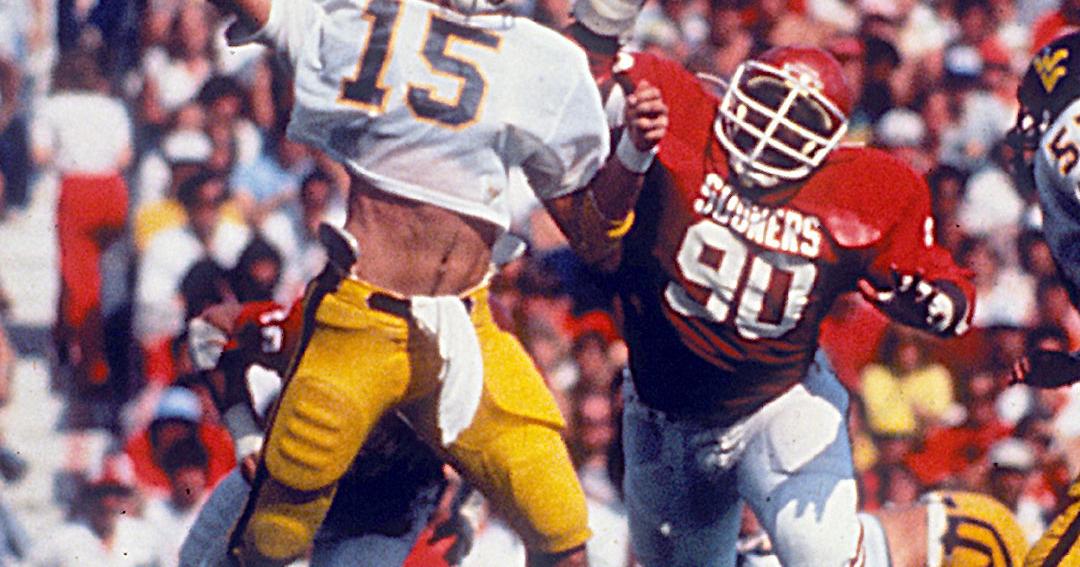
See, there are two sides to being a New York hero and a one-time Mountaineer star quarterback, Jeff Hostetler, saw both sides of it.
“Hoss,” as he came to be known, lived out one of the great stories of perseverance and triumph of the underdog known in athletics.
Out of high school in Pennsylvania, he went to Penn State, which had become the family school, played in a couple of games as a freshman, which was rare at the time, then the starting job as a sophomore, winning two of three games with the loss being to Nebraska, before the Hall of Fame coach Joe Paterno surprised him.
“The following week, Paterno came in and said he was going to make a change. It was like ‘Wow!’ He made the change and I ended up getting demoted to where I was playing basically on the scout team,” Hostetler told broadcaster Hoppy Kerchaval on a podcast a few months back.
“My dad always said, ‘Don’t let any one individual control your destiny, what your value is.’ I wasn’t about to let Paterno do that to me. It was sort of the family place. We had the opportunity to compete. When I have the opportunity to compete, I love it. I would compete with anyone. But the opportunity to compete was no longer there, no matter what I did.”
And so he transferred to play for someone who would also become a Hall of Fame coach, Don Nehlen at West Virginia, where he helped put the WVU program on the map. He fell in love with the place, which he made home and has become one of its community leaders, and fell in love with the coach’s daughter, Vickie, whom he married.
He went into the NFL with the New York Giants and spent seven years as a backup, mostly to Phil Simms, including in the 1987 Super Bowl win over the Denver Broncos. Playing for yet another Hall of Fame coach in BiII ParceIIs, the relationship was never close.
“We fought. We would argue in his office. I don’t remember what he yelled at me because it didn’t matter. He played a lot of mind games. I’m not a guy you play mind games with. You are not going to get anything from your mind games on me. That doesn’t work with me. Now, a pat on the back, you will get something from me,” he told Kercheval.
“He enjoyed the battle part. So after one of these battles, he came out and said, ‘Feel better?’ And I said, ‘I do because I got out what I wanted to get out.’ He was a master manipulator in the mind games and successful at it.”
But Hostetler also came to respect Parcells.
“One of the greatest compliments I ever got from Bill was after I was done playing and he came to me and said, ‘Bill, nobody realizes how difficult the position was that you were in and what you accomplished. I wish I had handled you differently. That was awesome. I hold those words extremely valuable,” he said.
“Oftentimes we do things we think are right at the time but come to realize I wish I could have handled that different.”
Anyway, Hostetler, before the regular season game against Buffalo, had come and decided he was playing his final season.
“It was the 13th game of the season and we were practicing to play against Buffalo. I came home and told my wife, ‘Babe, I’m done,'” he recaIIed. “I decided that was it. I had seven years. You didn’t have an opportunity for free agency then. You couldn’t get up and go to another team.”
But fate intervened. Simms was injured and Parcells went with Hostetler, who quarterbacked them to a 20-19 victory over Buffalo in what came to be known as “wide right game” when Scott Norwood’s attempt at a makeable game-winning goal sailed wide right.
Hostetler had an MVP-type game but the award went to running back Ottis Anderson.
Hostetler was robbed of a chance at a New York parade down Broadway, the Giants feuding with the city while playing in Rutherford, N.J., and the city facing deep financial problems, so he had to settle for a modest rally at City Hall.
But if there was no parade, there were other perks like earning a second Super Bowl ring, winding up on the cover of Sports Illustrated, a trip to Los Angeles to appear on Johnny Carson’s “Tonight Show,” and the admiration for his gutty performance, although no one knew how really gutty it was.
In 2025, Hostetler revealed in the book “The Franchise: New York Giants — A Curated History of Big Blue” that he had played the game with a complete tear of the ACL in his left knee.
Yes, he’d become a New York hero, maybe even should have gotten the Willis Reed treatment for playing the big game injured, but by the middle, the ugly side of some New York fans showed itself.
The next year he started the first 12 games, the Giants going 7-5, before Simms was back as the starter
“New York is a tough place to be,” he said. “When you go out and walk by a field with a 7- or 8-year-old kid who isn’t even playing, just sitting on the bench, turning around and saying ‘Hostetler, you suck!’Whenever you have graffiti on your home driveway or fence or when your son comes home and asks you ‘Daddy, why does everybody hate you?’ That’s when it’s gone past where it should … especially a year after you won the Super Bowl,” he said.
“That’s part of it. That’s how people reacted. That’s part of being in New York. It’s the fleetingness of fame, and if you valued yourself on what you do, you are in real trouble,” he said. “My Mom and Dad always taught us your value is not based on what you do. It was a tough place to be.”
We bring this up now because those hero-worshipping New York fans were rooting for Scottie Scheffler to score a Father’s Day win on his 30th birthday to complete a career Grand Slam, which was fine, but they turned it into a dislike for the winner, Wyndham Clark, who put on an inspiring performance to win from start to finish.
It reached the stage that even Scheffler commented on it:
“The crowd was tough today. I mean, New Yorkers, they are tough people. There was a good turnout from the fans. You like seeing the fans cheer for you. I think sometimes it can get a little too much when, you know, balls are kind of going off greens and you start hearing cheers. That felt a bit much to me.
“Being in the arena is not for everybody, and I think it shows a lot about Wyndham, how he handled not only this golf course but I think the crowd today as well and is a well-deserving champion.”
This is something for WVU fans to consider as they head into next season. You can love your own, but there’s no need to turn opponents into villains … unless they are Pitt.