
The Bayonne City Council adopted a $173,294,517.41 budget and subsequent amendment that comes with a 2.3 percent tax increase earlier this month.
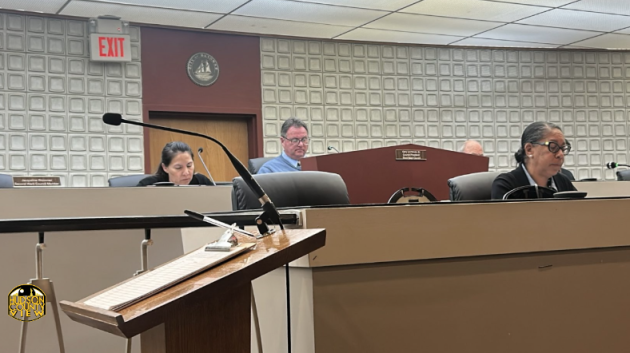 File photo.
By Dan Israel/Hudson County View
The municipal spending plan was adopted unanimously (5-0) at an “Adjourned Bayonne City Council” meeting on June 10th following a hearing on the matter where no members of the public spoke.
Immediately following that, the City Council unanimously introduced an amendment to the budget bringing the total from the introduced budget ($172,998,250.89) to $173,294,517.41.
The amendment also saw the tax levy go from $105,889,178.38 in the initial proposal to $105,888,513.26, among other minor changes to revenues and expenditures.
This equates to a 2.3 percent municipal tax increase, with the impact on taxpayers being $124 more yearly on the average assessed property of $400,000.
Then at the June 17th council meeting, the governing bodu also voted unanimously (5-0) to adopt the budget amendment.
However, during the public hearing on the amendments, the City Council faced pushback from residents who felt the budget should be adopted by the new administration.
Janice Mattis was one of those Bayonne residents who wanted the City Council to not act on the budget yet, alleging it was being “pushed through.”
“I don’t understand all of these things that are going on. They might have a better understanding,” she argued about the five new electeds set to be sworn in on July 1st. They all ran on Mayor-elect Sharon Ashe-Nadrowski’s ticket.
While La Pelusa said it “wasn’t a bad suggestion at all,” asking her if he wanted to discuss it with his council colleagues, Chief Financial Officer Donna Mauer noted they would have to start the budget process from the beginning and that they already have state approval.
“Another year has passed and we hadn’t done it. So if we go to a vote, it is my intention to vote no,” Carroll began.
“But I believe the future council has run on the promise that affordability is their key issue … I have hope and perhaps they can find cuts where we didn’t. So that my feelings.”
Weimmer felt that approving the budget would be “tying the hands of the future administration to a budget that we are committing to basically on their behalf.”
However, if the budget wasn’t adopted then, the city also wouldn’t be able to pay for salaries of select city employees, which she was not in favor of.
“I did not take into consideration and I was not aware that we would not have the ability to cover salaries, which is clearly an obligation of the city,” Weimmer stated.
La Pelusa was prepared to vote depending on how the majority of the council felt.
“I’m prepared to vote either way if you guys want, this is a democracy. If you guys want to table it, we’ll table it.”
While some residents agreed with the council over the issues of certain salaries not being funded in the budget and wanted the council to let the new administration take over, Mauer repeated it would take months to restart the process.
“You have an obligation as a council and if you do not adopt the budget on time, the state can also impose fines, personal fines they can impose on me if I don’t present the budget,” Mauer said.
“If you don’t adopt the budget, they can. That’s up to the Local Finance Board, but this budget is based on salaries and contracts that were awarded.”
La Pelusa said he sat with Mauer and reviewed the budget going through different changes made in the amendments, but there was not anything that he could cut.
Perez said that he agreed with Carroll that the budget should be adopted by the next City Council.
“If there’s any situations in here that they can cut or improve, by all means, go right ahead,” Perez expressed.
Booker also agreed that, if the incoming administration can find “something that they deem necessary to cut, I’m all for that,” but noted his issue with not paying municipal employees for weeks.
Mauer again interjected to say that a new budget wouldn’t be introduced until August, with a public hearing and adoption in September.
Mattis returned to the podium to then question Mauer’s statement that the budget “was already late,” which she said was because the city was still scraping together various revenues to keep the tax rate low, also requiring state approval.
“The more revenues we get in, the lower the tax rate,” Mauer said.
“I have to certify what we’ve collected up to that date. So we try to get in as many as we can, the PILOT [payment in lieu of taxes] revenues, the municipal court revenues, and get it to the maximum amount before we actually introduce the budget and move forward.”
According to Mauer, part of that discovered revenue includes the closing of land sales.
“The horse is out of the barn here. Whatever you did to make this as reasonable as possible for the taxpayers of the city, you should buy it, own it, and move on,” declared resident Mike O’Connor.
“And if things need to be changed in the next administration, let the next administration do that, but not have to do what was just described to go through a budget process, to have to go down to the Local Finance Board, and the OSC, and everybody else and try to redo this now.”
Weimmer argued that if this budget was approved and the next council simply made changes, it would not have an impact on the adopted budget and corresponding tax increase.
However, potential different tax efficiencies and cost-saving methods that the new administration could implement could have a greater effect in the long term, she said.
Business Administrator Mary Jane Desmond told the council that every day of her 14-month tenure thus far has been spent with Mauer trying to find ways to save money, programs to cut, and other ways to improve the city’s fiscal health.
She echoed La Pelusa that there wasn’t much left to cut in the budget, having previously revealed the preliminary budget numbers at a BOE meeting in April before the election, during which she was a candidate for mayor.
“There are things that we have held back on that need to be done because we did not want to add to the budget,” Desmond said.
“We took a great deal of both risk and responsibility in changing our health benefits plan and saving a huge multi-millions of dollars. I’m very confident that not much more could have been done except to bring in new revenue. We are bare bones.”
Desmond agreed with O’Connor that the council needs to be responsible and approve the budget now to keep paying bills and maintain the “status quo.”
“There’s no fat in here and there’s no new spending. It’s holding the line, which is the best we could do right now. It’s a transition. It’s a reset,” she added.
“And I do expect that the new administration’s going to make every effort to improve and to make things better for the city. I have no doubt. But right now, this is all you have to work with. It’s all they have to work with when they come in. You have to have continuity.”
Law Director Donna Russo said that postponing action would transfer responsibility for matter that has already been reviewed and considered by the current governing body to “officials who have not yet participated in that process.”
“ … The public interest is best served by providing certainty, maintaining the continuity of government, and allowing the duly constituted governing body to complete the business before it,” she decared.
“Accordingly, adoption tonight is appropriate, lawful, and consistent with sound municipal governance.”
La Pelusa said that the 2.3 percent tax increase present in the budget is less than the 12 percent tax increase from the Bayonne BOE portion of taxpayers’ tax bills, as well as the 4.9 percent tax increase from the county.
“For the amount of the atrocities, I’ll call them, that we went through with increases between energy, gas, health insurance, pensions, 2.3 percent – I’m not bragging about it- but I’m proud that it’s not 10, 12 or even 5 percent,” La Pelusa said.
Perez agreed with La Pelusa, and the public hearing on the budget amendment was closed without further comment from members of the public.
Before voting, Booker repeated his vote was contingent on wanting to fund salaries for municipal employees.
Carroll noted his objection was moral, but not opposed to the hard work that municipal employees conducted over many long hours and a myriad of meetings.
“If I was granted four more years to crusade for what I’ve been crusading for for the last eight years, I might have stayed resolved to say no, but we have to put our faith in the promises of the future. And so I will vote ‘aye’ on this budget.”