
Adriana Alicea practically has to wrestle her seven-year-old to get him to brush his teeth. It’s part of an hour-long process to get him out the door for their ten-minute downhill walk to his public school in Rego Park, Queens, New York City, each morning. On her uphill walk back home, Alicea thinks of all the things she has to do that day: apply to jobs; prepare dinner; and attend separate meetings with the PTA, her son’s school district, and the city-wide Panel for Education Policy (PEP), of which she’s a member representing Queens.
All of these meetings often devolve into shouting matches over a number of contentious issues, including public funding for private and charter schools, class sizes, underfunding troubles, and post-pandemic safety in classrooms. None of the boards that Alicea sits on has the final say over these types of decisions. Only New York City’s next mayor does.
With more than 1,800 public and charter schools serving about one million students, New York City has the largest school system in the country. It’s also one of the most diverse: As of last school year, city data indicates that 73.5 percent of students are economically disadvantaged and 21.6 percent are disabled, while Hispanic, Black, Asian, and white students make up 42 percent, 19.5 percent, 18.7 percent, and 16 percent of students, respectively. The city’s public schools have been under mayoral control since 2002, meaning the mayor sets the $40 billion annual K-12 budget and appoints the person who can dictate what individual schools or districts focus on. But experts and community members are divided over whether this centralization of power ought to continue—and the leading candidate to become New York’s next mayor has concerns as well.
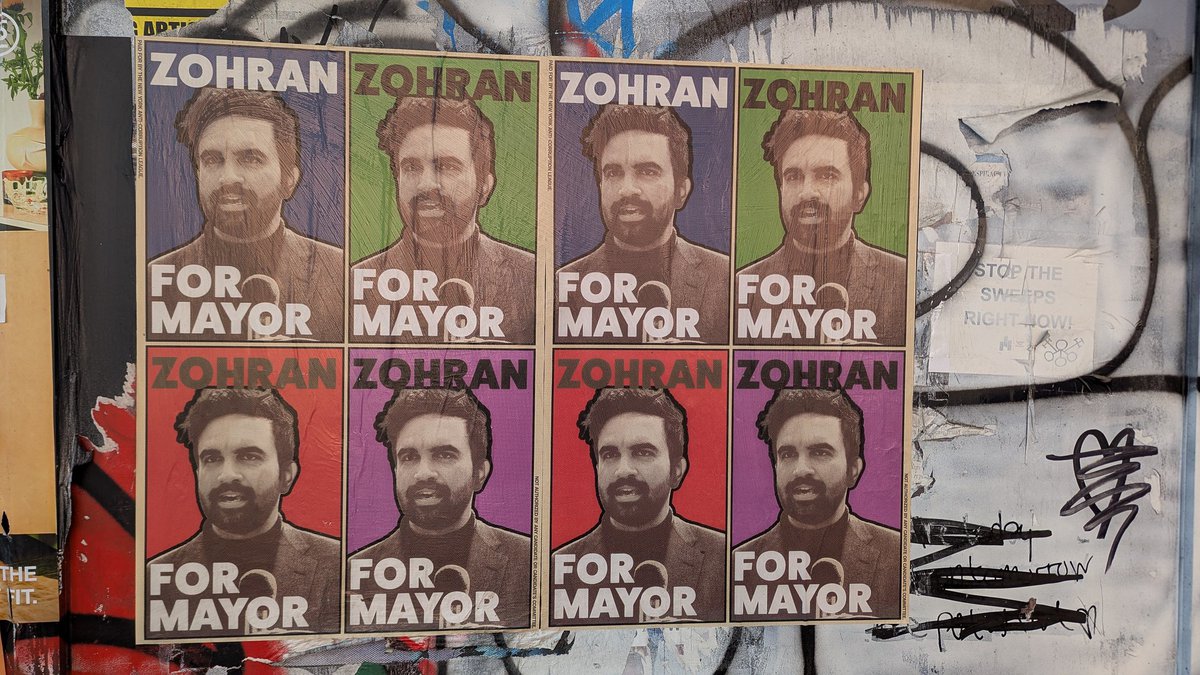
“I’ve been critical of mayoral control because of the ways in which it’s been used to take away the voice of parents, of educators, of students,” Democratic nominee Zohran Mamdani said during the first general election mayoral debate in October. He has said that he’s opposed to how the current system allows the mayor to make unilateral decisions without input from the people who would be directly impacted.
New Yorkers cast their ballots for mayor Tuesday, November, 4. More than a dozen different polls have Mamdani leading independent Andrew Cuomo and Republican Curtis Sliwa by double digits, according to a New York Times tracker.
Mamdani, a graduate of the public Bronx High School of Science, says he supports ending mayoral control to instead develop an alternative, more community-oriented means of decision-making. But, he has not provided specific details on this proposal yet. Mamdani’s team did not respond to requests for comment.
Philadelphia, Detroit, and Chicago are among the cities across the country whose school system was previously under mayoral control. Each city eventually phased it out to give local communities more power over their own education. Providence, Rhode Island, is currently in the process of doing the same.
In New York City, former Mayor Michael Bloomberg established mayoral control in 2002, when he lobbied the state legislature to replace the city’s school boards with PEP, to which the mayor appoints one-third of members. David Bloomfield, a professor of education leadership, law, and policy at Brooklyn College and City University of New York, tells The Progressive that the previous system of thirty-two locally elected school boards had weakened over the decades following its establishment in 1970.
Board members who served in the decades before there was mayoral control were accused of, among other things, stealing district property, extorting money from school employees, and protecting a school principal who was convicted in a crack cocaine possession case. Entire school boards have been suspended or investigated for corruption. The Manhattan Institute, a conservative think tank, published data in 2001 that lists the high school graduation rate at 55 percent in 1993 for New York City public school students.
“People found that it really wasn’t working for kids,” Bloomfield says. “There was corruption. There was a lack of accountability. The board members who had been appointed by the borough presidents could then run on their own without much control from anybody else.”
Each of the mayors who have held the position since the implementation of mayoral control—Bloomberg, Bill de Blasio, and Eric Adams—have taken a hands-on approach to governing the education system. Bloomberg decreased how many teachers received tenure, created a state-approved teacher evaluation system, and authorized principals to make hiring decisions. He also formed 173 charter schools, which made the option more readily available to families and contributed to charter schools’ popularity. De Blasio subsequently implemented free, universal pre-kindergarten and spearheaded reforms that reduced the use of suspensions and arrests in schools, while Adams introduced a new, phonics-based reading curriculum in elementary schools. State data shows that in 2023, the graduation rate for New York City public high schools was 83 percent.
The state legislature has renewed mayoral control each time it’s been on their docket since 2002. Alicea says she recognizes the problems that New York City schools faced prior to mayoral control. “But the world is different now,” she says, “and this is a whole different generation of parents and of New Yorkers. The landscape of New York City has changed dramatically and I think that it is time to consider placing the control of our schools back into the hands of our communities.”
Mamdani’s intention to dissolve mayoral control comes amid a nationwide uptick in families leaving public schools to enroll their students in private or proliferating charter schools, the latter of which are publicly funded but independently operated. From 2011 to 2021, the percentage of U.S. students enrolled in charter schools increased from 4 percent to 7 percent, according to a Pew Research report from last year. Private school enrollment remained steady at about 10 percent of school enrollment. Public school enrollment, meanwhile, declined from 87 percent to 83 percent nationwide during this period.
Nearly $6 billion of New York City’s $41.2 billion education budget currently goes to charter and non-public schools—and public funding for them continues to rise every year to satisfy state requirements. Thousands of people rallied in Brooklyn at the start of the school year to advocate for more funding for charter schools. Many proponents of charter schools cite their smaller class sizes as a major appeal—Alicea attended a charter middle school for this reason.
Governor Hochul signed a bill in 2022 to cap class sizes at twenty to twenty-five students, depending on the grade. The mayor is responsible for implementing the mandate by 2028, and Mamdani has said he supports smaller class sizes.
Alicea says she and other parents feel the implementation of the class size mandate has happened too slowly, and they blame mayoral control for the hold-up. Her son, Roman, has more than thirty students in his second grade class. Overall, just under half of classes (46 percent) are compliant with the law as of last year; that’s more than what the requirement was for this year (40 percent), according to a 2025 draft report from the city. For this school year, it says more than $400 million dollars were allocated to reach the mandate in about 750 schools.
Mamdani told Chalkbeat in May that 500 of the city’s schools did not have enough space to hold smaller classes with the current number of rooms available, and that the city’s education department does not have enough staff to meet the mandate. He said he would work with the city’s School Construction Authority to develop an infrastructure plan to create the space, and that he would revise trainings and professional development to hire and retain teachers.
If Mamdani wins, he’ll be racing against the clock to convince the state legislature not to renew mayoral control again: It’s currently set to expire June 2026.
Mayoral control has not fully solved the corruption problem it was originally established to fix. In 2024, a new record of nearly 12,000 complaints alleging misconduct, waste, fraud, financial mismanagement, and criminal activity were filed against the Department of Education, the Teacher’s Retirement System of the City of New York, and the Board of Education Retirement System, according to the annual report issued by the Office of the Special Commissioner of Investigation for the New York City School District. The department has reportedly initiated investigations for a little more than 4 percent of the filings.
Adams embroiled himself in a scandal when he initially selected his friend David Banks as Chancellor of New York City Public Schools, a decision many New Yorkers saw as a political move that wasn’t in the best interest of students or teachers. After Adams cut $547 million in education funding in 2023, the United Federation of Teachers union sued to have the funds restored.
Fabienne Doucet, the director of New York University’s Metropolitan Center for Research on Equity and the Transformation of Schools, says it’s unlikely that Mamdani will be heavily involved with the schools given his opposition to mayoral control. He’ll likely be more hands-off and, for example, allow parents and educators on various boards to control the education system in partnership with the chancellor. But he will still make the majority of appointments to the education department and to PEP, including the critical schools chancellor appointment.
“The mayor’s office guides [the chancellor] in terms of their priorities—whatever constraints or whatever they want to push for and make happen—so it ends up being a very political position,” Doucet says.
Bloomfield suggests that the next mayor could return power to local communities by turning the appointed seats, particularly the chancellor, into positions confirmed by city council. A report issued last year by New York State’s education department found that checks and balances similar to Bloomfield’s idea are a recommended way to reform mayoral control. The report also suggested a new commission to institute reforms and fewer mayoral appointments to PEP, among other proposals.
While adults parse out what happens next here, students continue learning with these tensions in the background. Roman is reading at a fifth grade level. There’s talk of him skipping a grade, but Alicea and her fiancé, Matt Harvey, have opted against it because they don’t think Roman is ready socially. He often isolates himself on the playground or during free time, preferring to play with himself because other kids “don’t play right,” his mom says.
“School has always been overwhelming for kids. Part of the learning process is learning how to cope with intellectual stress,” Alicea says of her goals for Roman’s education. She also wants him to “have the opportunity and the time to have other experiences [outside the classroom] and also have the energy to do that.”
At the end of Roman’s school day, he runs out of school into the arms of his father, Harvey. It’s Harvey’s turn to be the “park parent” at the public park next to the school, supervising the group of playing children.
After Harvey and Roman walk home, Roman does the thirty minutes of reading that his parents require before starting up Minecraft, a video game that involves building and problem solving. The next morning, they get up and do the same thing all over again.