
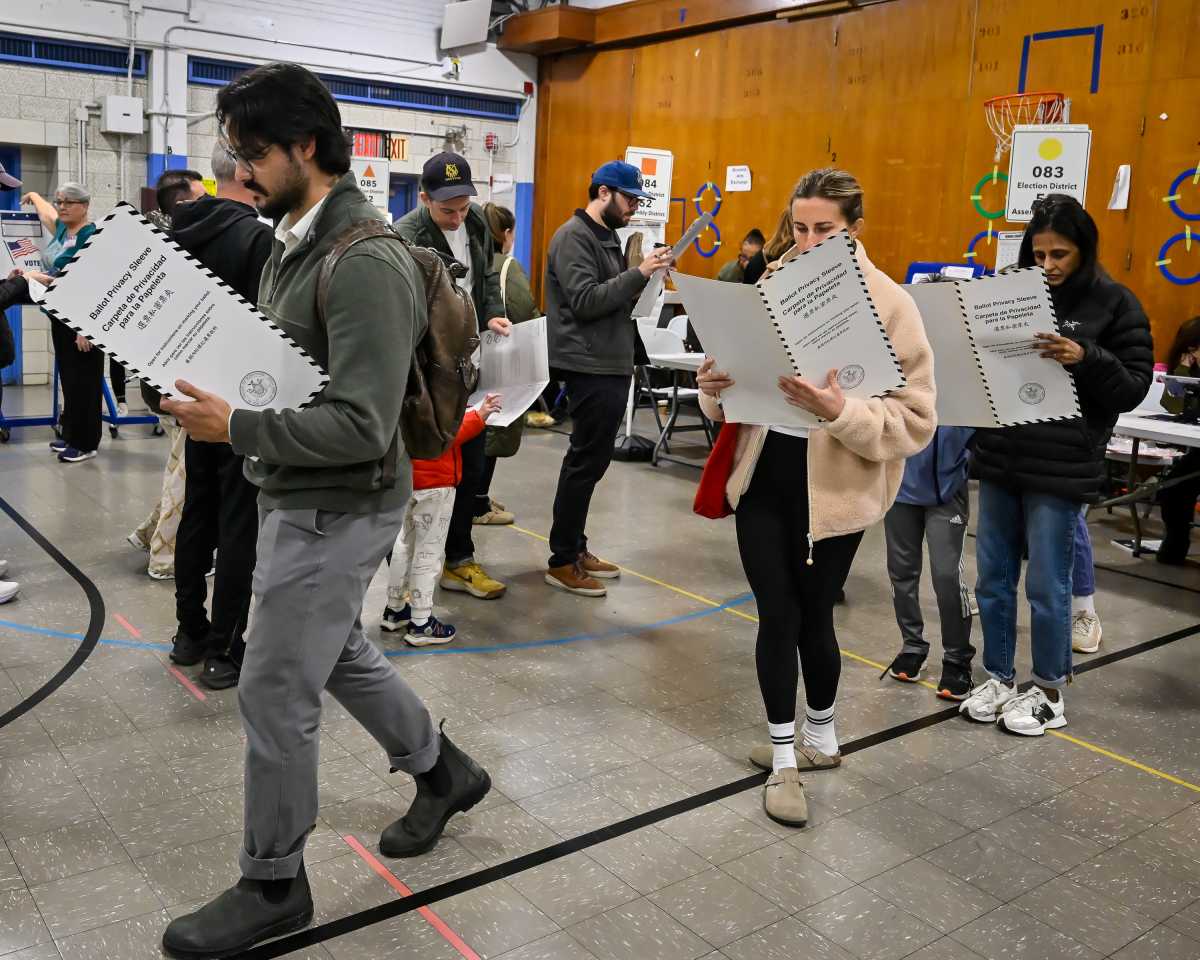
As New Yorkers cast ballots in Tuesday’s primary, open-primary advocates are pressing Mayor Zohran Mamdani’s charter revision commission to revisit a long-running City Hall fight over who gets to participate in the city’s primary elections.
Open Primaries President John Opdycke is expected to testify Tuesday evening at a Staten Island hearing of Mamdani’s Commission on Government Efficiency (COGE), according to the organization, keeping pressure on the panel as it gathers public input on possible changes to the City Charter.
More than 1 million New York City voters are registered without a political party, making them the city’s second-largest voting bloc after Democrats, according to the New York City Campaign Finance Board. Under New York’s closed primary system, those voters cannot participate in party primaries unless they enroll in a party.
Advocates say that shuts unaffiliated voters out of elections that often determine the city’s political leadership. But on June 22, they also acknowledged a key caveat: They have not settled on a specific proposal for what should replace the current system.
“We’re not pushing a specific proposal at this point,” Opdycke said during a Monday press call. “There are people working in New York that are wanting to put a specific effort on the ballot, and they’re not ready to talk publicly yet.”
Opdycke said advocates want Mamdani’s commission to study the issue, hear from experts and make a political commitment to changing the system before deciding what kind of ballot proposal should move forward.
“There’s lots of ways to skin a cat,” he said. “You can do open primaries in a variety of ways.”
Is NYC open to changing primaries?
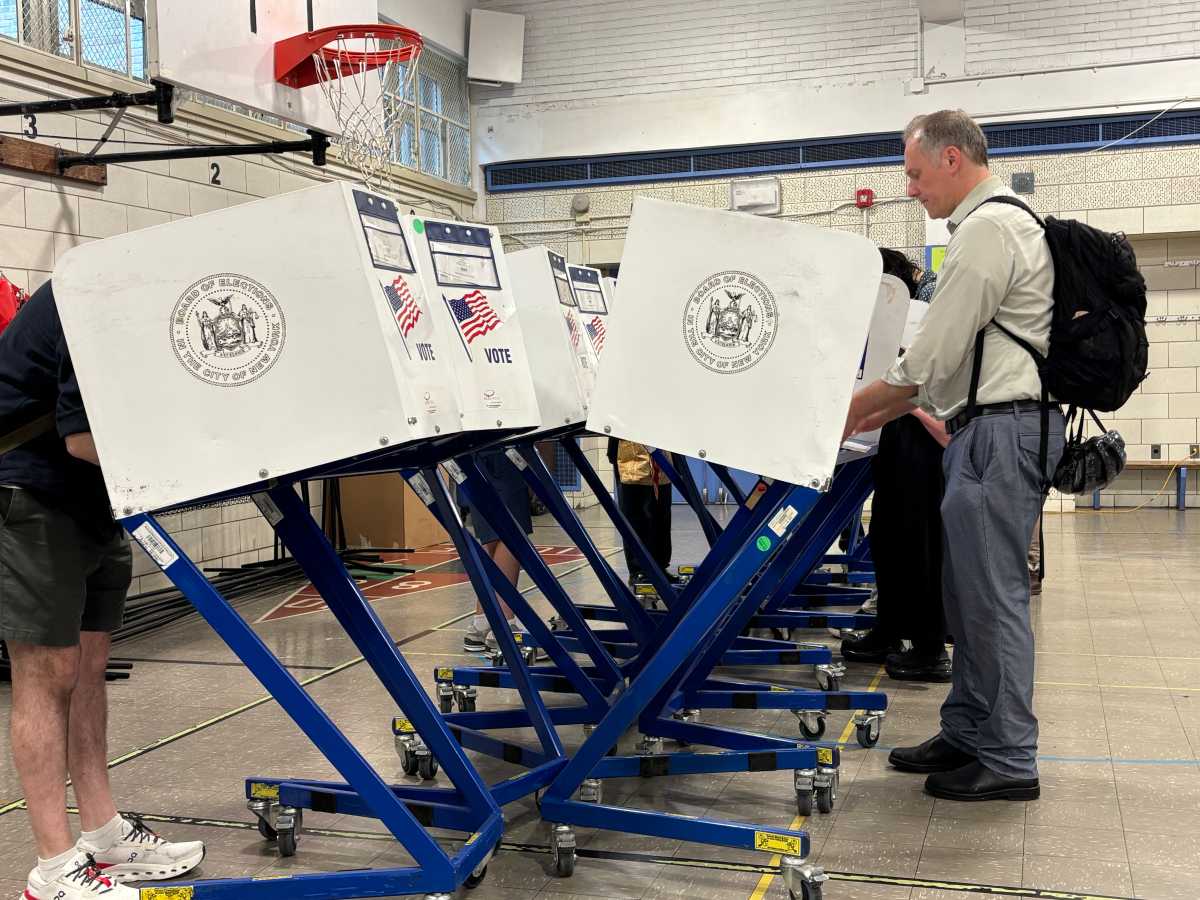 A New Yorker votes in the 2026 Democratic primary in Park Slope, Brooklyn on June 23, 2026.Photo by Ethan Stark-
The renewed push comes as COGE holds public input sessions across the city. The commission is empowered to recommend changes to the City Charter that could be placed before voters at the Nov. 3 general election, or another election date allowed by law.
A city charter change would apply to New York City municipal elections, not the congressional and state legislative races on Tuesday’s ballot. Current party-enrollment rules remain in place.
The issue has already moved through multiple charter fights.
Last July, a Charter Revision Commission appointed by then-Mayor Eric Adams declined to put an open primary proposal on the November ballot after considering a system that would have allowed all voters, regardless of party affiliation, to participate in a single primary, with the top two vote-getters advancing to the general election.
Commission Chair Richard Buery said at the time there was not enough consensus among commissioners, experts and city leaders to move the proposal forward.
That commission was separate from another charter commission Adams appointed on Dec. 31, 2025, his final day in office. A preliminary staff report from that later commission listed nonpartisan elections and open primaries as its first issue for consideration.
Mamdani moved in May to end the last-day Adams commission, invoking a state budget provision that gave him the option to void a charter commission created by his predecessor. He then created his own charter panel, COGE.
At COGE’s first public hearing, open primaries were the most popular topic, according to City & State, with about a dozen people testifying in favor of allowing voters of any party to participate in a single city primary.
Under New York’s current system, voters generally must be enrolled in a political party to vote in that party’s primary. Supporters of open primaries argue the rule is especially consequential in New York City, where Democratic primaries often decide the eventual winner in heavily Democratic districts.
Paul Rieckhoff, founder of Independent Veterans of America, said Monday he cannot vote Tuesday because he is not enrolled in a party. He said the exclusion is especially stark because elections are run with public resources and often held in public buildings.
“The election happens two blocks from my kid’s public school,” Rieckhoff said. “It’s publicly funded, public poll workers, public machines, public school — and I can’t vote in it.”
Dr. Jessie Fields, a Harlem primary care physician and independent voter, framed the issue as one of voting rights and civil rights. She said younger voters and voters of color are disproportionately represented among those registered without a party.
“Your right to vote should not depend on your joining a political organization,” Fields said during the call.
NYC not as ‘blue’ as people think?
Advocates also pointed to polling they commissioned, which they said shows that many registered Democrats do not strongly identify with the party. Opdycke said the poll found that 40% of registered Democrats in New York City identify as independents or Republicans but enroll as Democrats to vote in primaries.
“If you had an open system, people wouldn’t have to lie about who they are,” Opdycke said. “They wouldn’t have to join a private political party that they don’t believe in in order to cast a ballot in a publicly funded election.”
The advocates’ point to a 2024 Bipartisan Policy Center report that found primary electorates are generally older and less representative than the broader pool of eligible voters. The report found that unaffiliated voters made up 28% of eligible voters in the average state it studied, but just 10% of primary electorates.
The report also found that states saw turnout rise by 5 percentage points when they opened primaries to unaffiliated voters for the first time, and that the unaffiliated share of the electorate rose by 12 percentage points on average. The report did not study New York City specifically.
Fields also cited a 2019 Touro Law Review that argues closed primaries raise voting-rights, equal-protection and freedom-of-association concerns for unaffiliated voters.
The proposal remains controversial, however. Critics of open primaries argue that political parties should be able to choose their own nominees and warn that changing the rules could allow voters from outside a party to influence its candidate selection.
amNewYork asked the advocates what guardrails would prevent organized crossover voting or sabotage. Fields responded that voters can already change their registration to participate in another party’s primary. She argued that opening the process would be safer and fairer than a system that pushes voters to join a party they do not identify with.
Nick Troiano, executive director of Unite America, said the current system is already vulnerable to manipulation because low-turnout primaries can be influenced by outside spending and strategic political activity.
Troiano also framed New York as part of a national debate over closed primaries, saying it is one of 16 states with fully closed primaries. He argued that low-turnout primaries increasingly decide races before the general election, leaving unaffiliated voters without a meaningful say in many contests.
Opponents of the 2025 proposal included progressive Working Families Party leaders and some Republicans, who argued the change could benefit establishment candidates or weaken party primaries. Supporters counter that the current system already encourages strategic party enrollment, because voters who do not identify with a party may still register with one to have a say in competitive primaries.
The commission is holding Tuesday’s public input session from 5 p.m. to 8 p.m. at Staten Island University Hospital North. City Hall has also announced another round of public input sessions in all five boroughs beginning June 30 in Brooklyn and continuing in the Bronx, Staten Island, Manhattan and Queens through July 13.
Members of the public may testify for up to three minutes in person or by Zoom, or submit written testimony online, according to the city notice.
The ongoing process gives open-primary supporters more chances to press their case. But commissioners would still have to decide not only whether to advance the idea, but what “open” should actually mean.