
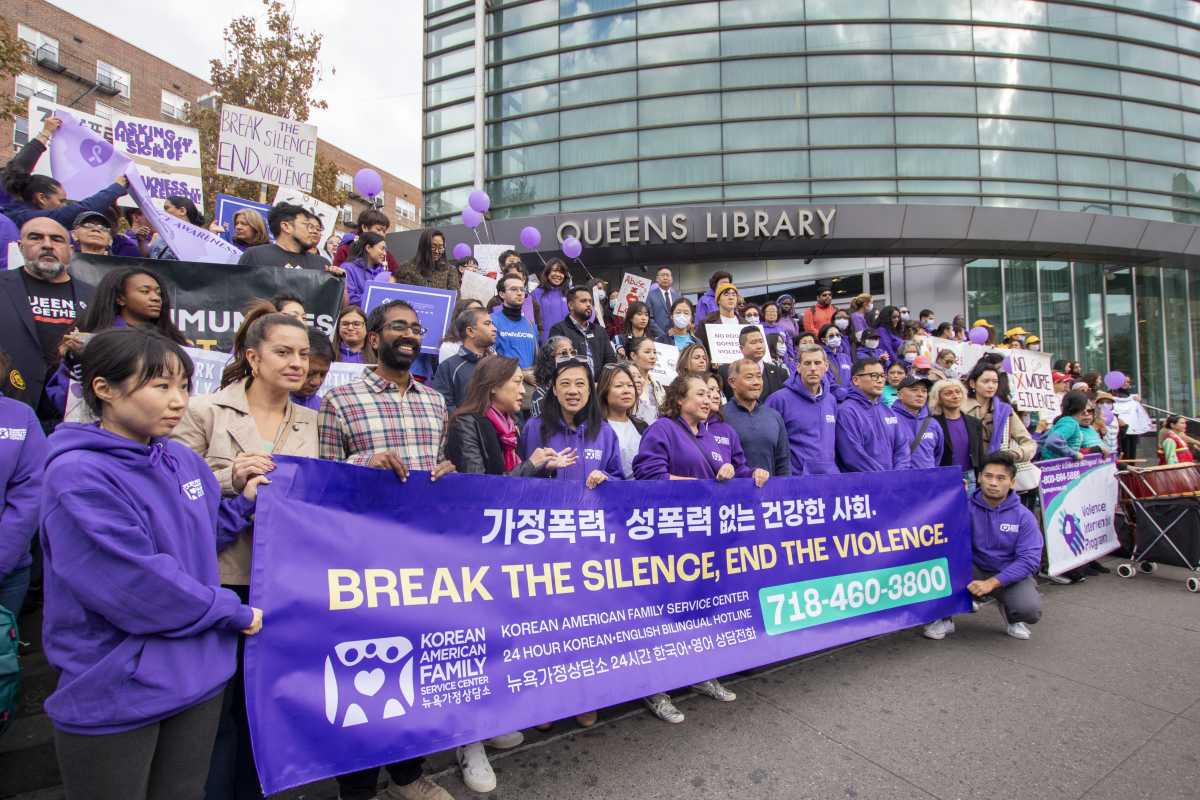
In a move that will significantly increase its ability to help those in desperate need, the Korean American Family Service Center in Flushing is gearing up to build an emergency shelter in Queens for those experiencing domestic and sexual violence.
The group, which is planning a groundbreaking in August, recently spoke in general terms about the plan for the shelter, which likely would take two years to build and open, with more details to be disclosed later.
This shelter, whose location will remain confidential, is expected to serve primarily Korean Americans, the population the Center interacts with most. It is being funded by New York City, New York State, private foundations and many donors.
It will serve victims of domestic violence, sexual violence, child abuse and human trafficking.
Public officials are expected to take part in the formal groundbreaking in August, a watershed moment as the shelter goes from idea to reality.
The group says it is designed to provide “safe, confidential and culturally responsive shelter services for survivors of gender-based violence.”
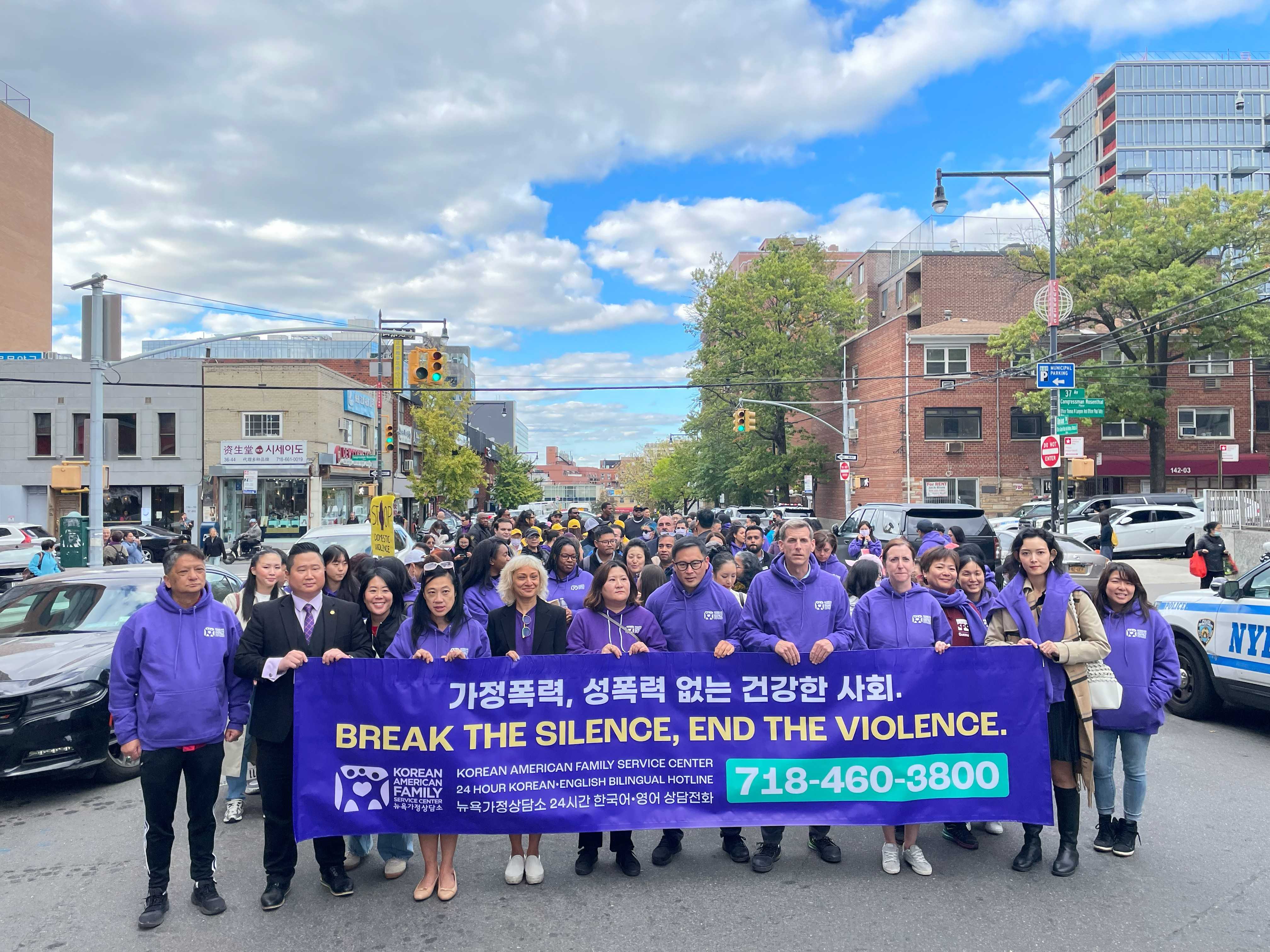 Photo courtesy of the Korean American Family Service Center
“We have a shelter now that’s very small,” Korean American Family Service Center Executive Director Jeehae Fischer said. “The need has grown since we opened the shelter. We wanted to provide a nice facility for our clients.”
The existing facility, which can serve up to five, opened in 2014 and would be joined by a new state-licensed facility that could house up to 25 adults and children in Queens.
“A lot of Korean-Americans live in Queens,” Fischer said of the Korean-American population, “but a lot of Chinese Americans are also in the Flushing area.”
They currently refer many clients to different domestic violence shelters, which sometimes means people end up leaving Queens.
“It’s really the shortage of space in Queens,” Fischer continued of one motivation. “Some of the shelters are in Manhattan, the Bronx, Staten Island or outside New York City. We want to give more options in Queens.”
The group, in written materials, says that in over 35 years it has evolved into an agency addressing domestic violence and sexual assault through “comprehensive prevention and intervention services tailored to our cultural context.”
Fischer said national data shows it typically takes about seven incidents for survivors to report or reach out for help, but that abuse takes on many forms.
“It’s not just physical. People in general think about domestic violence as just physical violence,” Fischer said. “There’s sexual violence and child abuse. Children witnessing domestic violence are secondary victims.”
Immigration status can also become a factor, amid fears and threats that can be used to force people into actions and relationships.
“There’s immigration status abuse and financial abuse,” she said. “There are a lot of cases where abusers threaten them by saying, ‘If you try to escape, I have your documentation.’ I’ll be your sponsor for the pathway to citizenship.”
Language is a key factor for many Korean-Americans who may want services in their native language.
“Language is so important. Many of the survivors that come to our doors, we speak their language. We look alike,” she said. “They have this instant trust that they built with us. Because of the language, even if they reach out for help at other wonderful organizations, a lot will be lost in translation.”
They also provide victim support services, including an around-the-clock crisis hotline, legal and social service advocacy and a monthly legal clinic.
The group operates an economic empowerment program, job training and an after-school program called Hodori, or “Little Tiger,” serving over 200 children in Queens. They run a youth leadership program, case management and provide legal and mental health support.
The group published a booklet called “Bridges of Belonging” in which their clients wrote poems, short stories and essays.
“I dream of the day when I will be able to speak English fluently with my grandchildren,” Jessica Kim, who said the group helped her learn to write in English, wrote. “It brings a smile to my face to imagine the day where I can say that, ‘I can speak English confidently.’”
The group provides help, while being sensitive to cultural nuances that other mainstream organizations might not be able to catch, Fischer added.
“A lot of clients say that our organization is like chin jung, which means a mother’s home,” Fischer continued. “They can come and relax.”