
Newly unsealed court records reveal concerns about media coverage, the feds, and unfinished psychiatric evaluations before attorneys withdrew an extreme emotional disturbance defense filing
One of the biggest mysteries surrounding one of America’s most talked-about murder prosecutions previously centered around a secret and sealed hearing on June 3. The press and the public both asked: Why did Luigi Mangione’s defense team want this hearing sealed?
During the June 17 state hearing, Judge Gregory Carro announced in open court that Mangione had filed notice he was considering the partial psychiatric defense known as Extreme Emotional Disturbance or EED, since September of 2025. That’s when the picture started to become clearer.
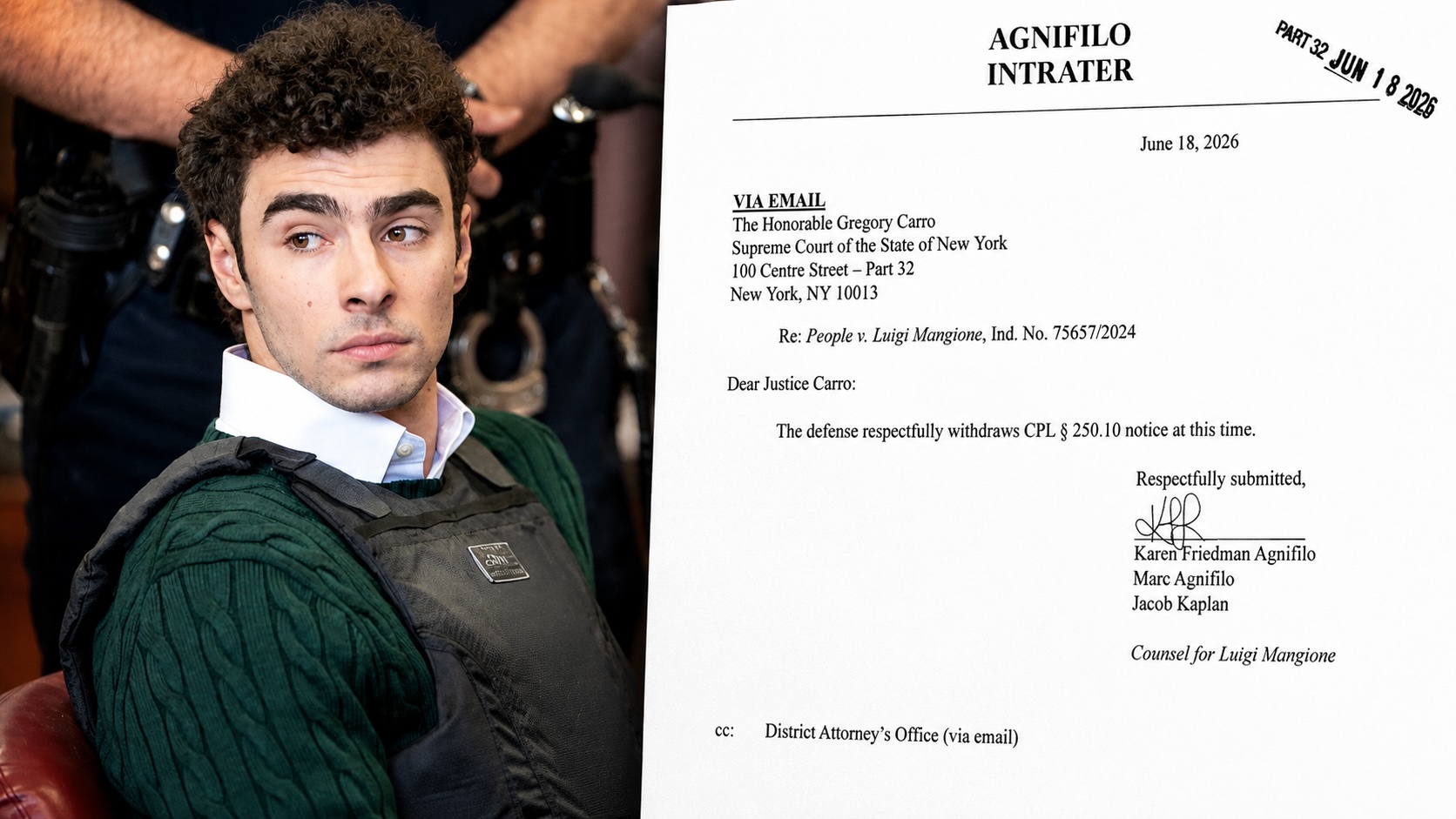
But in a stunning twist, the defense formally withdrew its CPL §250.10 EED notice on June 18, just one day later. Why? Still unclear…though many have speculated for the reasons we’re about to outline.
With the June 3 secret transcript now unsealed (and while portions remain redacted), it offers a glimpse at the challenges Mangione’s legal team is facing as they fight joint prosecutions (federal and state) without the protection of double jeopardy. In the transcript, Mangione’s attorney, Karen Friedman Agnifilo, argued that publicly disclosing an EED defense before the team had decided whether to use it could unfairly prejudice Mangione in his Manhattan murder case and the separate federal prosecution. EED is not a viable defense under federal law; however, it can be taken into account during sentencing.
Agnifilo noted that an EED defense effectively acknowledges that the defendant caused the victim’s death, while asking jurors to consider whether an extreme emotional disturbance would reduce his criminal responsibility. A major concern repeatedly raised during the sealed hearing was publicity. She argued that public commentary around this could influence future federal jurors long before either case reached trial… again, because EED indicates culpability. How does one mitigate that for the federal trial? Agnifilo added that publicly disclosing an EED defense before the team had decided whether to use it could unfairly prejudice Mangione in both his Manhattan murder case and his separate federal prosecution. This could also be an issue for the Appellate Courts to one day decide.
She also explained the team had spent months attempting to determine whether an EED defense was even viable, but said they still weren’t finished.
Agnifilo told Judge Carro that Mangione’s experts were continuing psychiatric evaluations and gathering medical records from multiple states, arguing they could not yet decide whether they would ultimately present psychiatric testimony at trial. Because Mangione is housed in federal custody while concurrently facing state murder charges, Agnifilo said every evaluation required permission from a federal judge and coordination with the Bureau of Prisons.
“The logistical hurdles are immense,” she told the court.
Scroll to continue reading
The defense was also concerned that confidential medical records for the state case could make their way to federal prosecutors. Agnifilo told the court that her team had already seen evidence of information sharing between the Manhattan District Attorney’s Office and federal prosecutors through discovery they had received.
Judge Carro responded by ordering that any medical records disclosed in the state case could not be shared with the feds or other agencies, although prosecutors would still be permitted to provide them to their own experts.
Assistant District Attorney Joel Seidemann argued that Mangione’s attorneys had been discussing a possible psychiatric defense since September 2025 but still had not identified an expert or produced the information required under New York law. He accused the defense of repeatedly changing their explanation for the delay and argued the timing threatened the court’s September trial schedule, though Agnifilo explained that was not the intention.
Mangione is charged with second-degree murder and other offenses in the December 2024 killing of UnitedHealthcare CEO Brian Thompson outside a Midtown Manhattan hotel. Federally, he is charged with interstate stalking resulting in death.
He is due back in federal court on June 29.