
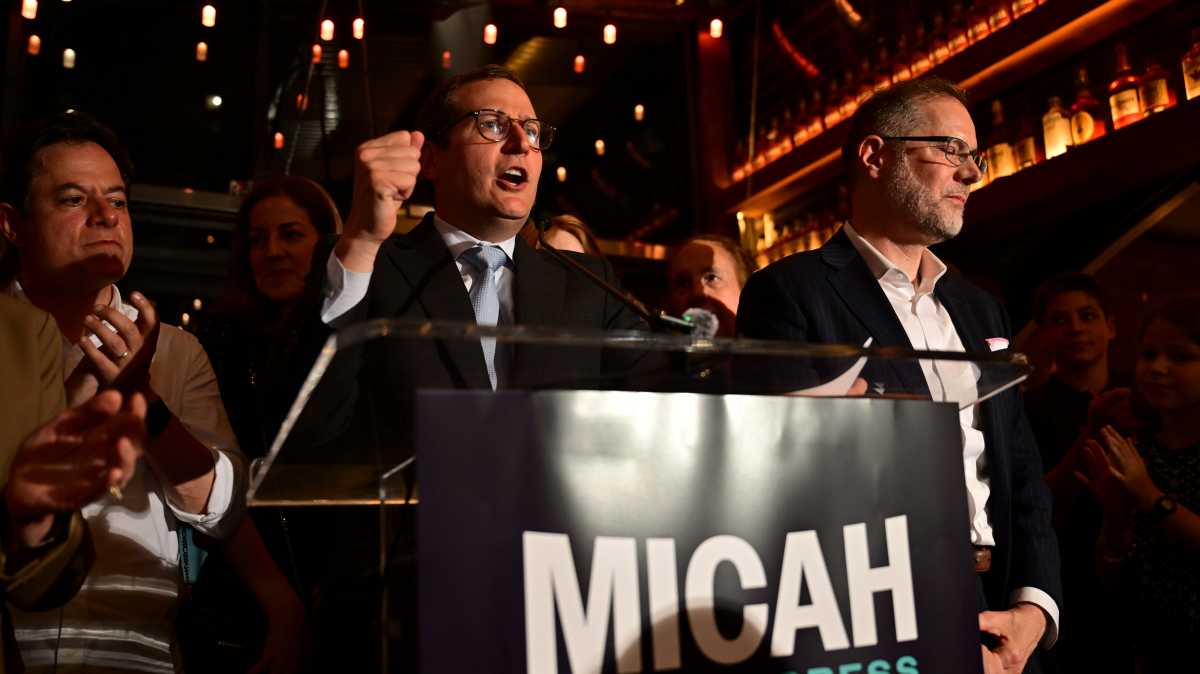
Assembly Member Micah Lasher has won the Democratic primary for New York’s 12th Congressional District, defeating a crowded field of rivals in the race to succeed retiring U.S. Rep. Jerry Nadler.
With 94.21% of scanners reporting, Lasher led with 39.04% of the vote, followed closely by Assembly Member Alex Bores at 35.01%, Jack Schlossberg at 10.79%, Nina Schwalbe at 7.09%, and George Conway at 6.09%, according to unofficial results from the New York City Board of Elections.
The Associated Press called the race at 10:08 p.m.
He entered the final stretch with the backing of Nadler, Gov. Kathy Hochul and former Mayor Michael Bloomberg, who injected close to $10 million dollars into a Super Pac to support him. Nadler, who has represented the Manhattan-based district for 34 years, appeared at Lasher’s election night party and thanked voters for choosing someone he said would continue his work in Congress.
“It’s been the honor of my life to represent this district in Congress for the last 34 years,” Nadler told supporters gathered at Jacobs Pickles to the Jerry Springer-esque chants of ‘Jerry’. “I want to thank you for electing a worthy successor who I believe will carry on the work that I’ve been doing.”
Lasher used much of his victory speech to place the district in a broader political and historical tradition, pointing to Broadway, Lincoln Center, Carnegie Hall, Central Park and the district’s long role in movements for labor, civil rights and social justice.
“The 12th district is not just any district,” Lasher said. “This is a district that changes history.”
He also paid extended tribute to Nadler, calling him “New York City’s liberal lion” and saying he could not replace the longtime congressman but would try to emulate him.
“For so many of us on the West Side of Manhattan, Jerry has been here our entire lives, governing with courage and without fear, delivering change that echoes across the nation,” Lasher said. “I cannot replace him, but in all I do, I will seek to emulate him.”
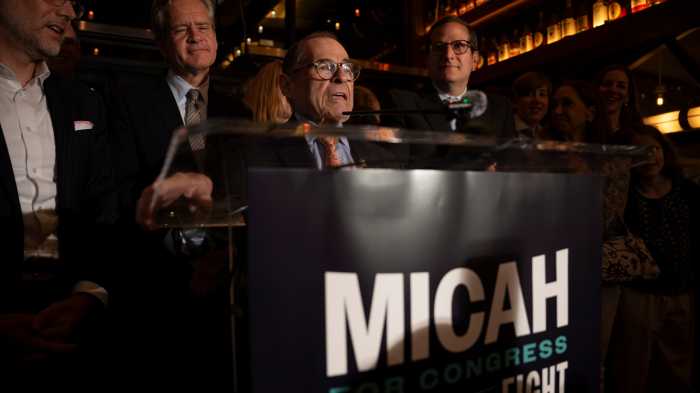 U.S. Rep. Jerry Nadler joins Micah Lasher onstage after Lasher won the Democratic primary for New York’s 12th Congressional District, putting Nadler’s former aide and endorsed successor on track to inherit the Manhattan seat.Photo by Lloyd Mitchell
 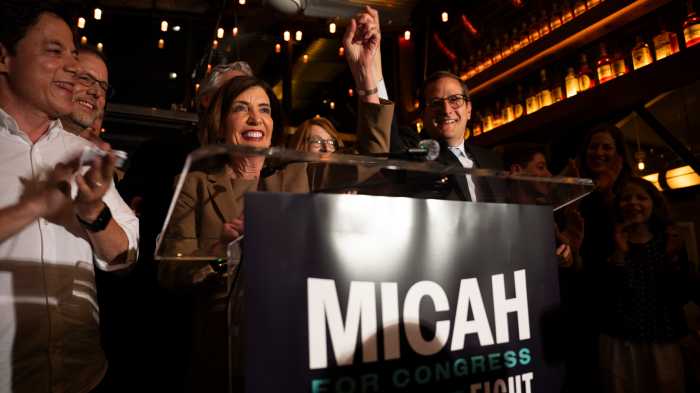 Gov. Kathy Hochul praises Micah Lasher during his election night partyPhoto by Lloyd Mitchell
Gov. Kathy Hochul also took the stage, praising Lasher as the right candidate to continue Nadler’s legacy and pointing to his work as her former policy director and later as a state lawmaker.
“He will be that champion, not just in New York State, but for all of America,” Hochul said.
Hochul described Lasher as a deep policy thinker whose ideas turned into results, saying he helped shape work on affordability and child care before becoming what she called an “extraordinary partner” in the Assembly.
For Hochul, Lasher was the only congressional candidate endorsed by her who came out on top. She had thrown her support behind Rep. Dan Goldman and Rep. Adriano Espaillat who lost their primaries to candidates backed by Mayor Zohran Mamdani. Hizzoner did not endorse any of the candidates running in NY-12.
Throughout the campaign, Lasher argued that the district needed a representative who already understood government and could deliver results in Washington from day one.
Taking the stage after the race was called, Lasher began by acknowledging his rivals — Bores, Schlossberg, Conway, Schwalbe and Laura Dunn — saying the district deserved a serious contest and that the primary field had met that standard.
He said his campaign was built around recharging a Democratic Party in Washington that, in his view, had failed to meet the moment, while also showing that Democrats could offer “bold new ideas” to improve people’s lives and then deliver on them.
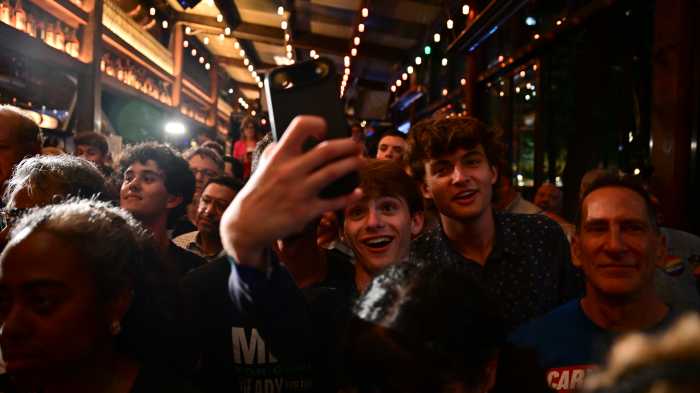 Supporters celebrating at Jacob’s Pickles after Micah Lasher won the Democratic primaryPhoto by Lloyd Mitchell
 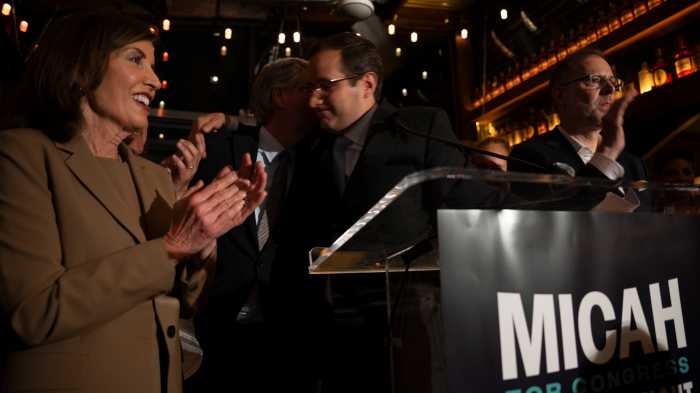 Micah Lasher embraces Manhattan Borough President Brad Hoylman-SigalPhoto by Lloyd Mitchell
Lasher also used his victory speech to take aim at the artificial intelligence companies and outside groups that helped make the race one of the most expensive and nationally watched congressional primaries in the country.
“I have some news for the two big AI companies who have taken such an unusual interest in who won this congressional seat,” Lasher said of OpenAI and Anthropic, before signaling that he would not take direction from them when it came to protecting children.
The AI line landed after months of attacks over outside spending, tech money and the role of super PACs in the race. It also offered a direct bridge to Bores, the Upper East Side assembly member whose campaign became the center of a nationally watched fight over artificial intelligence regulation and the political power of tech money.
Bores, a former Palantir employee, made AI safety a core part of his campaign and argued that his experience in technology made him uniquely suited to regulate the industry. But his campaign also drew heavy outside spending, both for and against him, turning the race into a larger test of how AI policy could shape Democratic primaries.
Outside a poll site on the Upper West Side on Tuesday, speaking to amNewYork, Bores framed the race as a test of whether voters would stand up to what he called Trump-aligned tech donors and super PAC money.
He said anti-Bores spending had been far larger than some public estimates and argued that he was facing major outside spending both against him and in support of one of his opponents.
“There’s no one more motivated than me to get all of this money out of politics,” Bores said.
Bores argued that the stakes went beyond NY-12, saying AI regulation in Congress would be chilled if outside spending could defeat a candidate known for pushing the issue.
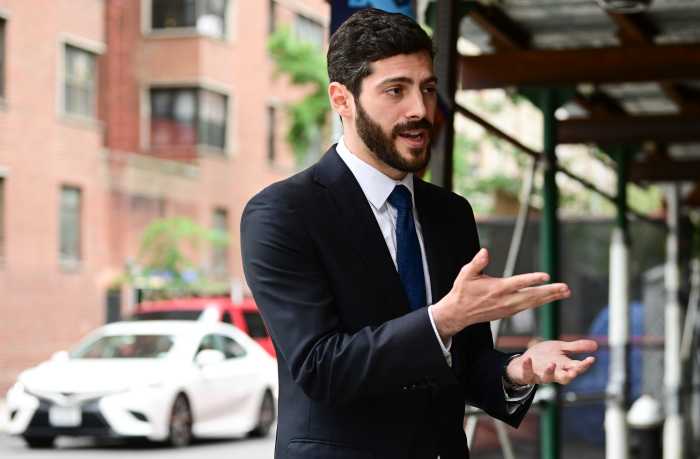 Assemblymember Alex Bores on the primary election trail in District 12 Tuesday morningPhoto by Lloyd Mitchell
In a statement after the race was called, Bores congratulated Lasher and said the Democratic nominee would “represent this district well in Congress.”
“This is not the outcome we hoped for,” Bores said. “But I want to congratulate Micah Lasher, who will represent this district well in Congress.”
Bores said he did not enter the race “to make a singular point about AI,” but to bring to Washington the same focus on effectiveness and standing up to powerful interests that he said he brought to Albany. He accused “some of the richest people on the planet” of trying to make an example of the race by spending more than $10 million against him.
“This was an unprecedented fight, and one we did not back down from,” Bores said. “Though we’ve come up short tonight, the example set here was not the one the AI oligarchs intended. They set out to make people afraid to stand up to them. Instead, they learned just how ready people are to push back.”
“This campaign may be over, but the battles we took on are just beginning,” Bores said. “We are at a true inflection point in this country, and we cannot meet it with fear or complacency.”
Nina Schwalbe, a public health researcher, finished fourth after running as the field’s most progressive candidate. She campaigned on public health, universal health care, paid family leave, housing affordability and a sharper critique of the Democratic establishment.
Her campaign celebrated the result as a stronger-than-expected showing, noting that she finished ahead of Conway after polling in the low single digits earlier in the race.
“Tonight we proved that voters in NY-12 are hungry for a candidate with real expertise and a real plan,” Schwalbe said in a statement. “In a field this crowded and this well-funded, we built something from the ground up — and the people of this district responded. And we did it without much help from those whose job it was to tell them we existed.”
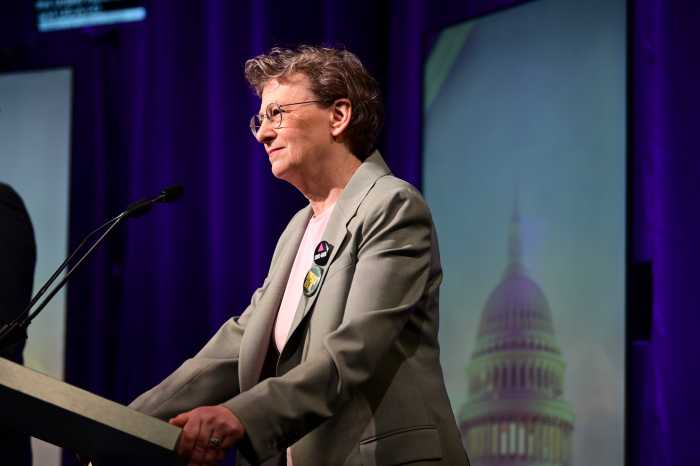 Nina Schwalbe during the June 9 NY1 debatePhoto by Lloyd Mitchell
Speaking to amNewYork before casting her ballot Tuesday, Schwalbe said the race had revealed how difficult it is for lower-budget candidates to break through in NY-12.
She said her campaign had set out to prove a candidate could run seriously for Congress without spending more than $1 million. Schwalbe said her campaign planned to spend about $700,000 and ended up spending roughly $648,000, while forgoing a formal office, using Manhattan Mini Storage locations as campaign dump sites and avoiding mailers.
But she said the campaign also showed how locked down the district’s political infrastructure had become.
Schwalbe said her campaign submitted 61 applications to clubs and organizations but received just one endorsement. She said only two groups even got back to the campaign.
The “Democratic machine,” she said, was “totally locked up.”
Schwalbe also argued that money shaped debate access and, by extension, which candidates voters got to see. She said voters stopped her throughout Election Day to tell her they had seen her in the NY1 debate and were voting for her because of it.
In her statement Tuesday night, Schwalbe said the amount of money poured into the race could have been used elsewhere.
“Twenty million dollars can solve a lot of problems,” Schwalbe said. “Ask me how.”
She congratulated Lasher and thanked her opponents, saying the race was about the future of the district and “the urgent work of fighting for health care, housing, and the people who make this city run.”
“That fight doesn’t end tonight,” Schwalbe said.