
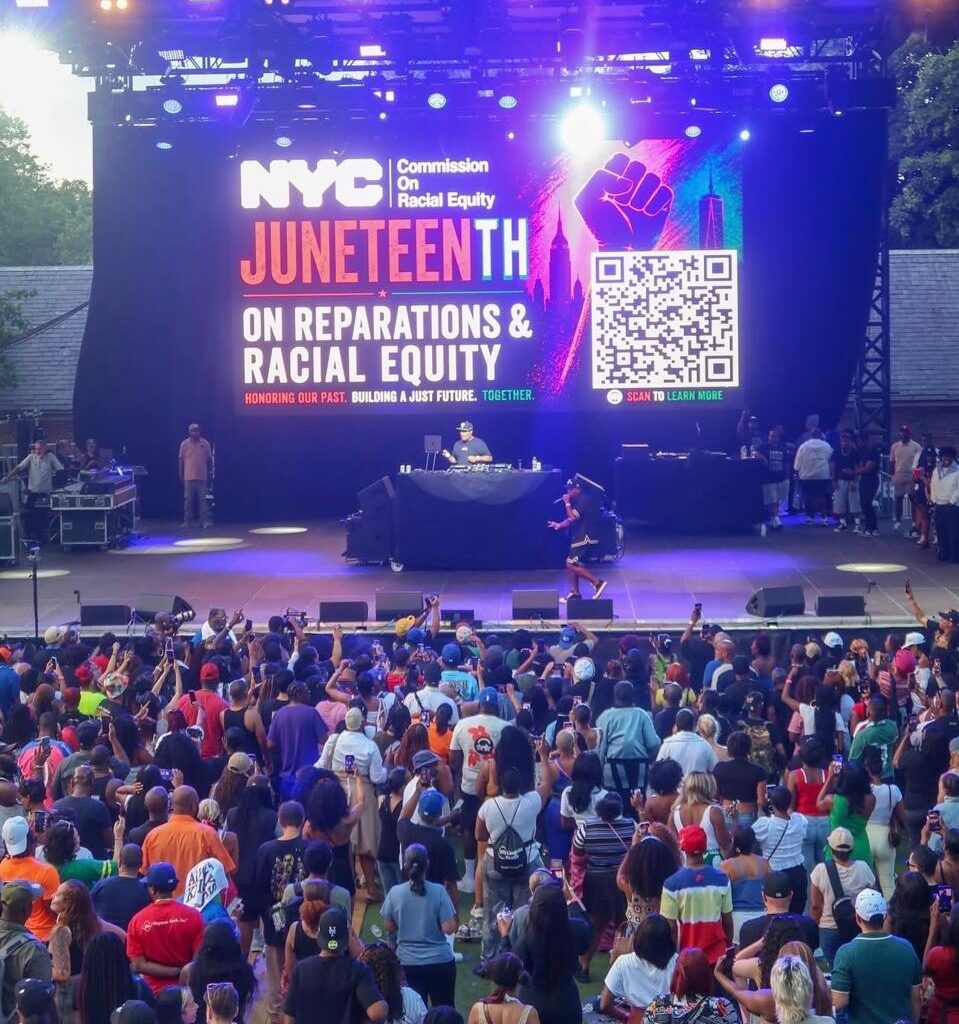
New York City’s Commission on Racial Equity (CORE) organized a 2026 Juneteenth event that ended up being the largest gathering for reparations in New York City. Although reparations have become a more contentious topic over the last several years, an increasing number of cities and states across the country have begun discussing reparations for the Black community to address the harms and horrors of chattel slavery. Across the country, many groups have been established for the sole purpose of studying reparations, to develop a plan for how reparations could be allocated.
“The goal of the event for NYC CORE was to create a space where joy, community, and civic engagement were at the center of both commemorating Juneteenth and advancing the conversation around reparations and racial equity,” shared Tyrik Washington. Washington is a political strategist who has partnered with CORE to provide guidance around a reparations study in New York City. “Juneteenth marks the day in 1865 when enslaved African Americans in Galveston, Texas, finally learned of their freedom. While the holiday is increasingly recognized nationwide, it is too often reduced to symbolic celebrations and photo opportunities rather than serving as a catalyst for meaningful action. Our objective [with the event] was to honor the significance of Juneteenth while connecting its legacy to the ongoing work of repairing the harms of slavery and addressing the inequities that continue to impact descendants of chattel slavery today.”
“Community participation and engagement are at the heart of this work. The community is leading the process of shaping what reparations will look like in New York City,” Washington explained. CORE’s Juneteenth event featured performances by Ja Rule, LeToya Luckett and DJ Kid Capri and served as a platform to educate New Yorkers about the city’s reparations and racial equity objectives. “For NYC CORE, the opportunity to connect this work with the fan base of a megastar like Ja Rule helps elevate awareness and visibility around reparations. The event created a free, joyful, and engaging space where people could come together, build community, and become more civically connected while learning about this important initiative.”
Washington shared more about how reparations could impact Black New Yorkers. “If reparations policies were implemented in New York City today, I believe that within 5-10 years we would see measurable reductions in occupational segregation and meaningful progress toward pay equity for Black New Yorkers.” According to the National Employment Law Project, in the U.S., Black and Latinx workers are overrepresented in jobs that are more dangerous and jobs with fewer benefits than their counterparts. In addition, Black women workers, immigrants and people with criminal records experience greater barriers when trying to secure better jobs with more economic security. According to New York City data from the Office of New York City Comptroller Brad Lander, between 2017 and 2023, occupational segregation was a serious issue. The State of Job Quality in New York City report indicated “About half of White workers hold quality jobs, while only about one-quarter of Black workers and under one-fifth of Latinx workers do.”
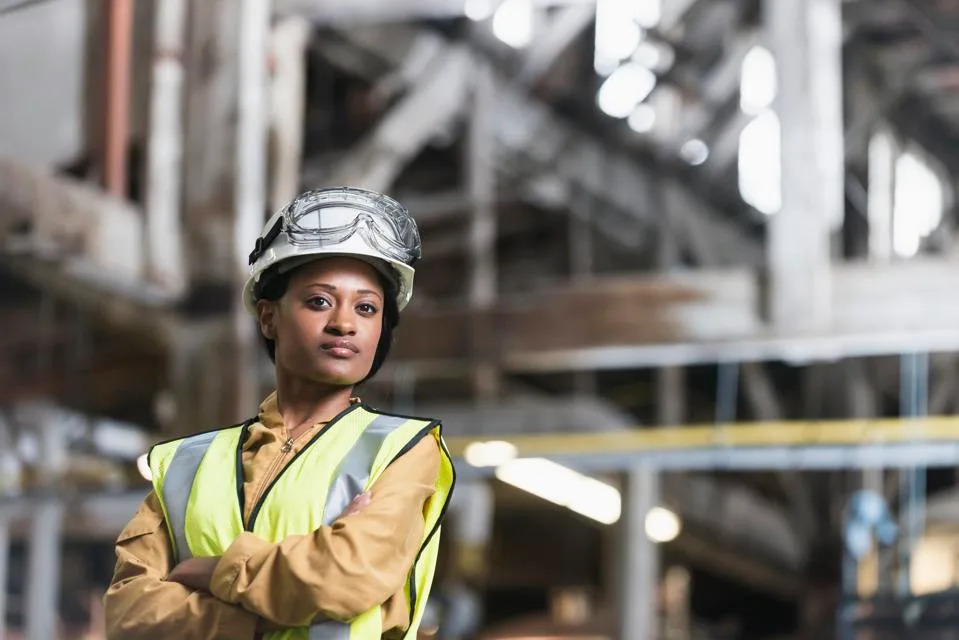
“About half of White workers hold quality jobs, while only about one-quarter of Black workers and under one-fifth of Latinx workers do.”
getty
In a 2020 NPR interview, Pulitzer Prize-winning journalist and the creator of the 1619 Project Nikole Hannah-Jones shared that reparations should include several components but said, “The center of any reparations program has to be cash payments. The only thing that closes a wealth gap is money.” While closing the wealth gap has several positive outcomes for Black Americans in various aspects of their lives including a better quality of life and greater entrepreneurial success, McKinsey research revealed that closing the Black-white wealth gap will have a positive effect on the overall economy.
If reparations become a reality in New York City, in 5-10 years, Washington explained, “We would see expanded pathways to entrepreneurship, wealth creation, and business ownership. Reparative investments could help remove longstanding barriers to capital, allowing more Black-owned businesses to start, grow, and thrive. Because Black-owned businesses are often more likely to hire within their communities, this growth would create a ripple effect, [which can] generate jobs, increase economic mobility and strengthen local economies across the city.”
He went on to say, “The success of reparations would be reflected not only in higher incomes and greater workforce representation, but also in increased business ownership, intergenerational wealth building, and greater economic self-determination for Black communities throughout New York City.” For Black professionals, reparations could provide a lifeline to a wealth of opportunities and access that was historically denied to them, contributing to systemic disparities. A future where equity is a reality requires accountability for past harms and redress to start the repair.
This article was originally published on Forbes.com