
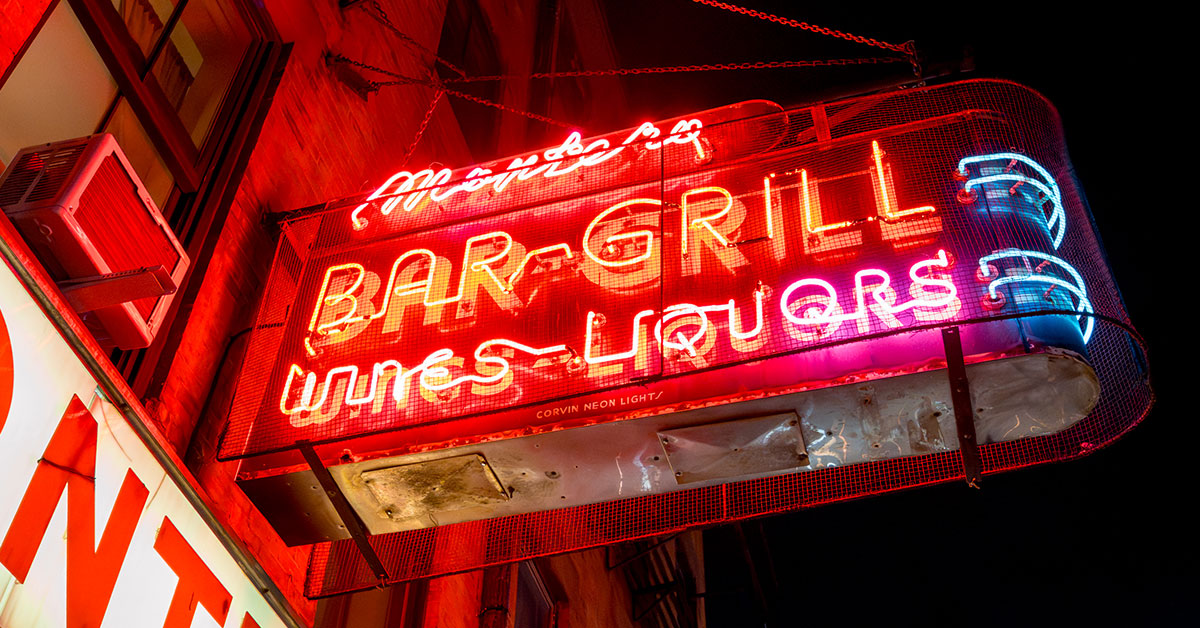
I like to think that I know a thing or two about what makes a dive bar, a dive bar. I’ve often written about neighborhood dives, featured several examples in my book and have, for years, been curating a series in my newsletter that invites a cast of cool characters to share stories about their favorite dives and jukebox songs.
I even spent two years—and a lot of late nights—working on a book on the subject. That is, until I spiraled into the realization that most dives didn’t give a damn about being featured in a book. It was impossible to even set up an interview or a photo shoot at some of these establishments. Despite consistently being listed in annual “Best NYC Dives” roundups, one Brooklyn bar owner took particular offense at my use of the word “dive.” When I asked if I might be able to interview some customers and take pictures, he snapped, “No photos. I’ve got people having affairs in here,” before ending the conversation by turning his back to me and walking off.
He had a point. The sense of anonymity that can often cloak a dive bar is just one of the many factors that makes them so special. These often quirky neighborhood bars welcome and serve longtime regulars, locals and strangers alike, and act as unsanctioned community hubs where people can disappear for an hour or two and feel the connection of being alone in a crowd in a room seemingly lost in time.
As more and more businesses shutter their doors due to rising rents, skyrocketing expenses, labor costs and post-pandemic shifts in consumer habits, every day seems more dire for bars, especially where I live in New York. We always think our favorites will be around forever, until they’re gone, and become, like so many things in New York, just another ghost.
Fans of Montero Bar & Grill, the beloved, nearly 90-year-old Brooklyn Heights dive, thought that might be the case for their favorite haunt earlier this year. In January, news about a planned acquisition from Crew—a hospitality group owned by brothers Alex and Miles Pincus, who oversee an ever-expanding fleet of nautical-themed concepts in New York City and New Orleans—was set to take over.
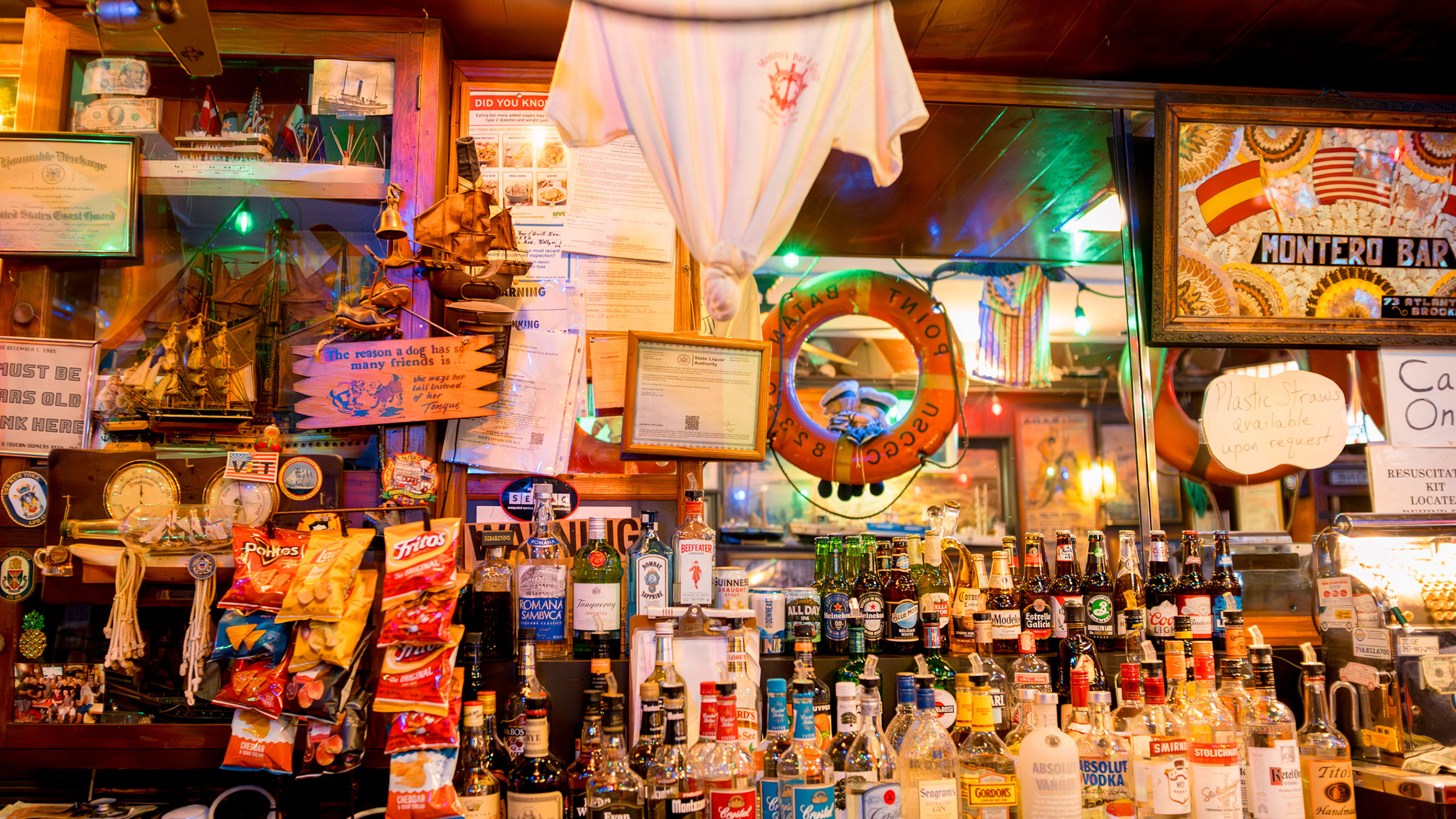
The backbar at Montero.
Montero has lived a long life. Former Galician merchant marine Joseph Montero and his wife Pilar opened it in 1939 on the western edge of Atlantic Avenue in Brooklyn Heights, just a few flaps of a seagull’s wings from the waterfront. Until recently, Montero’s son Joseph “Pepe” Montero (who had worked at the bar since he was a teenager) and his wife Linda had owned and operated it and the three-story building for decades. While the nearby longshoremen and sailors were among the original patrons of the bar, it’s now best known for its lively weekend karaoke sessions that have been hosted by ethereal karaoke queen Amethyst Valentino and attended by the likes of Matt Damon (whom she teased by asking him to add the initial to his last name since there were two other Matts in the queue), Ayo Edebiri and Clairo (“such a sweetheart,” according to Valentino) for almost 19 years.
You could say I was personally invested in how this story played out. To add one more claim to my dive bar bonafides, I had been made aware of this impending sale and seismic neighborhood shift almost a year before the news broke. I’ve lived above Montero for just over six years, in the very apartment that Pulitzer Prize-winning author Frank McCourt once called home in the early 1980s when he was teaching English and creative writing at Stuyvesant High School.
Before shaking hands on renting me this apartment, which is cast every evening in a splash of red neon from the bar’s vintage sign hanging just outside my windows, Pepe insisted I stop by several late-night Saturdays in a row to prove that I could handle the unique ambience and steady noise and distractions that come with living above a bar. I moved in March 2020. Two weeks later the world changed and the bar’s iconic neon sign went dark for 15 months.
But if anyone could live over a dive bar, I was your guy. As I grew into my role as an unofficial Montero ambassador, Pepe and Linda (always Mrs. Montero to me) looked out for me and proved understanding if I was a little late with the rent and often checked in on my cat. I even stored big pots of Mrs. Montero’s marinara sauce in my refrigerator the night before the popular Atlantic Antic street fair, when she would serve every customer at the bar a plate of spaghetti and meatballs.
Naturally, I was freaking out about losing one of my favorite dives and possibly having to find a new living situation. But, unbeknownst to me, Pepe had vouched for me and put in a good word on my behalf. As it turns out, the Pincus brothers were fans of my writing, and one night I received a text from Alex: “I’m texting from a plane to New Orleans now, but would love to discuss all this in depth at some point soon. For now, I just wanted to put on your radar that 1. We’d love to have you stay on as a tenant, and 2. We’re not going to ruin the bar.”
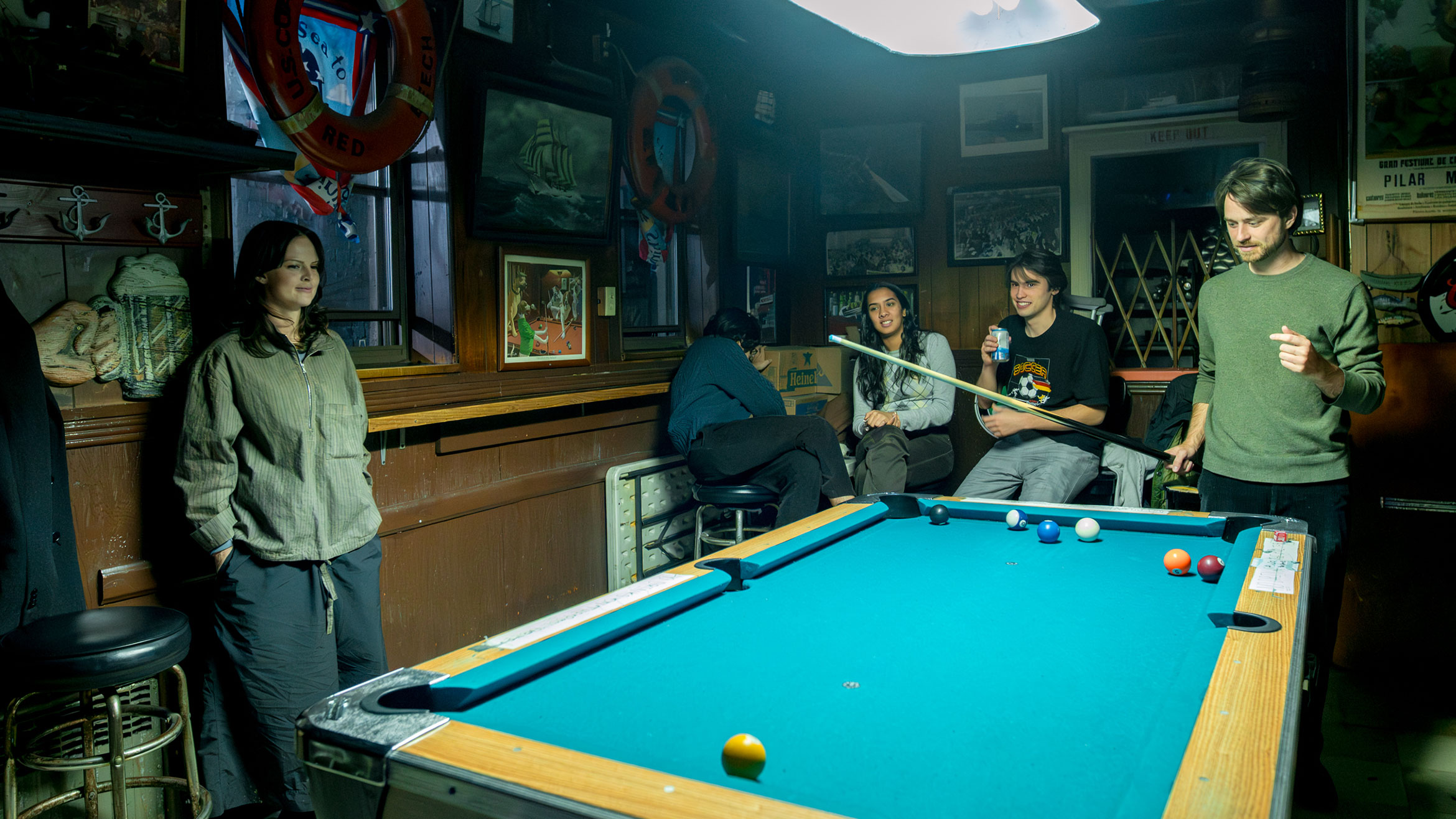
The pool scene at Montero.
Second-generation restaurateurs Alex and Miles Pincus grew up in New Orleans. Their mother ran a popular hot sauce and Creole praline shop in the French Quarter and their father managed a number of restaurants and bars, including the historic Hotel Monteleone. “I grew up around the food culture of New Orleans and seeing hospitality in action,” Alex says. “I’ve been in New York for almost 30 years and though I feel very at home here and it feels like my town, I still don’t call myself a New Yorker because I’m a New Orleanian at heart.”
The Pincus brothers have had an obsession with boats and sailing since they were kids. Miles lived on a 38-foot boat when he went to college, while Alex was on the U.S. Olympic training team for kayaking. They both wound up in New York for graduate school, Miles getting a master’s in maritime science while Alex was pursuing a career in architecture. They would follow afternoon sessions on a restored 1920s-era sailboat with dinner at a little dockside clubhouse. After a spell running a summer sailing camp on the Hudson River, Miles later purchased the Clipper City, a 160-foot clipper ship that had been repossessed by the bank and listed for sale on eBay “for a steal.” After a six-month restoration, including adding a custom bar, they sailed the ship to New York and began offering tours.
One year, Alex threw himself a birthday party on the clipper ship, and, instead of the 20 invited guests, hundreds of unexpected people showed up. When the captain, whom they nicknamed Santa Claus (he had a prodigious white beard), pre-gamed a bit too hard and was too tipsy to take the helm, the cruise turned into a dockside “party for the ages” that would serve as the spark for their career as James Beard Award-nominated restaurateurs.
“We realized sailing’s fun and hanging out with your friends and drinking beer on a boat is fun, but the best part is when you get back and you tie up and you’re at the dock, kind of tired and just hanging out having some drinks,” says Alex. He was also inspired by Mark Kurlansky’s The Big Oyster and its depiction of the many floating saloons and oyster bars that were once a fixture around lower Manhattan. In time, he and Miles got to work pitching a seasonal waterfront oyster concept that would one day become their first restaurant, Grand Banks, an oyster bar on a historic, wooden sailboat docked in Tribeca.
That 1949 metal neon that inspired me to first walk into Montero also served as a beacon for Alex during a particularly dark time in his life. In 2017, he and his brother had opened their restaurant Pilot on a 100-year-old wooden schooner docked at Brooklyn Bridge Park’s Pier 6 (the oyster bar is currently undergoing restoration). Less than a year later, Alex’s first wife died from cancer and he was now a single father with a three-and-half-year-old son.
One night after walking back home from a black-tie gala at Brooklyn Bridge Park and feeling depressed, Alex drifted away from the “city official types” in his group and instead followed the glow of the neon sign to Montero. “I looked up and saw that neon sign and peeled off on my own,” recalls Alex. “I had never been inside but something drew me in.” Pepe, at his usual spot at the front door, took one look at the tuxedoed guest and mercilessly greeted Alex with, “What are you, a fucking penguin?” then smiled and invited him into the bar to have a drink.
“It was a karaoke night and it was a rager,” recalls Alex. “The bar’s going nuts and everybody’s having a good time singing, and I was like, ‘I’m just going to stay here.’” Alex got back home at two in the morning and later returned to the bar to properly introduce himself to Pepe and invite him to stop by Pilot. “Pepe started coming here and the bartenders from Pilot would hang out at Montero after their shifts and we’d have company parties here, and we became good friends,” says Alex. “Whenever I was in he’d say, ‘Hey, when are you going to buy this joint? Come on, you guys, I want to retire.’ but I was never sure if he was joking or not.”
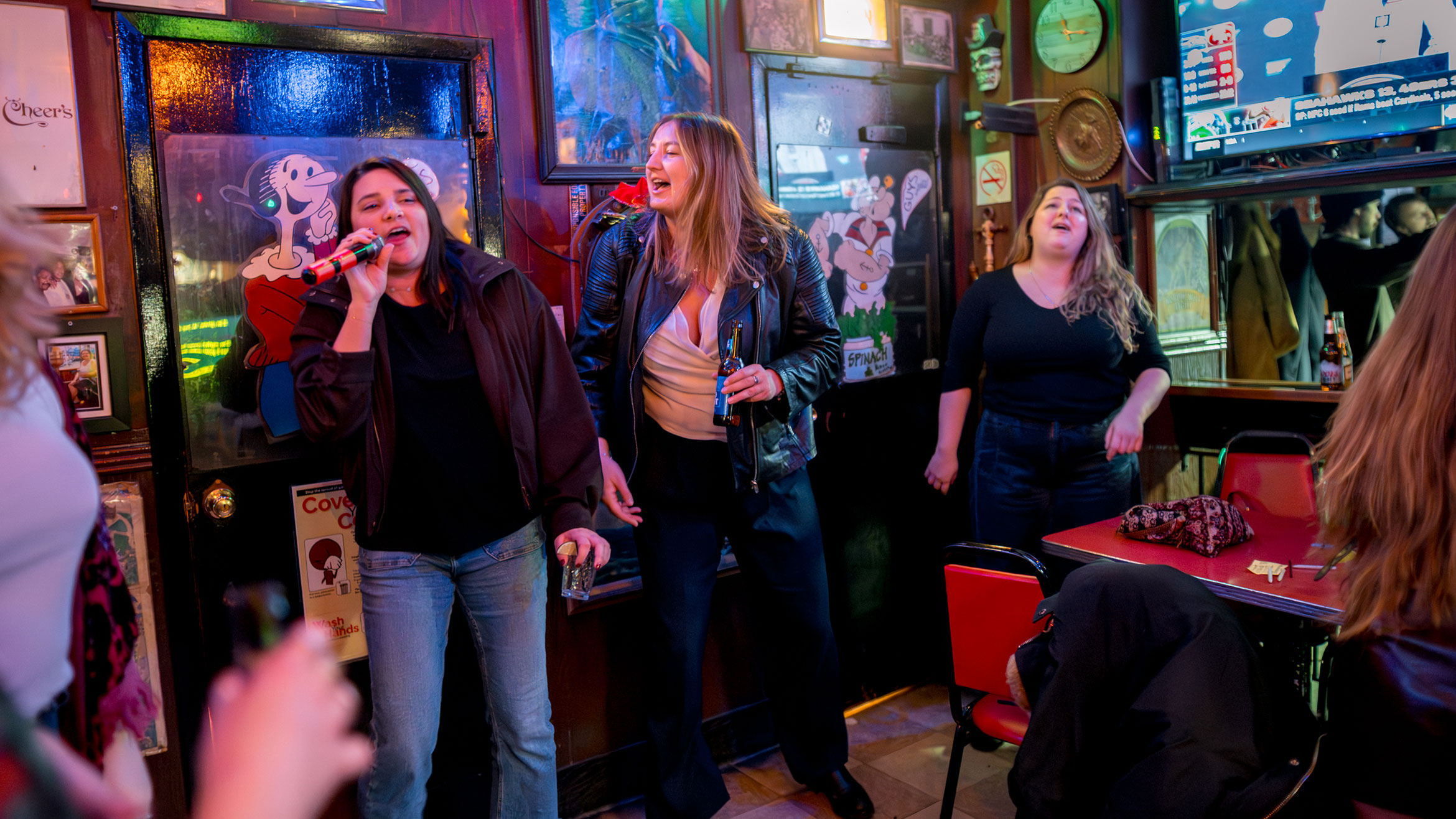
One of Montero’s legendary karaoke nights.
The Crew team actually had some serious conversations about buying Montero in early 2020 and even made an offer, but then the pandemic happened and things fell apart. Five years later, Pepe called Alex to tell him he was selling the bar to some developers. “You can’t argue with the guy, I mean, he’s pushing 80, but it was depressing news,” says Alex. He consulted with his brother before calling Pepe to make an offer. “I was like, ‘Look, man, you know who we are, you know what we’re into. I’ll do my best to keep the legacy alive.’ After consulting with his wife, Montero called him back the next day: “All right, let’s do it.”
What followed was a long, drawn-out process that had its share of memorable moments, including the liquor license transfer hearing where, after making his case for the Crew group, Alex watched Pepe slowly stand up from the front row and walk over to him and rest his hand on his shoulder. “Pepe gave a good two-minute speech about how he was born in this building and he ran this all his whole life,” says Alex. “Honestly, I teared up when he did that. It felt like a real iconic Brooklyn moment. Everyone stood up and gave him a standing ovation.”
The Crew team officially took over Montero on April 24, 2026, closing the bar for a week during the transition in order to get their systems into place. Alex and Miles have been adamant about “keeping Montero, Montero,” and while the space has undergone a thorough scrub down, to paraphrase David Byrne, the essential Montero experience is “same as if ever was.”
Save for the Montero’s branded mirror decorated with monarch butterflies—Pepe held on to that—the decades-long collection of personal artifacts and nautical photographs, paintings and marginalia is still on display throughout the bar. Pincus has been thrilled at some of the discoveries he’s uncovered in the Montero archives, including a photo of 1960s supermodel Twiggy hanging out at the bar along with a picture of Pepe and Linda that he’s since put on display behind the bar along with some vintage bottles of whiskey.
Alex promises that any changes or developments will be gradual. Some things, like the pool table now being free, taking credit cards and the addition of a few “halfway decent” wines by the glass have already happened. The cheap bottles of beer aren’t going anywhere and even though you don’t necessarily expect a great cocktail at a dive bar, he’s looking forward to offering a concise cocktail list of classics that guests would actually enjoy. They also plan to put the “grill” back in Montero Bar & Grill by bringing the long-dormant kitchen back to life for some not-too-fancy bar snacks like chili cheese fries. The brothers have also rolled out an inaugural run of t-shirts featuring Pilar at her usual seat and my own cat Enzo perched in the window above the bar.
And have no fear, karaoke nights have continued without interruption. Regulars would have likely rioted if Amethyst’s regular appearances had halted; it’s hard to imagine Montero without her being a part of it. “I truly love my job and I love the people,” she says. “They’re the ones who are the elemental part of the vibe. There’s a synergy that comes with a karaoke host and the singers.”
When the news of Montero being sold went public, some commenters lamented the impending change. But from my point of view, Alex and Miles were hand-annointed by the Montero family to serve as stewards for their business, which allowed Pepe and Linda to finally retire and enjoy their golden years while also making sure their namesake bar didn’t stay vacant or turn into another Blank Street Coffee or weed shop. Like many of Alex’s favorite bars in New Orleans, Montero is alive in spirit and sense of place.
“It’s not an artifact, it’s a living thing filled with the ghosts of the past,” says Alex. He’s been quick to head off any criticism at the pass by greeting every guest with a smile and a self-deprecating, “Yeah, we’re the dickheads who are ruining your neighborhood bar.”
But he’ll also point out that he and his brother are real people that love this place and are just trying to do a good job. “We have a lot of skills that relate to how to run a venue and we are deeply tied into maritime heritage,” Alex says. “This is my friend’s bar and he wanted to retire. We helped him retire, and now we’re just trying to make everything smooth sailing for the next generation.”
Get our freshest features and recipes weekly.
Related Articles
More Stories you may like