
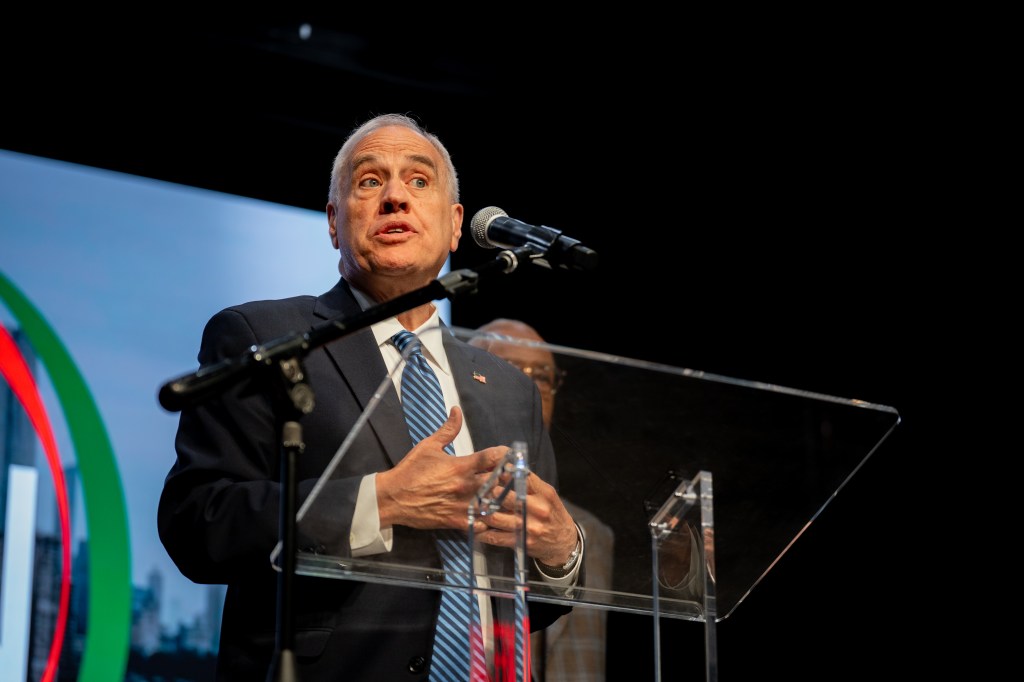
Tom DiNapoli won the Democratic primary for state comptroller Tuesday. Good for him. Now give New Yorkers back their money.
Albany is sitting on $20 billion in unclaimed funds. That money does not belong to the state. It belongs to New Yorkers. Forgotten bank accounts. Insurance checks. Payroll checks. Utility refunds. Stock proceeds. Safe-deposit boxes. Money left behind after someone dies.
Your money. Your parents’ money. Your grandparents’ money. Maybe even your dead uncle’s money. And if you want it back, Albany makes you find it yourself.
The state has no problem tracking you down when you owe money. Miss a toll? They find you. Forget a parking ticket? They find you. Fall behind on taxes? They come for you. But when Albany owes you money, suddenly you become invisible.
You have to find the website. Search every version of your name. Try old addresses. Look up dead relatives. File a claim. Wait. That is Albany making you chase your own cash.
DiNapoli’s office says it returns more than $2 million a day. Then why is the state still holding $20 billion? Because New York is far better at taking money than returning it.
During the primary, challenger Drew Warshaw made unclaimed funds an issue. He lost. But his question did not:
Why should New Yorkers have to beg for money the government already knows belongs to them? Warshaw called for automatic repayment whenever the state can verify the owner. That idea should not die with his campaign.
Albany already has names and addresses attached to much of this money. The state knows how to match data when it wants to collect. It should use the same muscle when it owes you.
A 2024 law created a fast-track program allowing the comptroller to return funds automatically, without requiring a claim. The program started with payments of $250 or less. DiNapoli’s office later raised the cap to as much as $5,000 after sending more than 210,000 checks worth $48 million.
That is a start. It is also couch change next to $20 billion.
DiNapoli deserves credit for expanding automatic payments. Now he should go much further.
If the state can verify the owner, mail the check. Do not make people search. Do not make them file. Do not make them prove what government records already show. Fraud, complicated estates and ownership disputes are real. But they are not excuses for leaving billions untouched.
The state should automatically return verified claims, simplify estate claims and disclose how much comes in, how much goes out, how long claims take and how often they are rejected. It should also show the value of each property in its public database.
Right now, New Yorkers can find a listing and still have no idea whether it is worth $10 or $10,000. That secrecy protects Albany, not the owner.
I got pulled into this issue after finding a few hundred dollars for my mother, Ann, from Mount Sinai Hospital. No one in my family knew it existed. It was simply sitting there. Then I searched for relatives, friends, businesses, churches, universities and estates. The same thing kept happening.
Unclaimed money is not just for careless people. People move. Parents die. Banks merge. Hospitals send refunds to old addresses. Stock accounts get lost. Years later, the money lands in Albany.
DiNapoli has been comptroller for nearly two decades. He won another primary. That means he owns this problem. The campaign is over. The excuses should be, too.
Albany can find you when it wants your money. DiNapoli should be just as relentless when the state has yours.
Lewyn is founder of UnclaimedMoneyGuy.com and a former staff writer for BusinessWeek and USA Today’s Money section.