
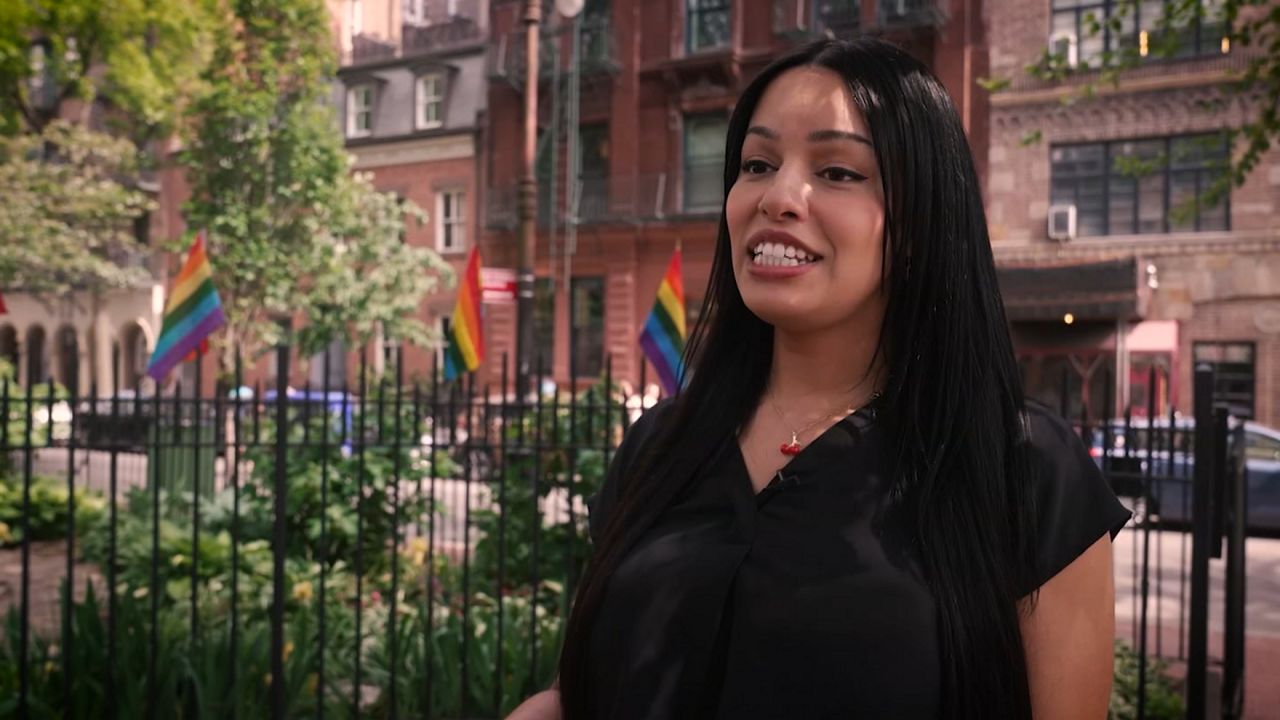
Taylor Brown has spent her whole life walking through doors that weren’t made for her — but this one was.
“I got a contact over LinkedIn, actually, from the mayor’s transition team, and inquired whether or not I would be interested in a potential position in the administration,” Brown said.
What You Need To Know
Taylor Brown is the director of the newly created Office of LGBTQIA+ Affairs, making her the first transgender person to lead a New York City office or agency, and the highest-ranking transgender woman in city government
Brown is a graduate of UNC Chapel Hill and Cardozo School of Law
Before leading the Mayor’s Office of LGBTQIA+ Affairs, she worked for Lambda Legal, the ACLU and the State Attorney General’s Office
Brown is now the director of the newly created Office of LGBTQIA+ Affairs, making her the first transgender person to lead a New York City office or agency, and the highest-ranking transgender woman in city government.
“During my interview, we had candid conversations and the need for innovation and to do things differently,” Brown added.
The path to this office began in a small town.
As a Black transgender woman, she said living openly once felt like something meant for other people.
“I knew from a very early age I was different in a lot of ways, on top of being LGBT, but also being a racial minority from where I am from,” Brown said.
Brown said it wasn’t until she was a student at UNC Chapel Hill that she stopped hiding who she was.
Coming out as transgender brought distance from her mother, not because of rejection, but because of fear, she said.
“She was scared for me. I think that’s really what it was. And there weren’t resources to help families understand,” Brown said. “I think as they saw me sort of blossom into the person I am today, that really helped sort of assuage those fears.”
She said New York offered something the South couldn’t — a community already built and waiting. She moved to New York City in 2014 to attend Cardozo School of Law.
“Coming to New York, I felt more free. I was able to be myself, get the healthcare I needed, get my law degree, and have a very successful career,” Brown said.
Brown’s experience eventually led her to advocacy work.
She got a job with Lambda Legal, which then led to the ACLU and the State Attorney General’s Office. She spent years fighting for transgender Americans in courtrooms.
“My focus was on their ability to be themselves, access healthcare, access employment, access education,” Brown said.
Statistics from the Williams Institute at the UCLA School of Law show nearly three in 10 transgender adults live in poverty.
Transgender people experience violent attacks at 2.5 times the rate of cisgender people, according to the Bureau of Justice Statistics.
Nearly six in 10 transgender people killed in this country since 2013 have been Black transgender women, according to the Human Rights Campaign.
In Washington, executive orders have moved to strip protections for those identifying as LGBTQ+ in schools, the military and healthcare. At a Women’s History Month event on March 13, 2025, President Trump said.
“On day one, I made the official policy of the United States government that there are only two genders, male and female. No matter how many surgeries you have or chemicals you inject, if you’re born with male DNA in every cell of your body, you can never become a woman. You’re not going to be a woman.”
But New York City has some of the strongest civil rights protections in the country, and Brown’s office sits at the center of enforcing them across city agencies.
“It is meant to make sure that the agencies that touch the lives of LGBTQ people, which is virtually almost every agency, are serving those communities and have the best policies in place, and to me that means the same things that got me here today: education, healthcare, employment.”
NY1 conducted the interview at the Stonewall Inn and Stonewall National Monument.
“This is a monument to the trans women who really were here at the beginning and kicked off the civil rights movement, Sylvia Rivera and Marsha P. Johnson,” Brown said when asked what the place means to her.
“I wish that the world had been kinder to them [Rivera and Johnson]. I just hope that wherever they are, they see me and know that I’m a direct result of everything that they sacrificed and did for our community. It is validating to be now a part of that history, and the activists that started that are very much responsible for my ability to be here today.”
Rivera and Johnson, two transgender women of color who became prominent voices in the fight for LGBTQ+ rights, helped shape the movement that grew out of the 1969 Stonewall uprising.
“The violence, the disparities, homelessness, discrimination, to still see so much joy, I think, is something that has always been a part of our community,” Brown said.
Brown carries into this office the years she spent waiting to be herself.
“I have always felt a sense that I have been robbed of time,” Brown said.
NY1 asked how she’s gaining the time she feels she lost back.
“I think living authentically, fearlessly, and doing everything I want to do, even on days when I don’t feel like showing up,” Brown said.
That time is being reclaimed with her family. This past March, they were in the room watching her make history.
“I just want a normal life. I want to feel safe. I want to be able to create the life I want, to have a life of meaning, to have joy, and so I hope that I am my ancestors’ wildest dreams,” Brown said.