
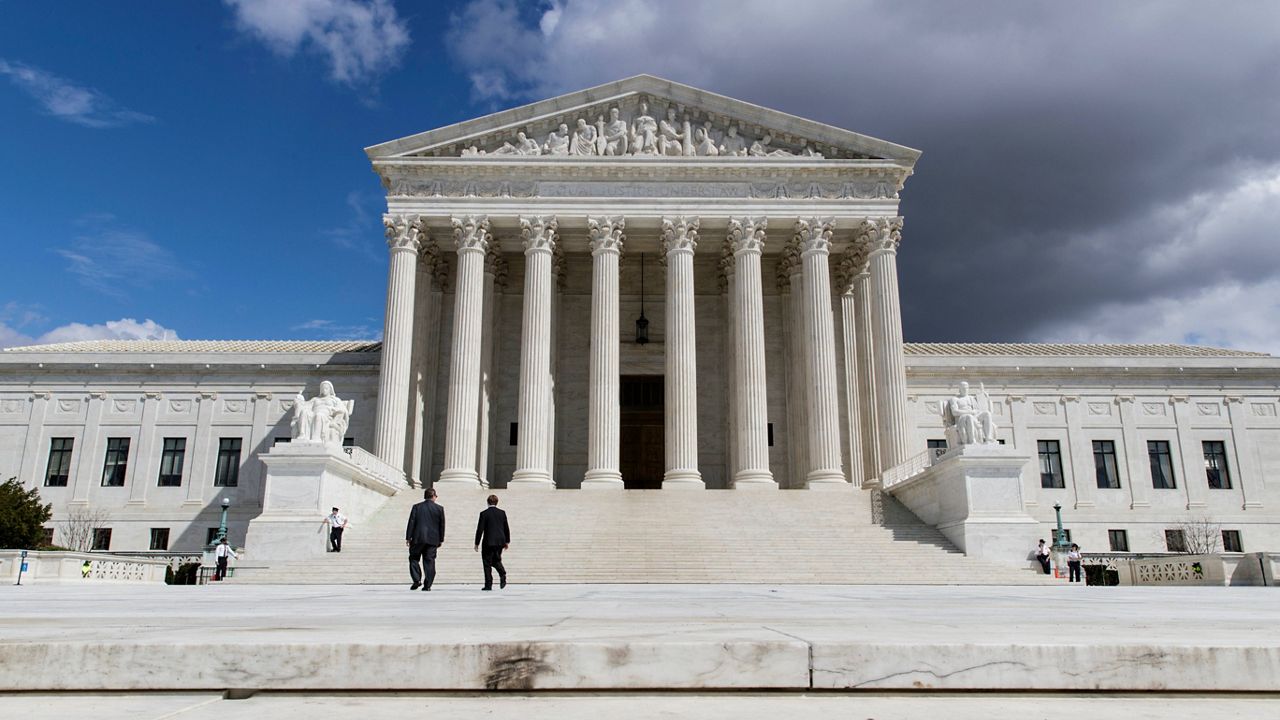
It’s the time of year when the U.S. Supreme Court begins delivering rulings in cases it has heard throughout the current term.
Among the decisions released Thursday was one in which the majority of the court ruled against a Hawaii state law that prohibited carrying a firearm on any private property that was open to the public unless the gun owner first received permission from the property owner.
According to Vin Bonventre, the Jackson distinguished professor of law at Albany Law School, the court, in a 6-3 decision along ideological lines, threw out Hawaii’s law on the grounds that it interfered too much with the right of an individual to bear arms.
This could impact New York state where there are laws prohibiting firearms in “sensitive places,” which according to Bonventre is ripe for a challenge.
“I think that’s just far too vague and far too overbroad, so I can’t imagine the Supreme Court upholding that either,” he told Capital Tonight.

Bonventre, who writes the New York Court Watcher Blog and is a constitutional expert, has analyzed the court’s opinions for this term and has noticed some trends.
“One of the things that characterizes this court is the politicization, the division along partisan lines. But one of the really, really interesting things about this court in the last couple of years at least is that there are a couple of the judges that have actually been emerging and breaking away from that pattern,” he said.
Those justices are Amy Coney Barrett and Chief Justice John Roberts.
“They don’t always vote with the very conservative Republicans which has really upset some people who had wished they would vote along the party lines,” he said while acknowledging that the liberal wing of the court is as “lopsided” as the conservative wing.
“What it means is that in this court, which is a pretty conservative court, they find themselves in many of these cases in between the extreme liberals and the extreme conservatives,” he said. “They are the ones to watch.”