
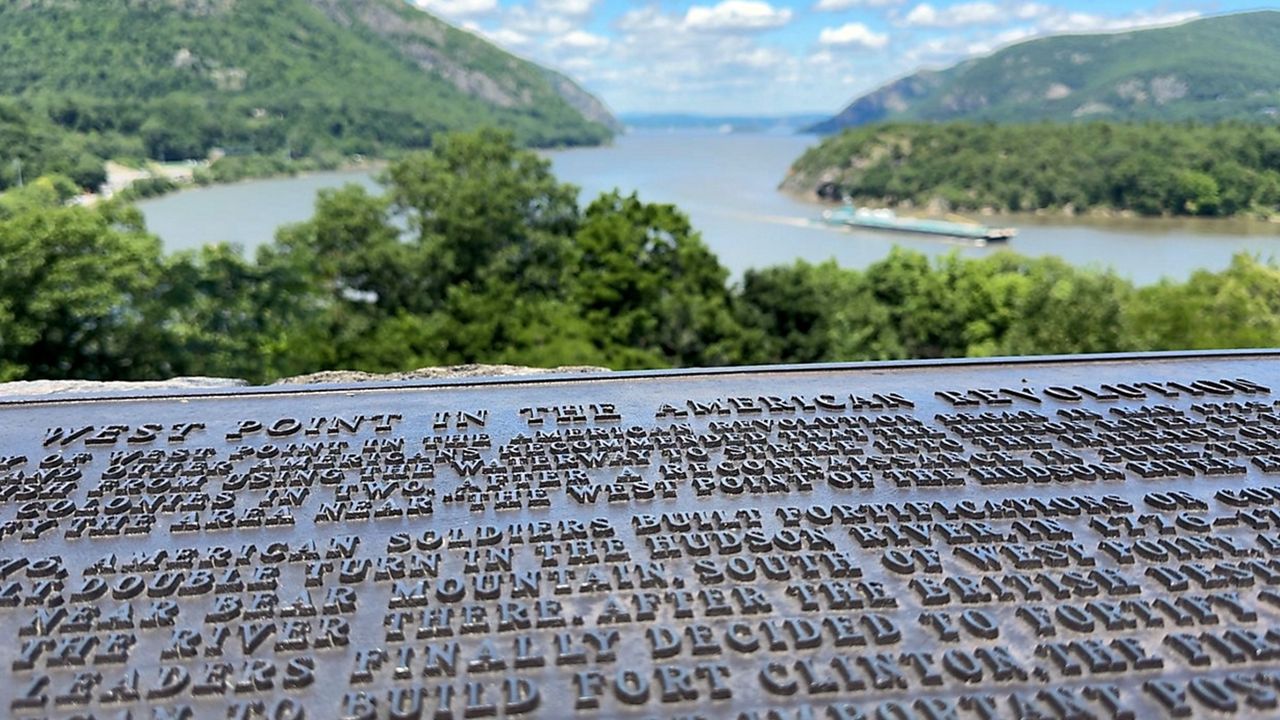
As the 13 colonies began their war for independence against the British, one landmark stood out: the Hudson River. If the river was taken by the British, it could effectively cut the rebellious American colonies in half.
“The British had a feeling that if they can separate Massachusetts from the rest of the colonies, then they can probably get the revolution to end,” said Capt. Chris Canty, a history and war studies instructor at the United States Military Academy.
One spot stood out as the place for the Americans to defend the river, a spot along the Hudson highlands known as West Point.
“There is a point in the river where there’s an S-turn, which would cause one of those British ships — and the British had one of the most impressive navies in the world at this time — to have to slow down almost to a stop,” Canty said. “The slower ship moves, the easier it is to hit it with some cannons.”
George Washington, headquartered just miles from West Point, had to ensure the powerful British navy couldn’t travel up the Hudson River from New York City. Washington ordered the construction of a fort at West Point, whose remains can still be seen today, and laid a 600-yard chain across the river for the duration of the war. Both the chain and the fort discouraged the British from trying to sail up the river.
“The chain would cause a ship to sink or at least suffer catastrophic damage while they’re receiving cannon fire from the Continental Army on both sides of the river,” Canty said.
But the significance of West Point wouldn’t end when the British army surrendered. Washington called it the key to the continent, and it was about to become the key for the developing United States.
The fort remained active for years following the war, but in 1802, President Thomas Jefferson signed the creation of the United States’ first military academy at West Point into law.
“It’s going to be West Point-trained Army officers that will go out and construct the bridges and the roads as America begins to expand itself westward,” Canty said.
More than 200 years later, the academy still serves a critical purpose for the nation, with a focus on being timely but timeless.
“Timely as in it’s capable of adapting to the threats at hand and enhancing technologies and bringing new technology into the classroom and bringing new technologies into the cadets’ army field training that they do during the summer,” Canty said. “It also still focuses on those timeless attributes, the same ones that … are brought to the academy, those values of duty, honor and country.”