
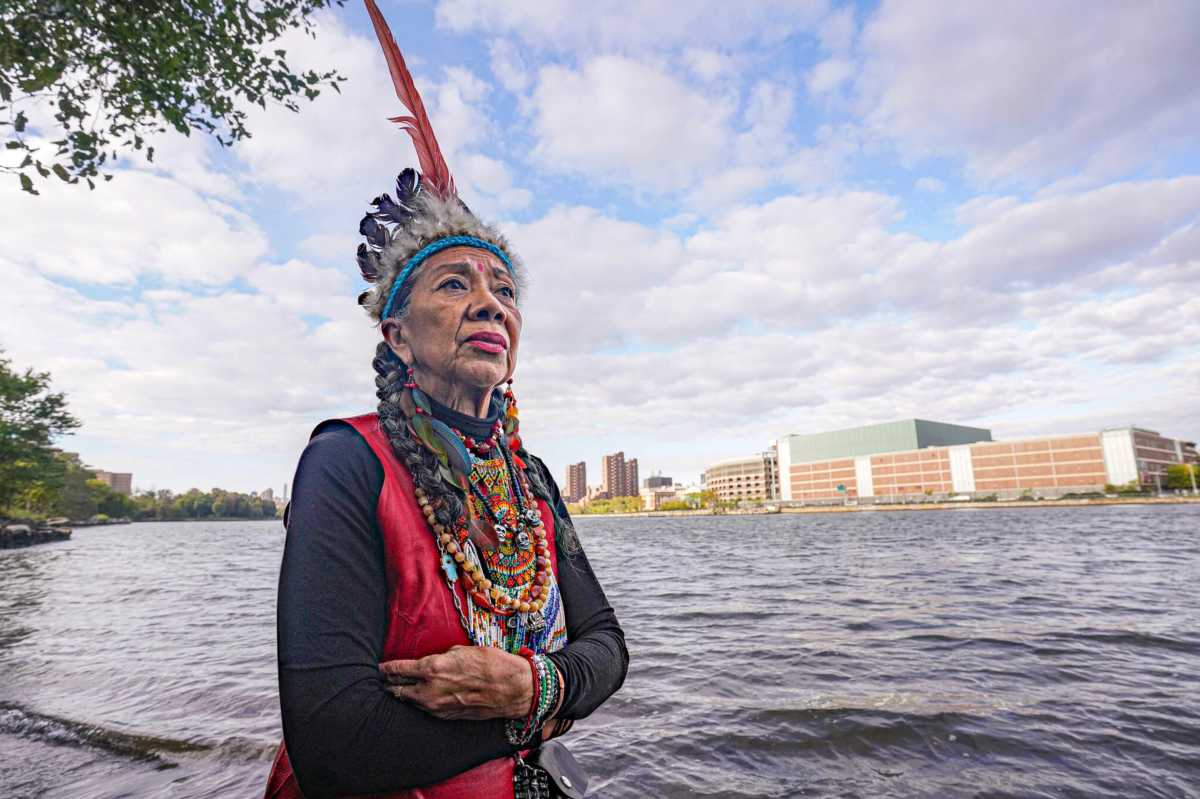
Over two centuries since the founding fathers envisioned independence from the British and conceived the “land of the free,” indigenous New Yorkers still reckon with the near-erasure of their peoples’ stories, history, and culture from the public eye, and the lack of representation and recognition of indigenous groups in government.
“The big challenge is to continue our presence in a place that has effectively erased our presence,” Joe Baker, founding member and executive director of the Lenape Center and an enrolled member of the Delaware Tribe of Indians, one of three federally recognized Lenape nations, told amNewYork.
Before it was called New York City, even before it was New Amsterdam, the land was Lenapehoking. The Lenape people lived along the coast of modern-day Pennsylvania through southern New York for a thousand years or more before settlers arrived. They called Manhattan “Manhatta,” commonly translated to “hilly island.”
First New Yorkers ‘sale’ of Manhattan cost natives more
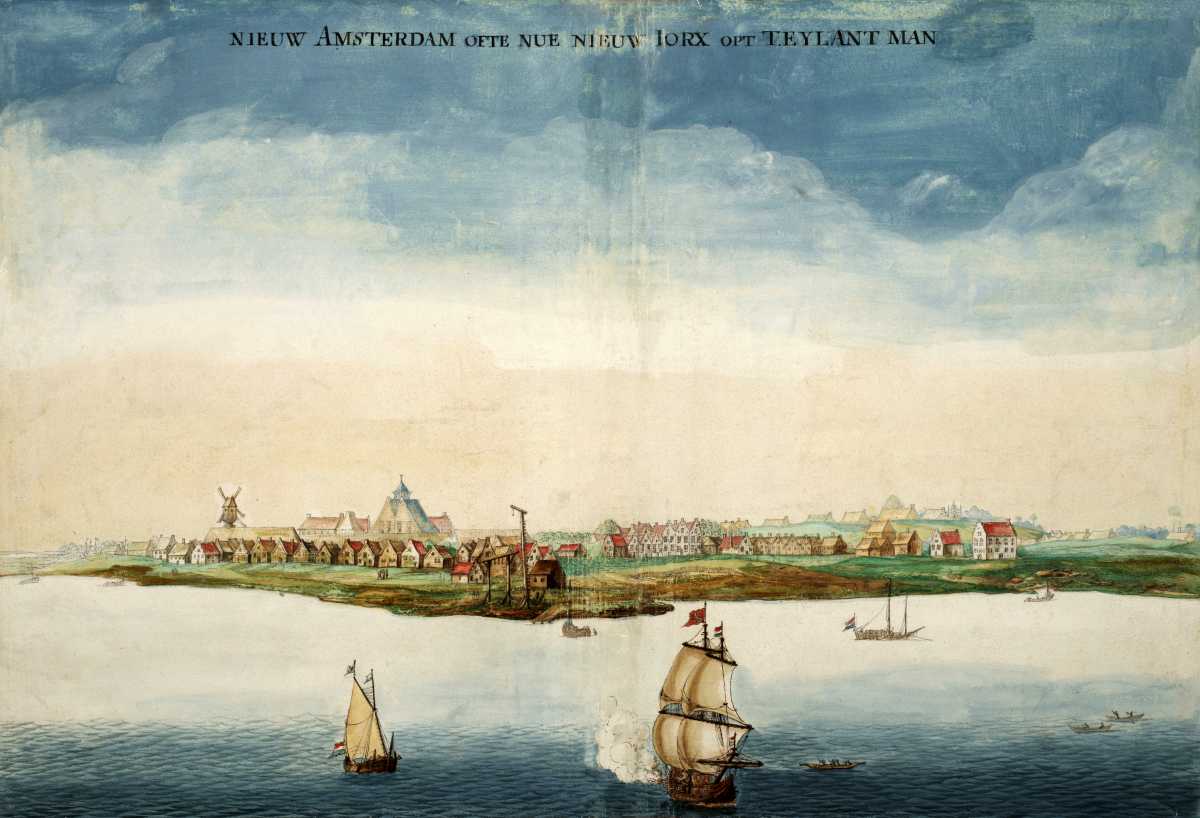 Gezicht op Nieuw Amsterdam by Johannes Vingboons (1664), an early picture of Nieuw Amsterdam made in the year when it was conquered by the English under Richard Nicolls.Public domain
The story most New Yorkers know of Dutch settlers purchasing Manhattan in 1626 for $24 in beads is largely a myth. The only remaining record is a 1626 letter from Pieter Schaghen, a representative for the Dutch West India Company who wrote that the island was acquired “for the value of 60 guilders.”
Schaghen, who was not present for the “purchase,” names no Lenape seller and mentions no beads in the document. The Lenape treated land as shared, not owned, and likely did not view it as a permanent sale.
What followed was a violent removal. The colony’s Dutch director, Willem Kieft, made demands that led to massacres of Lenape communities in 1643. Disease and war reduced the population to only a fraction of its original 20,000 members by 1700.
After the English seized the colony of New Amsterdam and transformed it into New York in 1664, the surviving Lenape were pushed off Manhattan Island. Many of their descendants now belong to federally recognized nations in Oklahoma, Wisconsin and Ontario, Canada.
Baker said that progress for indigenous groups cannot be made unless their stories are actively preserved and shared. He noted the unhonored 1778 Treaty of Fort Pitt, which proposed a native-led state headed by the Delaware with a seat in Congress, as a piece of indigenous history that many schools do not teach. One of the treaty’s signatories was Captain White Eyes, whom Baker described as a fourth great-grandfather.
“As long as we’re dragging this myth, the story, this fabricated narrative of the beginnings of this country, I don’t think we can move forward in a good way,” Baker said.
Lenape descendants look to tell forgotten lessons
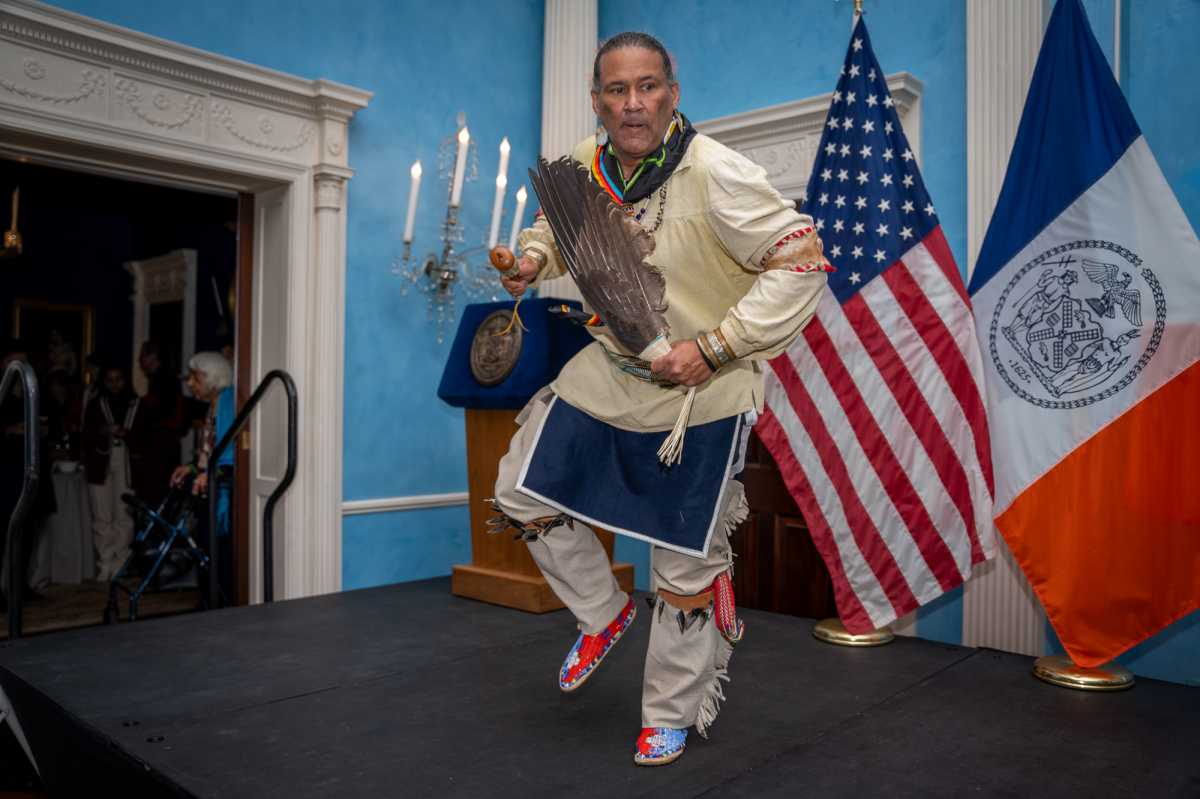 An indigenous man performs a dance during a Gracie Mansion reception in 2023.Benny Polatseck | Mayoral Photography Office
The Lenape Center is focused on addressing that issue today. With Teachers College, Columbia University, the center built a Lenape curriculum now being tested in city schools, which Baker said includes an introduction to the culture and language.
For most of the city’s history, the representation of Indigenous people was not seen on calendar days. This changed in 2021, when New York City Public Schools renamed “Columbus Day” as “Italian Heritage/Indigenous Peoples’ Day.”
However, this change wasn’t universal. New York State and New York City still recognize Columbus Day as the official paid holiday, and a state bill introduced in 2017 that aims to replace the holiday did not pass. While Gov. Kathy Hochul signed the state’s first-ever proclamation recognizing Indigenous Peoples’ Day in 2021, this was done in addition to Columbus Day, not a replacement of it.
In reaction to such changes, as well as Columbia and other institutions on Lenape land issuing land recognitions, Baker said that “we’re at the very beginning of change,” noting that most New Yorkers have only become aware of the Lenape in recent years.
Baker also said that the Lenape Center recently brought Delaware Tribe Chief Brad KillsCrow to meet former Mayor Eric Adams and Mayor Zohran Mamdani, a monumental moment that marked decades of the people’s attempts to meet with New York City mayors and elected officials.
Representatives from the American Indian Community House (AICH), founded in 1969 to serve Native American people across the tri-state area, spoke similarly of what progress has been made and what is yet to come.
Drew Woodson, a member of the Te-Moak Band of Western Shoshone people of Nevada and the youth and education coordinator at AICH, said that recent actions are a “good first step,” but that he hopes to see the general public “actually making moves to see how Native and indigenous people can be better supported.”
Despite being historically overlooked, Native Americans are significant to New York City’s life and population. Data from the 2020 census counted 180,866 people throughout the city who identified as American Indian or Alaska Native alone or in combination with another race.
Patricia Tarrant, a member of the Mandan and Hidatsa tribes and executive director of AICH, pushed back against the idea that Native American New Yorkers are some kind of relic of the past.
“People think that they’re just extinct, or like we’re like dinosaurs,” Tarrant said.
When asked what people should think about as the 250th anniversary of the U.S. arrives, Baker did not describe a celebration, but instead “a moment for reflection.”
“We start with the truth,” Baker said, “and then by starting there we can enjoy a certain new freedom to move forward.”