
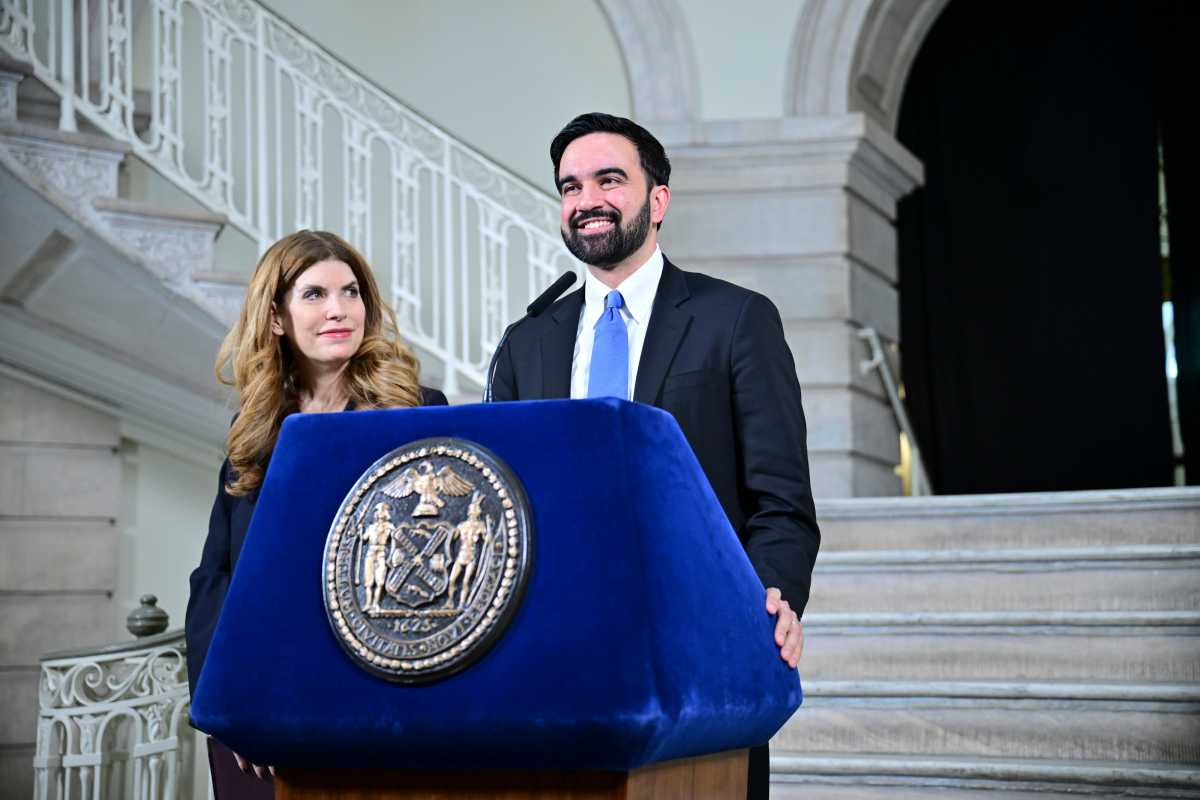
The deal, announced as part of Mamdani and Speaker Julie Menin’s budget handshake on deadline day, June 30, commits $175 million in Fiscal Year 2027 and baselines another $125 million starting in Fiscal Year 2028 for a new rental assistance program that Council officials said could potentially reach 30,000 additional New Yorkers facing eviction or homelessness.
Under the agreement, the Mamdani administration will drop its appeal in the lawsuit over the Council’s 2023 CityFHEPS reform laws once the Council passes new legislation creating the voucher framework. The new program will be administered by the city Department of Housing Preservation and Development (HPD) and is designed to expand access while imposing new cost controls.
The agreement stops short of fully implementing the Council’s 2023 CityFHEPS expansion laws — instead creating a narrower, HPD-administered rental assistance program backed by a fixed budget commitment, annual negotiations over the program’s scale and guardrails intended to contain costs.
“Every New Yorker deserves a safe, affordable home, and this agreement will help more families avoid eviction and homelessness,” Menin said in a statement. “Housing vouchers are a smart investment that save taxpayers money by preventing homelessness before it happens.”
The deal after Menin, Council Housing Chair Pierina Sanchez (D-Bronx) and housing advocates had spent the last five days pressing Mamdani to put more money toward CityFHEPS before the budget was finalized. It also gives Mamdani a path out of a politically difficult fight over a program he promised during his campaign to expand.
“This is a historic win for vulnerable New Yorkers — and a turning point in our City’s approach to homelessness,” Sanchez said. “For too long, New York City has paid more for worse outcomes, keeping children and families in shelter when permanent housing is safer, more stable, more humane, and more cost-effective.”
The Mayor’s office did not immediately offer comment on the agreement.
What the housing voucher deal means for CityFHEPS program
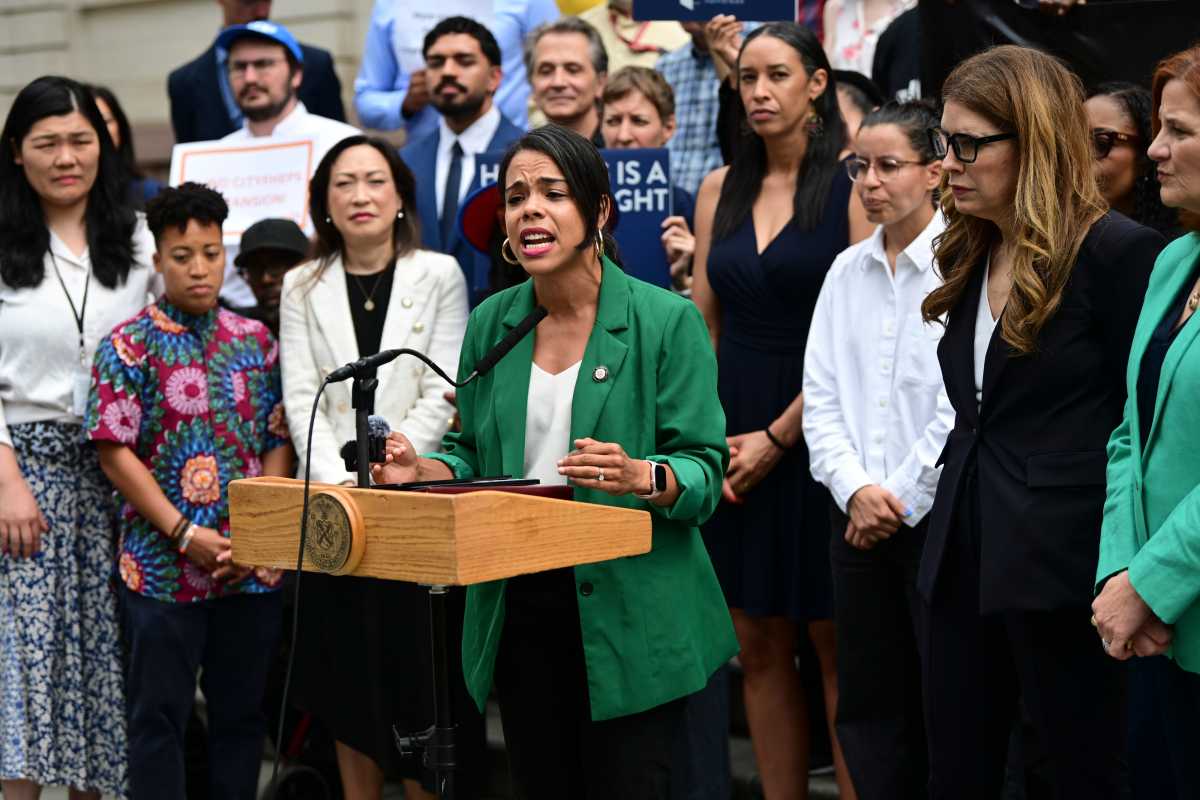 Bronx City Council Member Pierina Sanchez speaks outside City Hall in support of expanding CityFHEPS at a June 26, 2026 rally.Photo by Lloyd Mitchell
The legislation, sponsored by Sanchez, would increase the income eligibility threshold to New Yorkers living at or below 50% of area median income (AMI) and reach New Yorkers in non-Department of Homeless Services shelters, including runaway and homeless youth, justice-involved individuals and people displaced by fires or city vacate orders.
The deal also aims to preserve rent-stabilized housing by helping eligible New Yorkers remain in their apartments before they enter shelter.
CityFHEPS currently serves roughly 65,000 households. Under the program and other city housing voucher programs, the city helps cover rent for eligible New Yorkers leaving shelter or trying to avoid homelessness. Council officials and advocates have argued that vouchers are far cheaper than shelter, citing costs as low as $54 per day per family for rental assistance compared with as much as $270 per day for shelter.
The agreement followed a tense final stretch of budget negotiations in which CityFHEPS emerged as one of the last major sticking points. Menin said Friday that budget talks were “stuck” over the program, while Sanchez said enough members were prepared to withhold support for the budget to delay the handshake.
The Council’s Progressive Caucus also escalated pressure over the weekend, saying in a Saturday statement that its 24 members needed “to see movement to fund this critical program before the handshake.”
The Council passed four bills in 2023 to expand CityFHEPS by raising income eligibility, eliminating the shelter-stay requirement and removing certain work and source-of-income requirements. Then-Mayor Eric Adams vetoed the bills, and the Council overrode him.
It appears the removal of the shelter-stay, work, and source of income requirements will not happen this year under this settlement.
The Adams administration refused to implement the laws after they took effect in January 2024, prompting a lawsuit from the Legal Aid Society on behalf of impacted New Yorkers. The Council later joined the case. An appeals court ruled that the Council had the authority to legislate on the program, but the Mamdani administration appealed that decision to the state’s highest court earlier this year. Both sides had been preparing for the September arguments before that court.
Mamdani’s decision to continue the litigation drew sharp criticism from housing advocates and Council members because he had campaigned on dropping the lawsuit, which challenged the Council’s ability to pass this type of social services law. The settlement agreement preserves the Council’s ability to pass such laws.
The deal also addresses warnings from fiscal watchdogs that any expansion should include cost controls. Comptroller Mark Levine’s office said Monday that the city needed “clear parameters and effective cost controls” for fast-growing programs like CityFHEPS to avoid worsening future budget gaps.
Menin said the agreement does both.
“This agreement delivers a humane and fiscally responsible path forward by expanding access to rental assistance, establishing cost controls, and ending years of litigation,” she said.
This is a developing story. Check back for updates.